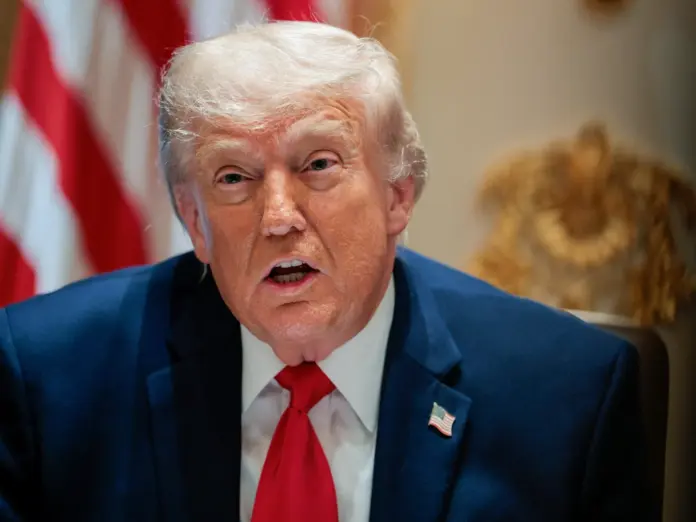
Washington — President Donald Trump threatened to destroy Oman on Wednesday if the Gulf nation cooperates with Iran over control of the Strait of Hormuz, escalating tensions in a region already destabilised by an active US-Israeli military campaign against Tehran.
Iran Strait Dispute — "Oman will behave just like everybody else, or we will have to blow them up," Trump said during a cabinet meeting, remarks that were subsequently amplified by the US State Department, which shared a transcript of the comments on social media.
The threat came in response to a reporter’s question about whether Trump would accept a short-term arrangement allowing Iran and Oman to jointly manage the strait. Iran’s state television had reported the existence of a framework memorandum of understanding between the two countries regarding shared control of the waterway. The Trump administration dismissed that report as "a complete fabrication."
Recommended Reading
The Strait of Hormuz is one of the world’s most strategically vital chokepoints, channelling more than 20 percent of global oil traffic as well as significant volumes of agricultural fertiliser. Parts of the strait pass through both Iranian and Omani territorial waters, giving both nations a degree of geographic leverage over the passage.
The backdrop to Trump’s remarks is a war that the United States and Israel launched against Iran on February 28. Following the onset of that campaign, Tehran closed the strait and began asserting sovereignty over it — a move with profound consequences for global energy markets and supply chains.
Trump’s threat against Oman stunned observers given the depth of ties between Washington and Muscat. The two countries share a diplomatic relationship spanning more than 200 years, underpinned by multiple formal agreements including security partnerships, a bilateral free trade agreement, and a science and technology cooperation deal. Oman has long maintained a posture of strict neutrality in regional disputes and has never publicly expressed any desire to join Iran in asserting control over the strait.
Crucially, Oman has historically served as a quiet but effective back-channel between Washington and Tehran. The sultanate played a key mediating role in earlier rounds of nuclear diplomacy, making Trump’s threat particularly jarring to diplomatic observers.
Raed Jarrar, advocacy director at the US-based rights organisation DAWN, said the threat crossed a clear legal line. "The UN Charter prohibits the threat of force against any state," Jarrar noted, pointing to one of the foundational principles of the post-World War II international order.
Iran Strait Dispute: Regional Implications
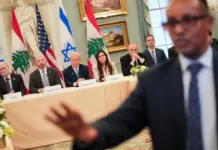
Trump also used the occasion to press Arab nations on a separate but linked demand. He called on Saudi Arabia, Qatar, and other Arab states to establish formal diplomatic relations with Israel as a prerequisite for any future ceasefire agreement with Iran. "I'm not sure we should make the deal if they don't sign," Trump said, threatening to withdraw from negotiations entirely if more Arab governments do not move toward normalisation with Israel.
The linkage of a potential Iran ceasefire to Arab-Israeli normalisation represents a significant escalation of US diplomatic demands, effectively conditioning an end to active hostilities on a sweeping regional political realignment. Neither Saudi Arabia nor Qatar has publicly committed to such a step.
The combination of military threats against a neutral ally, an active war against Iran, and the closure of the Strait of Hormuz has placed global energy markets on edge. Analysts warn that any prolonged disruption to the waterway — through which a fifth of the world's oil passes — could trigger severe economic consequences far beyond the immediate region.
Oman has not issued a formal response to Trump's remarks. The sultanate's government has historically avoided public confrontations, preferring quiet diplomacy — a posture that now faces an extraordinary test as Washington's rhetoric grows increasingly combative toward one of its oldest partners in the Gulf.