Us-Israel-Iran Conflict — The Middle East stands at a historic inflection point. A cascading conflict involving the United States, Israel, and Iran is straining the region’s most critical chokepoints, inflaming sectarian divisions, and exposing the structural fragility of Arab states that have long suppressed political dissent behind bloated security apparatuses and rentier economies dependent on oil revenues.
At stake is control over some of the world’s most consequential geography. The Strait of Hormuz, through which nearly one-fifth of global oil supply passes, has become a flashpoint as oil prices climb following US strikes on tankers and the downing of Iranian drones. To the west, the Suez Canal — one of the most vital arteries of international trade, controlled by Egypt — faces mounting pressure as instability ripples outward. Yemen, positioned at the southern gateway to the Bab al-Mandeb, sits at the intersection of these pressures, its Houthi movement aligned with what Iran describes as an ‘axis of resistance.’
The Fertile Crescent, the ancient corridor linking Asia to Europe, is once again a theatre of great-power competition. Iran’s underground Fordow nuclear facility, located near the holy city of Qom, has drawn particular attention as the Trump administration sets new deadlines for a revised nuclear agreement, even as military confrontations continue to escalate.
Recommended Reading
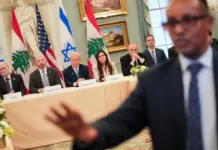
The Abraham Accords, signed in 2020, were premised on the idea that Iran represented a shared existential threat capable of bridging the historic divide between Israel and Gulf Arab states. That framework is now being tested severely. The US-Israel military campaign against Iran has deepened sectarian fault lines across Iraq, Lebanon, and Yemen, where significant Shia populations — also present in Bahrain and Saudi Arabia — have become both targets and mobilising forces in a broader regional struggle.
Iran’s role in the Palestinian cause adds another layer of complexity. Tehran invested in that cause both ideologically and strategically, though the Palestinian issue itself predates the Islamic Republic by decades. With nearly eight million Palestinians living under occupation, Arab public opinion from the Atlantic coast to the Gulf remains deeply attached to Palestinian statehood — a sentiment that Arab governments, however authoritarian, cannot entirely ignore.
The structural weaknesses of those governments compound the crisis. Across much of the Arab world, political institutions remain underdeveloped, judicial systems lack independence, and economies have failed to diversify beyond resource extraction. Confidence in the Western democratic model had already begun eroding in the region before the 2003 invasion of Iraq — a military intervention that, alongside subsequent US operations in Afghanistan, fundamentally altered the regional balance of power and created the conditions for Iran’s expanded influence in Baghdad, Beirut, and Sanaa.
Political Islamist movements, including the Muslim Brotherhood, and Salafist activist networks have filled governance vacuums left by weakened state institutions, further complicating efforts to build stable political orders. Iran’s interventions in Syria, Yemen, and Iraq have reinforced its influence while simultaneously drawing it into costly, protracted conflicts.
Us-Israel-Iran Conflict: Regional Implications
The convergence of these forces — a nuclear standoff, proxy wars, energy market volatility, and unresolved Palestinian grievances — presents a challenge of extraordinary complexity for regional and global powers alike. Whether diplomatic channels can be reopened before military escalation forecloses them remains the defining question of the moment.
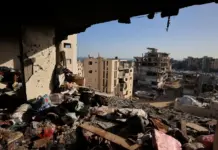
For now, the geography of crisis speaks for itself: from the Bab al-Mandeb to the Suez Canal, from the Fordow bunkers to the streets of Gaza, the Middle East is locked in a confrontation whose consequences will be felt far beyond its borders.