Iran Hormuz Deal — Ceasefire negotiations between the United States and Iran are showing serious signs of strain, with President Donald Trump publicly rejecting key terms attributed to a draft agreement while insisting Tehran will receive no sanctions relief and must surrender its stockpile of highly enriched uranium.
Speaking at a Wednesday cabinet meeting, Trump declared that Iran would not obtain any easing of American sanctions as part of a negotiated settlement, and that the country’s estimated 440 kilograms of enriched uranium — roughly 970 pounds — would be handed over to the United States rather than transferred to Russia or China. Trump said he would be uncomfortable with either Moscow or Beijing taking custody of the material, a position that narrows the diplomatic space considerably.
The remarks came as Iranian state television circulated details of what it described as a draft memorandum of understanding under negotiation. That document, as reported by state broadcasters, would require Washington to lift its naval blockade on Iranian ports in exchange for Tehran restoring commercial shipping through the Strait of Hormuz to pre-war levels within 30 days. The reported draft also called for the withdrawal of US forces from the region and proposed that Iran and Oman jointly manage vessel routing through the strait. Military ships were explicitly excluded from the arrangement.
Recommended Reading
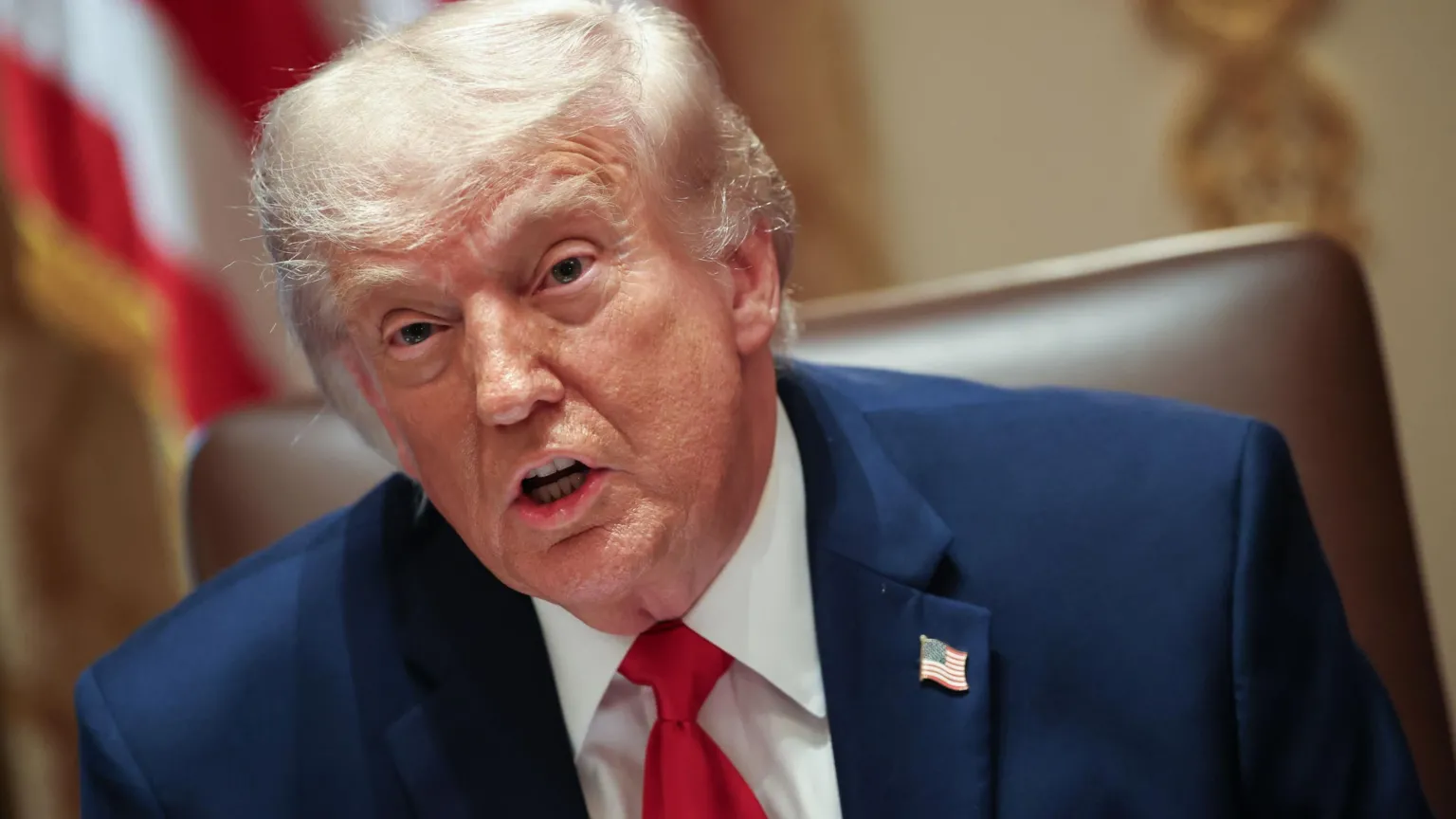
The White House dismissed the Iranian account as "a complete fabrication." Trump went further, stating that "nobody" would exercise control over the Strait of Hormuz and that the waterway must open "immediately." When asked about the prospect of an Iran-Oman joint management arrangement, Trump issued a blunt warning: "Oman will behave just like everybody else, or we'll have to blow 'em up."
Critically, the Iranian state media version of the draft agreement made no mention of Tehran abandoning its nuclear programme or relinquishing its enriched uranium stockpile — two demands Trump has publicly insisted upon. Iran also denied a claim Trump made more than a month ago that it had agreed to allow the US to retrieve its uranium at what he described as a "leisurely pace."
The public contradictions reflect the broader fragility of a ceasefire that has already been tested. The truce, agreed on April 8, has largely held, but the US launched strikes against Iranian missile sites and boats attempting to lay mines on Monday. By Tuesday, Washington had conducted what it characterised as "self-defence strikes" against southern Iran. Tehran condemned those strikes as a "gross violation" of the ceasefire agreement.
Trump acknowledged the negotiations remain unresolved. "I'm not satisfied" with the current terms, he said, while adding that Iran is "very much intent" on reaching a deal but "hasn't gotten there yet." He described Iran as "negotiating on fumes" and instructed his negotiating team "not to rush into" an agreement. Secretary of State Marco Rubio offered a more measured assessment, acknowledging "some progress and some interest" from the Iranian side. Washington also reiterated its willingness to resume large-scale strikes if talks collapse.
The conflict that produced this diplomatic impasse began on February 28, when the United States and Israel launched wide-ranging military strikes against Iran. The operation resulted in the death of Supreme Leader Ali Khamenei, who has since been succeeded by his son, Mojtaba Khamenei. The Islamic Revolutionary Guard Corps continues to exercise significant influence over Iran's political and military decision-making under the new leadership.
Iran Hormuz Deal: Regional Implications
Iran retaliated to the February strikes with missile and drone attacks against Israel and US-allied Gulf states, and moved to close the Strait of Hormuz — a chokepoint through which more than 20 percent of global oil trade passes. The closure sent shockwaves through international energy markets and intensified pressure on all parties to reach a settlement.
Trump claimed Iran's navy and air force have been effectively destroyed in the conflict, a characterisation that frames Washington's negotiating posture as one of overwhelming leverage. The key sticking points — US sanctions, the naval blockade on Iranian ports, and control of the Strait of Hormuz — remain unresolved, and the gap between the two sides' public positions suggests a final agreement remains distant despite signals of progress late last week.
Both sides had indicated movement toward a deal in the days before the latest round of contradictory statements. Tehran, however, cautioned that any agreement was "not imminent," a warning that now appears prescient as the negotiations enter a more turbulent phase.