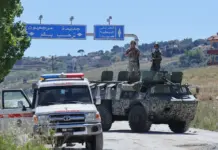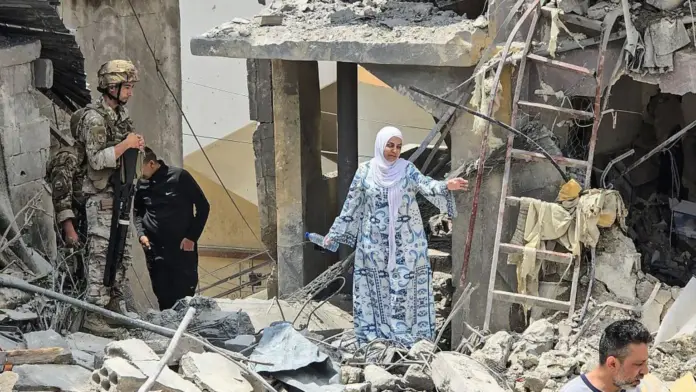
Lebanon Ceasefire Collapses — Israel ordered the evacuation of Tyre, a major city in southern Lebanon, and announced an expansion of its ground operation on Wednesday, dramatically escalating a conflict that a US-brokered ceasefire was supposed to contain. The Israeli military declared it was "compelled to act forcefully" in response to what it described as systematic ceasefire violations by Hezbollah.
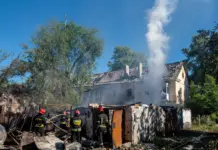
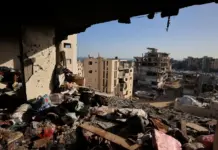
Air strikes struck targets across southern Lebanon and the eastern Bekaa Valley, killing three people in the town of Choukine. Israeli Prime Minister Benjamin Netanyahu announced the ground operation expansion after Hezbollah launched drone attacks against Israeli troops stationed in parts of southern Lebanon and against civilians in northern Israel.
Hezbollah, for its part, said its fighters were engaged in active combat with Israeli forces north of the Litani River, roughly 30 kilometres from the Lebanese-Israeli border. The group has accused Israel of repeatedly breaching the ceasefire — a charge Israel flatly rejects, insisting it retains the right to strike Hezbollah wherever it perceives a threat.
Recommended Reading
The ceasefire, which took effect on 16 April following intensive American mediation, has been extended twice and has never fully held. Both sides have continued exchanging fire throughout its duration, but Wednesday’s events marked the most significant breakdown since the truce was established five weeks ago.
The human cost of the broader conflict has been severe. Lebanon’s health ministry reports at least 3,213 people killed since the war began, a figure that does not distinguish between combatants and civilians. Israel says it has lost 23 soldiers and four civilians across both sides of the border during the same period.
The war’s origins trace to 2 March, when Hezbollah launched rockets into Israel in retaliation for an Israeli strike that killed Iran’s supreme leader. Israel responded with a sweeping air campaign across Lebanon followed by a ground invasion, drawing the country into a conflict that has since reshaped the region’s security landscape.
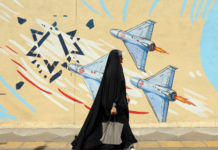
Wednesday’s escalation carries consequences that extend well beyond Lebanon’s borders. Diplomatic talks aimed at ending the wider war — involving the United States, Israel, and Iran — are now under renewed strain. Iran has insisted that any comprehensive agreement must include provisions covering Lebanon, a condition Israel has resisted. The renewed fighting threatens to collapse those negotiations entirely before they produce a framework.
Lebanon Ceasefire Collapses: Regional Implications
Israel’s decision to order the evacuation of Tyre, a city with deep historical significance and a substantial civilian population, signals that military planners are preparing for operations of considerable scale in the south. The move will intensify pressure on Lebanese authorities and international humanitarian organisations already struggling to manage the displacement of hundreds of thousands of people since the conflict began.
The situation along the Litani River line has become the conflict’s most volatile flashpoint. Under the terms of United Nations Security Council Resolution 1701, which ended the 2006 war between Israel and Hezbollah, armed groups were prohibited from operating south of the river. The current fighting suggests those boundaries have effectively ceased to function as a constraint on either side.
With both Israel and Hezbollah publicly accusing each other of bad faith, and with Iran tying any diplomatic resolution to the Lebanese theatre, the prospects for a durable ceasefire appear increasingly remote. The coming days will test whether American mediators can reassert enough leverage to pull the parties back from a full resumption of hostilities — or whether the fragile truce of the past five weeks has already run its course.