Lebanon Ceasefire Rejected — A US-brokered ceasefire agreement reached in Washington between Lebanese and Israeli officials has collapsed in acrimony, with Hezbollah Secretary-General Naim Qassem branding the deal a ‘farce’ and denouncing the negotiations as ‘humiliating.’ The rejection came as Lebanon’s Health Ministry confirmed the conflict has now claimed at least 3,526 lives and left 10,733 people wounded since March 2.
Qassem issued a stark warning alongside his dismissal, declaring that northern Israel would remain a target for Hezbollah fighters for as long as Israeli forces continue to bomb Lebanese territory. Iran’s Islamic Revolutionary Guard Corps echoed that defiance, stating there would be ‘no peace in the region’ until Israel withdraws entirely from Lebanese soil.
Lebanese Prime Minister Nawaf Salam pushed back against the criticism, defending the ceasefire process and arguing that diplomacy remains the least costly path available to Lebanon. His government’s position stands in direct contradiction to Hezbollah’s posture, exposing a deepening rift between Beirut’s civilian leadership and the armed group that continues to dominate the country’s south.
Recommended Reading
On the ground, the violence showed no sign of abating. Israeli warplanes launched four missiles that struck in the vicinity of Jabal Amel Hospital in the southern city of Tyre. A previous Israeli strike across the road from the same facility killed four people and caused severe structural damage to hospital buildings. Artillery shelling was also reported in the nearby town of Deir Amas in the Tyre district.
The Israeli military acknowledged that 63 officers and soldiers were wounded in fighting across southern Lebanon over the past four days, and confirmed one soldier was killed by a Hezbollah missile. Hezbollah, for its part, claimed a series of coordinated strikes on Israeli military positions in the southern towns of Yohmor al-Shaqif, Rashaf, al-Qantara, and Khiam. The group said it fired successive artillery shells, large rocket barrages, and drone strikes against Israeli command posts and troop concentrations near Beaufort Castle, and claimed the destruction of several Israeli Merkava tanks.
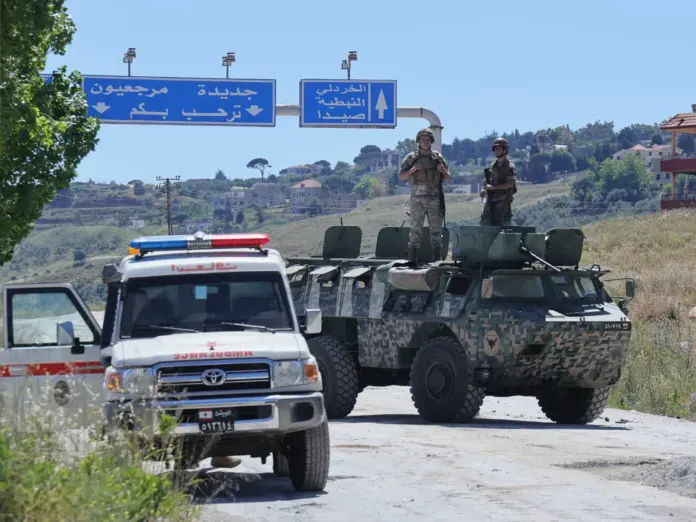
In a sign of incremental territorial shifts, Lebanese Army units entered the southern village of Dibbine after Israeli forces withdrew from the area — a development that underscores the fluid and contested nature of the front lines.
The conflict’s reach extended into the occupied West Bank, where Israeli forces raided the village of Beitin, east of Ramallah, killing an 18-year-old Palestinian identified as Haitham Izz al-Din Omar Hamida. Troops fired live ammunition, deployed stun grenades, and used toxic gas canisters during the operation. Israeli forces subsequently withheld the teenager’s body from his family. Separately, Israeli strikes on Gaza over the preceding 24 hours killed at least 11 Palestinians and wounded 32 others.
Israel’s supreme court delivered a notable legal ruling amid the broader crisis, annulling a government ban that had prevented the International Committee of the Red Cross from visiting Palestinian prisoners held in Israeli jails. The decision represents a significant judicial check on executive authority during wartime.
Lebanon Ceasefire Rejected: Regional Implications
In Washington, the political fallout from the conflict continued to reverberate. President Donald Trump attacked lawmakers who voted in favour of a resolution aimed at limiting his authority to wage war on Iran, calling them ‘unpatriotic.’ Meanwhile, a US congressional panel rejected an amendment introduced by Democratic Congressman Ro Khanna that sought to repeal Section 224 of the National Defense Authorization Act — a provision designed to further integrate the US and Israeli militaries. The amendment failed in a voice vote in the House Armed Services Committee on Thursday.
A UNIFIL peacekeeper was also killed and two others injured in an attack in southern Lebanon, which the United Nations said it was investigating. The death of a UN peacekeeping soldier adds further international pressure to a conflict that has already drawn in regional powers and strained diplomatic channels across multiple capitals.
The combination of a rejected ceasefire, continued strikes near civilian infrastructure, and escalating political tensions in Washington suggests the conflict is entering a more entrenched phase, with little immediate prospect of de-escalation despite ongoing diplomatic efforts.