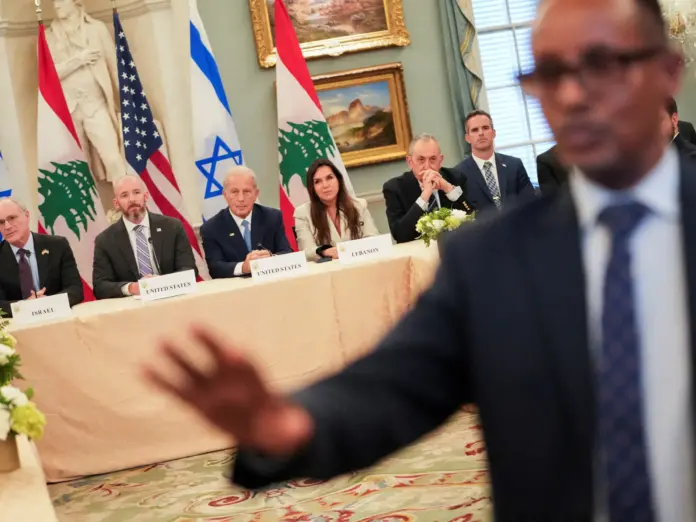
Israel-Lebanon Ceasefire — Israel and Lebanon have agreed to a US-brokered ceasefire following direct diplomatic talks in Washington, DC, but the deal showed signs of strain within hours of its announcement Wednesday as violence persisted on both sides of the border.
The agreement — the product of the fourth round of direct talks between Lebanese and Israeli diplomats since fighting escalated on March 2 — calls for a complete cessation of fire by Hezbollah and the removal of the group’s operatives from southern Lebanon. Notably, Hezbollah itself was absent from the Washington negotiations, which is particularly significant given that Israel and Lebanon do not maintain formal diplomatic relations.
A central feature of the deal is the creation of ‘pilot zones’ in which Lebanese armed forces would assume exclusive territorial control, explicitly excluding non-state actors such as Hezbollah. Both delegations agreed to reconvene for further talks during the week of June 22.
Recommended Reading
The ink had barely dried on the agreement before Hezbollah claimed it had targeted Israeli soldiers on Wednesday. Israeli airstrikes killed at least 10 people in southern Lebanon the same day, and air raid alarms sounded in northern Israel hours after the announcement, triggered by what authorities described as a ‘suspicious aerial target’ — though no casualties were reported.
Israeli Defence Minister Israel Katz made clear on Thursday that the agreement would not halt Israeli military activity. ‘Israel’s military will continue operations in Lebanon and will not withdraw,’ Katz stated, adding that forces would press on to ‘dismantle terrorist infrastructure’ across the country. Israel currently occupies areas of southern Lebanon, which it characterises as a buffer zone, a presence that has displaced hundreds of thousands of Lebanese residents from their homes since March.
Israel also asserted it retains ‘freedom of action, backed by the United States, to strike in Beirut’ should attacks against it continue — a declaration that drew a sharp response from Tehran. Iranian Foreign Minister Abbas Araghchi warned that any strike on Beirut would trigger a ‘full-scale resumption’ of war, while also stating that no ‘tangible progress’ had been made in broader negotiations to end the wider Middle East conflict. Iran’s Supreme Leader Mojtaba Khamenei separately accused Iran’s enemies of seeking to undermine public resilience and sow internal divisions.
The ceasefire is the latest in a series of fragile arrangements that have repeatedly failed to hold. A truce intended to halt fighting was meant to take effect on April 17 but was never observed. A 45-day extension to an earlier ceasefire was agreed in May, yet hostilities continued. The current conflict intensified on March 2, when Hezbollah renewed its attacks against Israel in a move framed as support for Iran.
US President Donald Trump signalled his preference for keeping the Lebanon negotiations separate from ongoing US-Israeli discussions concerning Iran, reflecting Washington’s effort to manage multiple overlapping crises in the region simultaneously.
Israel-Lebanon Ceasefire: Regional Implications
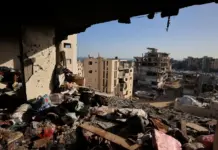
Meanwhile, the violence extended beyond Lebanon’s borders. Overnight Israeli attacks on Gaza City apartment buildings killed at least nine people, including four children, according to medical sources at al-Shifa Hospital, underscoring the breadth of the ongoing conflict across multiple fronts.
The diplomatic path forward remains deeply uncertain. With Hezbollah excluded from the talks that produced the agreement, the group’s compliance cannot be assumed. Israel’s stated intention to maintain its military presence and operational freedom in Lebanon further complicates implementation. The pilot zone mechanism, while innovative, depends on the Lebanese armed forces’ capacity and willingness to assert control over territory long dominated by Hezbollah — a formidable challenge given the group’s entrenched influence in the south.
Both sides have agreed to return to the table in late June, but the events of Wednesday suggest the gap between diplomatic progress and ground-level reality remains vast.