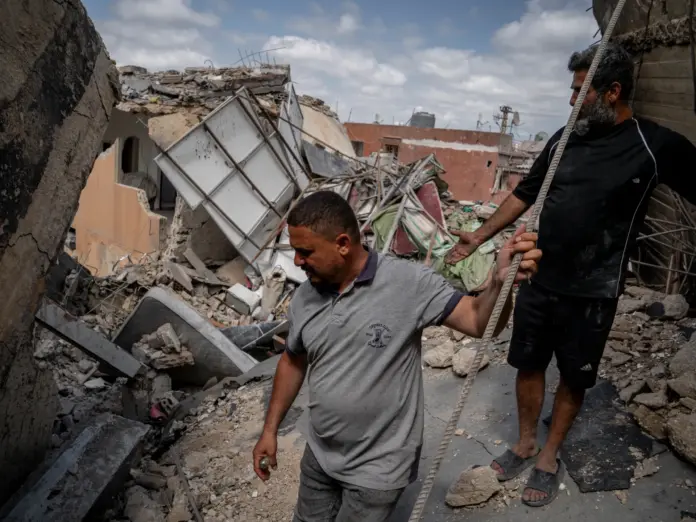
Israeli Strikes Lebanon — Israeli air strikes killed at least five people across southern Lebanon on Friday, striking multiple towns and triggering fresh evacuation orders, even as military delegations from Israel and Lebanon sat down for security talks at the Pentagon in Washington.
Four people died when an Israeli strike hit a building in Abbasiyeh, a town near the coastal city of Tyre. A fifth person was killed in a separate strike on Deir Qanoun al-Nahr. Israeli forces also carried out air raids on the towns of al-Baisariyah, as-Sarafand and Khirbet Selm, while the Israeli military issued evacuation warnings for an additional seven towns in southern Lebanon — two of them located roughly 40 kilometres north of the Israeli border.
Prime Minister Benjamin Netanyahu confirmed that Israeli forces had crossed the Litani River, which runs approximately 30 kilometres north of the Israel-Lebanon border, marking a significant northward push in operations against Hezbollah. Israeli troops have broken through Hezbollah’s second lines of defence and are now heavily bombarding the third. Operations have extended to Beirut and the Bekaa Valley as part of the broader campaign.
Recommended Reading
The escalation unfolded on the same day that Lebanese and Israeli military delegations convened at the Pentagon for security discussions. The Lebanese delegation, comprising six officers, was headed by the army’s director of operations, Brigadier General Georges Rizkallah. Israel was represented by Brigadier General Amichai Levin, head of the strategic division within the Israeli army’s planning directorate.
A ceasefire between the two sides took effect on April 17 and was extended for 45 days on May 17 following indirect negotiations mediated by the United States. Lebanese President Joseph Aoun has told US Secretary of State Marco Rubio that a durable ceasefire with Israel is essential, underscoring the diplomatic pressure bearing down on both parties even as the fighting continues.
The human cost of the conflict is falling disproportionately on Lebanon’s most vulnerable. The United Nations reported that 15 children were killed and 62 injured in Lebanon over the seven days preceding Friday’s strikes. UNICEF spokesman Ricardo Pires said seven children were killed and 30 injured in a single day alone, with an average of 11 children killed or wounded every 24 hours. The Lebanese Ministry of Public Health put the combined child casualty figure for the past week at 77.
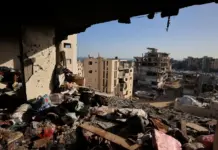
The broader humanitarian situation in southern Lebanon has deteriorated sharply since March. Hundreds of thousands of residents have been displaced from their homes since March 2. Around 40 hospitals in the south are already closed, severely limiting medical access for those who remain. Civil defence workers have paid a heavy price as well — 126 have been killed and 310 wounded since the conflict intensified in March.
Israeli Strikes Lebanon: Regional Implications
The juxtaposition of Friday’s strikes with the Washington talks illustrates the precarious nature of the current ceasefire arrangement. While diplomats and military officials negotiate in the US capital, Israeli forces continue to press deeper into Lebanese territory, and civilians continue to bear the consequences. The extension of the ceasefire in May bought time, but the events of Friday suggest the underlying military dynamics remain unresolved.
International pressure for a lasting halt to hostilities is growing. With civilian infrastructure gutted across the south, hospitals shuttered, and child casualties mounting by the day, humanitarian organisations are warning that the window for preventing a deeper catastrophe is narrowing rapidly.