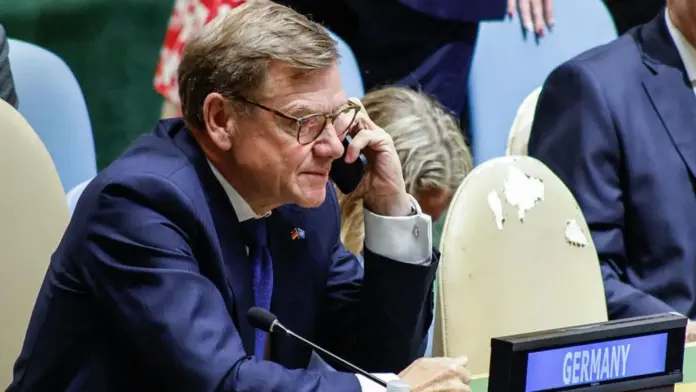
UNITED NATIONS — Germany suffered a stinging diplomatic setback Wednesday when it failed to secure a rotating seat on the UN Security Council, losing to Portugal and Austria in a vote that its foreign minister blamed partly on Russian interference.
Germany Un Security Council — The election, held to fill two seats allocated to the Western European and Others Group for a two-year term, saw Portugal receive 134 votes and Austria 131. Germany managed only 104 votes — well short of the threshold needed to prevail. Kyrgyzstan, Trinidad and Tobago, and Zimbabwe were also elected to the council in the broader ballot.
Foreign Minister Johann Wadephul did not mince words in his assessment of the result. "This is a bitter defeat," he said, pointing to what he characterised as deliberate efforts by Russia to turn member states against Germany’s candidacy. Wadephul alleged that Moscow stirred up sentiment against Berlin and actively lobbied to block its path to the council. Russia has not responded to the accusations.
Recommended Reading
Wadephul identified two policy positions as likely liabilities in the vote: Germany’s sustained support for Ukraine in its war against Russia, and what he described as Germany’s special historical responsibility toward Israel in the context of the ongoing Middle East conflict. Both stances, he suggested, may have alienated blocs of UN member states whose votes were ultimately decisive.
The foreign minister also acknowledged a self-inflicted wound — Germany’s late entry into the race. Entering a competitive UN election campaign without sufficient lead time to build diplomatic support, he conceded, was a contributing factor in the loss.
Chancellor Friedrich Merz adopted a more measured tone, congratulating Austria and Portugal on their election while reaffirming Berlin’s commitment to multilateralism. Germany, he said, would remain a firm supporter of the international system regardless of the outcome.
The stakes of a Security Council seat are considerable. As the only United Nations body empowered to make legally binding decisions, the council holds unique authority to impose sanctions, authorise the use of military force, and shape the international response to crises. Its five permanent members — China, France, Russia, the United Kingdom, and the United States — hold veto power, while the 10 elected temporary members rotate on two-year terms.
Germany’s absence from the council means it will have no formal seat at the table during what many analysts consider a particularly volatile period in global affairs, with the war in Ukraine ongoing and tensions in the Middle East showing no sign of abating. Berlin had positioned its candidacy as an opportunity to advocate for rules-based international order and multilateral diplomacy — goals that will now have to be pursued through other channels.
Germany Un Security Council: The Diplomatic Context
The allegation that a permanent council member actively worked to block a candidate from even joining the body as a temporary member underscores the increasingly transactional and adversarial nature of UN politics. If Russia did campaign against Germany, it would represent a notable escalation of diplomatic friction between Moscow and Berlin beyond the battlefield in Ukraine.
For Austria and Portugal, the outcome represents a significant diplomatic achievement. Both countries will now take their seats on the council, gaining influence over some of the most consequential decisions in international security for the duration of their terms.
Germany, meanwhile, faces a period of reflection on how it engages with the broader UN membership — and whether its foreign policy positions, however principled, carry a diplomatic cost in multilateral forums where every vote counts.