Hezbollah Drone Kills — A Hezbollah fibre-optic drone killed one Israeli soldier and wounded two others near the border community of Shomera on Wednesday, deepening a crisis that has now claimed 12 Israeli lives since a ceasefire came into force in April. The strike underscored the mounting toll of a cheap, difficult-to-counter weapon that has fundamentally altered the security calculus along the Israeli-Lebanese frontier.
Eight of the 12 deaths since the ceasefire began — including 11 soldiers and one civilian defence contractor — have been attributed to fibre-optic drones, also known as First-Person View (FPV) drones. The Alma Research Center, which tracks cross-border incidents, has recorded more than 100 drone attacks against communities inside Israel since April, and warns that Hezbollah has accumulated a significant stockpile of the devices.
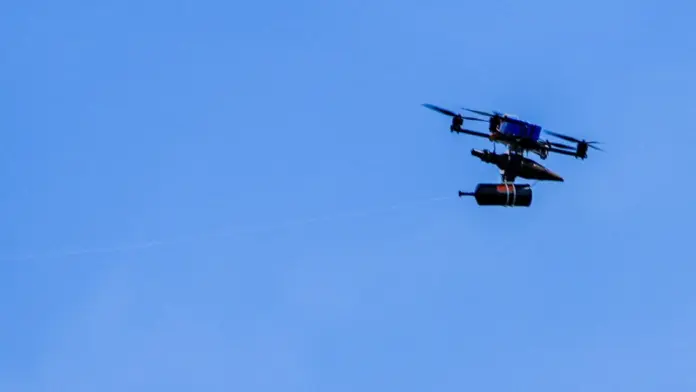
What makes these weapons so dangerous is their design. Unlike conventional drones, fibre-optic models are tethered to their operators by a thin optical wire, enabling real-time visual guidance as the device chases targets at low altitude. Because they carry no radio signal, Israel’s electronic jamming systems — among the most sophisticated in the world — cannot intercept them. Each unit costs between $300 and $400, making them an asymmetric weapon of considerable strategic value.
Recommended Reading

Alma Research Center analyst Sarit Zehavi raised the alarm about this threat as far back as 2024, warning that fibre-optic drones would become Hezbollah’s next major offensive tool. The organisation is now assessed to have dozens of trained drone operators ready to deploy them. Israeli forces have drawn criticism for being slow to adapt, particularly given that troops in Ukraine have been battling near-identical Russian-launched FPV drones for more than two years, generating hard-won tactical lessons that were available to study.
The Israeli military has begun implementing countermeasures, including draping netting over positions to entangle incoming drones. Defence companies are racing to develop more sophisticated solutions: advanced interceptor drones, specialist fragmenting anti-drone ammunition, and automatic firing systems equipped with electro-optical sensors. Smart Shooter, an Israeli firm, is working on a sensor system that scans the surrounding environment and feeds targeting data directly to a computer mounted on a soldier’s personal weapon.
Israel’s preferred tactical approach, according to assessments circulating within the defence establishment, is to destroy drone stockpiles in warehouses or eliminate operators before they can launch. The Israel Defense Forces released footage on Wednesday purporting to show a strike on an operator retrieving a drone in southern Lebanon, signalling a shift toward pre-emptive targeting of the drone infrastructure itself.
The military response has been accompanied by sharp political rhetoric. Prime Minister Benjamin Netanyahu vowed earlier this week to deal Hezbollah a crushing blow. Finance Minister Bezalel Smotrich went further, calling for Israeli forces to demolish 100 buildings in Hezbollah’s southern Beirut stronghold for every drone that harms an Israeli soldier. Israel’s military chief of staff has separately called for strikes on buildings in Beirut in response to the ongoing drone campaign.
Hezbollah Drone Kills: Regional Implications
On Wednesday, the IDF issued sweeping evacuation orders covering villages, towns and cities across all of southern Lebanon below the Zahrani river, a waterway that runs approximately 40 kilometres from the Israeli border. The breadth of the order — encompassing an entire swath of Lebanese territory — signals that Israeli military planners are preparing for a significant escalation if the drone attacks continue.
The crisis unfolds against a broader regional backdrop. Donald Trump has shared a draft peace agreement with Iran with Israel and other allied governments, though the diplomatic track has done little to suppress hostilities on the ground. Hezbollah’s drone campaign, waged with weapons costing less than a tank of petrol, has demonstrated that a determined non-state actor can impose sustained casualties on a technologically superior military force — a lesson with implications far beyond the Lebanese border.
For communities like Shomera, the threat is immediate and personal. Residents living within range of the border have faced more than 100 drone incursions since April, a relentless pressure that has tested both civilian morale and military doctrine. Israel’s defence establishment is now in a race to close the technological gap before the human cost climbs further.