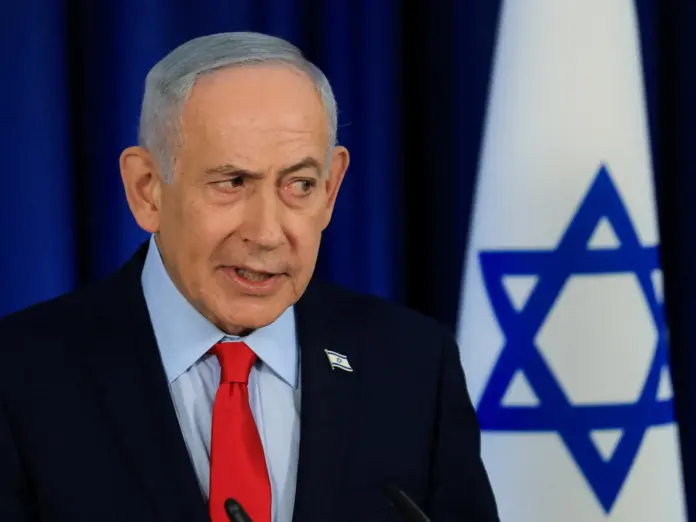
Gaza Strip — Israeli Prime Minister Benjamin Netanyahu has ordered the military to extend its control over Gaza to 70 percent of the territory, escalating a campaign of territorial expansion that has already shattered the terms of a ceasefire agreement brokered less than a year ago. Netanyahu confirmed on Thursday that Israeli forces currently hold 60 percent of the enclave and directed that figure be pushed higher — with the prime minister suggesting the final share could exceed even that threshold.
Netanyahu Gaza Annexation — The announcement marks a dramatic departure from the October 9, 2025 peace framework signed under Donald Trump, which required Israeli forces to withdraw behind a designated boundary known as the ‘Yellow Line’ and maintain control of approximately 58 percent of Gaza. At the time the ceasefire came into effect, Israel was occupying around 53 percent of the territory. Rather than pulling back, Israeli forces have since expanded their footprint by roughly 11 percent, according to satellite data and field assessments.
That same satellite data, gathered in March, identified at least 32 Israeli military outposts established inside Gaza since the ceasefire. Israel has also constructed a ground barrier and supporting infrastructure along what was designated as a temporary boundary line — physical changes that analysts say signal an intent to make the arrangement permanent.
Recommended Reading
![A Palestinian girl in the rubble of an overnight Israeli attack on structures and tents for displaced families in Gaza City [AFP]](https://world-tension.s3.us-east-2.amazonaws.com/articles/1192/ae54d387ffb94ff79c24b8b11824fff8.webp)
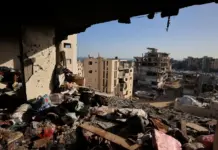
The consequences for Gaza’s 2.3 million residents have been catastrophic. By April 2026, Israeli actions had rendered approximately two-thirds of the enclave inaccessible to its own population, leaving only around 35 percent of the territory reachable. Oxfam and other humanitarian agencies have accused Israel of systematically restricting aid deliveries since October 2025. More than half of Gaza’s hospitals are non-functional, nearly all schools have been destroyed or damaged, and the United Nations and European Union have confirmed that Israel’s military campaign has had a catastrophic impact on human development across the territory. Economists estimate that more than $70 billion will be needed over the next decade for recovery and reconstruction.
The death toll since the war began in October 2023 has reached at least 72,819 people. During the ceasefire period alone, Israeli strikes killed at least 922 Palestinians in near-daily attacks. By 2025, international agencies had confirmed a famine inside Gaza, with Israel having decimated nearly all infrastructure required to sustain civilian life.
Strikes continued this week. Three Palestinians were killed in an Israeli attack on Khan Younis in southern Gaza, and a separate drone strike in eastern Gaza City killed three more and wounded others. Israel said it killed senior Hamas commander Imad Hassan Hussein Aslim and a colleague in a strike earlier in the week.
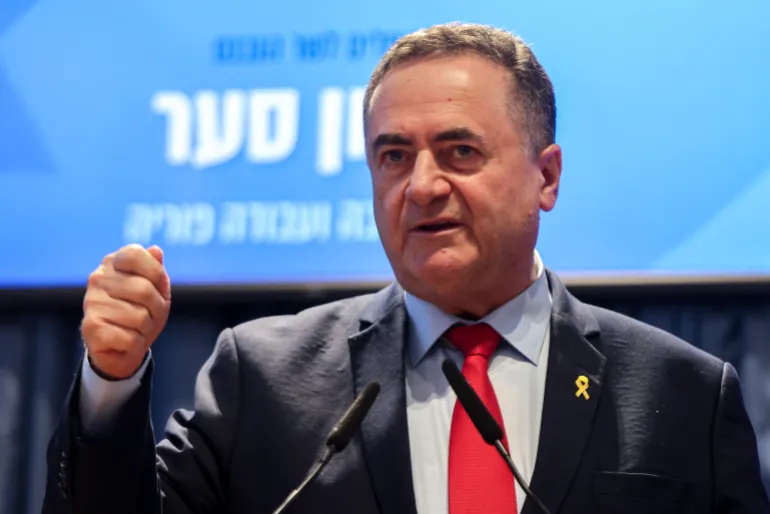
The territorial expansion has been accompanied by increasingly explicit statements from senior Israeli officials about the future of Gaza’s population. Defence Minister Israel Katz wrote about implementing what he termed ‘voluntary emigration from Gaza’ following the killing of Hamas leader Mohammed Odeh. National Security Minister Itamar Ben-Gvir and Finance Minister Bezalel Smotrich have used the same language. Israel’s Ministry of Defence did not respond to questions about those plans.
Michael Becker, a professor of international human rights law at Trinity College Dublin, said permanent Israeli control over Gaza would constitute unlawful annexation under international law. The International Court of Justice reaffirmed in a 2024 advisory opinion that acquisition of territory by force is prohibited. Becker added that permanently removing Palestinians from Gaza would violate the fundamental right to self-determination.
Netanyahu Gaza Annexation: Regional Implications
The UN’s Office for the Coordination of Humanitarian Affairs expressed alarm over how Gaza’s remaining population can subsist as the territory available to them continues to shrink. Ismail al-Thawabta, head of the Hamas-run Gaza government media office, described Netanyahu’s latest statement as a dangerous escalation.
International reaction has been muted. Germany, Israel’s second-largest weapons supplier after the United States, expressed concern on Friday through its Foreign Office and stated its opposition to any permanent division of Gaza. Berlin has also recently criticised Israeli annexation of territory in the occupied West Bank and the application of the death penalty solely to Palestinians. Despite those statements, Israel has not faced meaningful international sanctions, and continues to participate in international sporting and entertainment competitions. The U.S. State Department did not respond to requests for comment on Israel’s territorial expansion.
With Israeli parliamentary elections scheduled for October, Netanyahu’s push to extend military control carries clear domestic political dimensions. International attention has meanwhile shifted toward the U.S. and Israel’s conflict with Iran and Israeli operations in Lebanon, further reducing scrutiny of conditions inside Gaza itself.
The October ceasefire had been brokered by the United States alongside regional partners including Qatar and Turkey. Its terms now appear largely abandoned, with Israel having transformed what was framed as a temporary military posture into what critics and legal scholars increasingly describe as a permanent occupation — and, potentially, annexation — of one of the world’s most densely populated territories.