Israel Un Sexual Violence — The United Nations has added Israel to its official blacklist of parties that commit sexual violence in conflict zones, marking the first time the country has appeared on the list, following the verification of 31 cases of abuse perpetrated by Israeli military, police and prison service personnel against Palestinian detainees.
The findings, contained in a report produced by the office of Secretary General António Guterres, document violations including rape, gang rape, forced nudity, and violence to genitals. The 31 verified cases involved 14 men, seven women, nine boys and one girl. Thirteen of the incidents occurred in 2025, with the remaining 18 spread across the two preceding years.
Israel’s ambassador to the UN, Danny Danon, responded with fury on Thursday, accusing Guterres of spreading antisemitic lies. The Israeli UN mission went further, announcing it would refuse all contact with Guterres’s office for as long as he remains head of the international body — a dramatic diplomatic rupture that underscores the depth of tension between Israel and the UN over the conduct of its military campaign in Gaza.
Recommended Reading
The UN acknowledged that its efforts to conduct a full investigation had been hampered by obstruction from the Israeli government, as well as threats made against detainees who might otherwise have come forward.
The report’s findings are consistent with a growing body of evidence. Five Israeli guards were captured on leaked CCTV footage appearing to sexually abuse a Palestinian detainee at the Sde Teiman detention facility. A doctor who examined the detainee found corroborating wounds to his rectum. Despite the footage, Israel’s top military lawyer dropped charges against the guards in March of this year. Two Palestinian men separately described experiencing sexual abuse as part of torture at Israeli detention sites, and the UN Committee against Torture stated in November that it was deeply concerned about what it characterised as a de facto state policy of organised and widespread torture and ill-treatment of Palestinian detainees — abuse it said had gravely intensified following the Hamas-led attacks on Israel on 7 October 2023.
Research organisation Action on Armed Violence found that nearly nine in ten Israeli investigations into crimes committed by soldiers since the Gaza war began were closed without finding fault or resolution. Of 52 cases examined, only one resulted in a prison conviction.
Israeli Prime Minister Benjamin Netanyahu and Foreign Minister Gideon Sa’ar have launched a defamation lawsuit against the New York Times over a report based on testimonies from 14 Palestinian sexual abuse survivors — a legal move critics argue is designed to suppress accountability journalism rather than contest specific factual errors.
Hamas was added to the UN’s Conflict-related Sexual Violence report in the previous cycle, following allegations from twelve former hostages released from Gaza who described sexual violence at the hands of their captors.
Israel Un Sexual Violence: Regional Implications
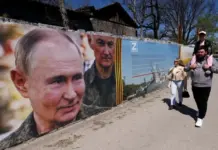
The same UN report simultaneously placed Russia on the blacklist for the first time, documenting 310 instances of conflict-related sexual violence by Russian armed and security forces against Ukrainian prisoners of war and civilian detainees. Those cases involved 280 men, 26 women and four girls, with violations including rape and genital mutilation carried out in Russia and in Russian-occupied Ukrainian territory. The full-scale Russian invasion of Ukraine began in February 2022 under President Vladimir Putin.
Ukraine’s Foreign Minister Andrii Sybiha welcomed the findings, describing the report as ‘a crucial step on the painful road to truth and accountability.’
The dual listings mark a significant moment for the UN’s annual accountability mechanism, which tracks wartime sexual violence across the globe. The inclusion of Israel — a close ally of Western powers and a permanent feature of international diplomatic discourse — is certain to intensify debate over the selective application of international humanitarian law and the capacity of multilateral institutions to hold all parties to armed conflict to the same standard. Israel’s decision to sever communication with Guterres’s office signals that it has no intention of engaging with the process, raising serious questions about whether any accountability mechanism can function without the cooperation of the party under scrutiny.