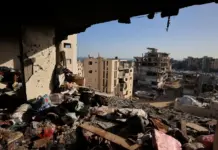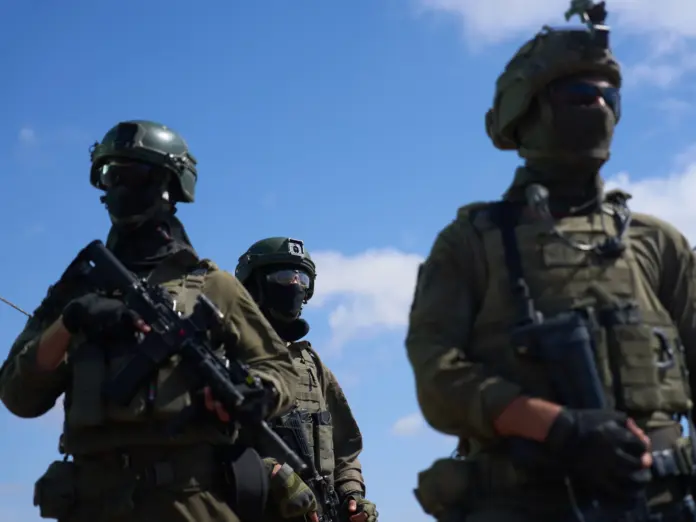
Gaza Death Toll — A deadly Eid holiday in Gaza has given way to an intensifying military campaign, with Israeli forces killing dozens of Palestinians, eliminating two successive Hamas military commanders within 11 days, and pushing territorial control well beyond limits set in a ceasefire agreement signed just months ago.
Between May 27 and May 30, at least 33 Palestinians were killed and more than 130 wounded across Gaza, according to the Gaza Ministry of Health. Among the dead was Ahmad Ali Helles, 37, struck by a drone on Shawa Square in Gaza City. Dr Jamal Abu Aoun, head of anesthesia at Yafa Hospital, was killed by Israeli forces near Al-Aqsa Martyrs Hospital in Deir el-Balah — a loss that compounded a deepening medical crisis after the hospital’s director announced that operating rooms had ceased functioning following the failure of a fourth backup generator.
The violence did not abate after the holiday. On May 31, an Israeli helicopter struck a crowded cafe near Gaza City’s fishermen’s port, killing at least two Palestinians and wounding around 18. A separate drone strike on the Abu Dhaher family home in Bureij refugee camp killed Khaled Abu Dhaher and wounded four others. A further strike on a gathering in eastern Maghazi killed five Palestinians.
Recommended Reading
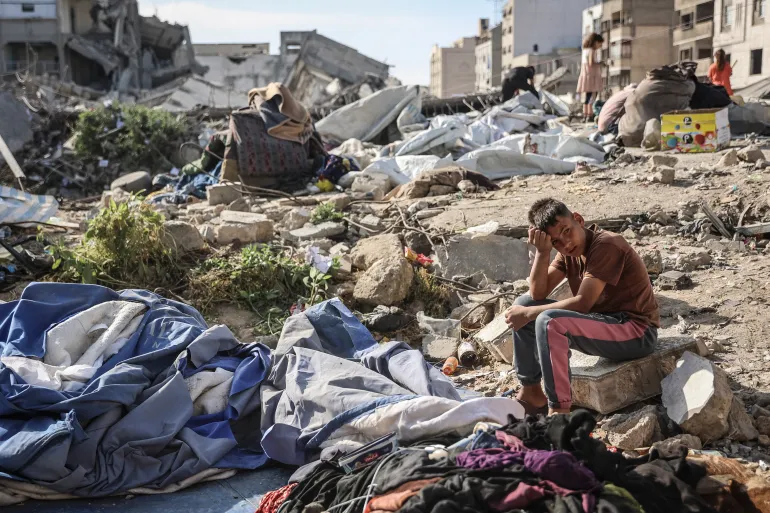
The cumulative toll since the October 11 ceasefire has reached at least 932 Palestinians killed as of June 1, according to Gaza’s Ministry of Health. Since the conflict began on October 7, 2023, at least 72,941 Palestinians have been killed.
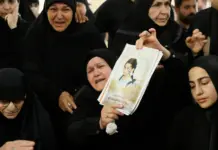
The military campaign has also claimed two of Hamas’s most senior military figures in rapid succession. On May 26, Israeli forces killed Mohammed Odeh, the newly appointed head of Hamas’s armed wing, along with his wife and children in Gaza City — just 11 days after the killing of his predecessor, Izz al-Din al-Haddad. Hours after Odeh’s funeral on May 27, an Israeli air raid on a residential building in Gaza City killed at least 10 people, including four children.
Territorial expansion is proceeding in parallel with the military strikes. Prime Minister Benjamin Netanyahu publicly directed the army on May 28 to extend Israeli control of Gaza from approximately 60 to 70 percent of the territory. Maps sent to aid organisations in mid-March already showed Israeli forces had pushed roughly 11 percent beyond the agreed demarcation line, placing effective control at 64 percent — well above the 53 percent stipulated in the October ceasefire agreement. Two ministers from the ruling Likud Party, May Golan and Amichai Chikli, have openly called for Israeli settlements to be rebuilt inside Gaza.
The international response has sharpened considerably. The European Union sanctioned four additional entities and three individuals identified as extremist settlers, including the settler organisation Nachala and its director Daniella Weiss. Also sanctioned was Regavim, a settler movement co-founded by Finance Minister Bezalel Smotrich. Separately, France asked prosecutors to open a criminal investigation into the treatment of French citizens detained from the Global Sumud Flotilla.
On May 28, several Israeli entities were added to the UN Secretary-General’s annual blacklist following credible suspicions of patterns of rape and conflict-related sexual violence. UN-verified cases documented in the report included 14 men, seven women, nine boys and one girl from Gaza and the West Bank, attributed to the Israeli military, the Israel Prison Service and special police units. Sde Teiman military camp and several other detention facilities were cited as sites of abuse. Israel responded by cutting ties with UN Secretary-General Antonio Guterres.
Gaza Death Toll: Regional Implications
Violence has simultaneously escalated across the West Bank. On May 30 in Madama, south of Nablus, dozens of settlers from an illegal outpost shot and wounded seven Palestinians, stealing more than 100 sheep. Settlers pushed a Palestinian’s car off a cliff near Deir Abu Mash’al after the owner refused to surrender his keys, and stabbed and wounded a resident defending his home in Qusra. On May 31, Israeli forces killed Imad Ishtayeh, 26, as he attempted to cross the separation barrier near ar-Ram.
In occupied East Jerusalem, seven homes were demolished in Qalandiya and others in Beit Hanina. An 18-month campaign of Israeli harassment in Silwan has forcibly displaced more than 50 families. Videos circulating on May 31 showed dozens of settlers raising Israeli flags and chanting inside the Al-Aqsa Mosque compound. One violent incident cut the other way: two Israeli teenage girls were wounded, one seriously, in an alleged car-ramming at Gush Etzion junction on May 31; the Palestinian assailant from the Hebron area was shot dead at the scene.
Against this backdrop, reconstruction efforts remain paralysed. None of the $17 billion pledged for Gaza’s reconstruction has reached the World Bank fund, leaving the territory’s civilian population without any material pathway toward recovery.