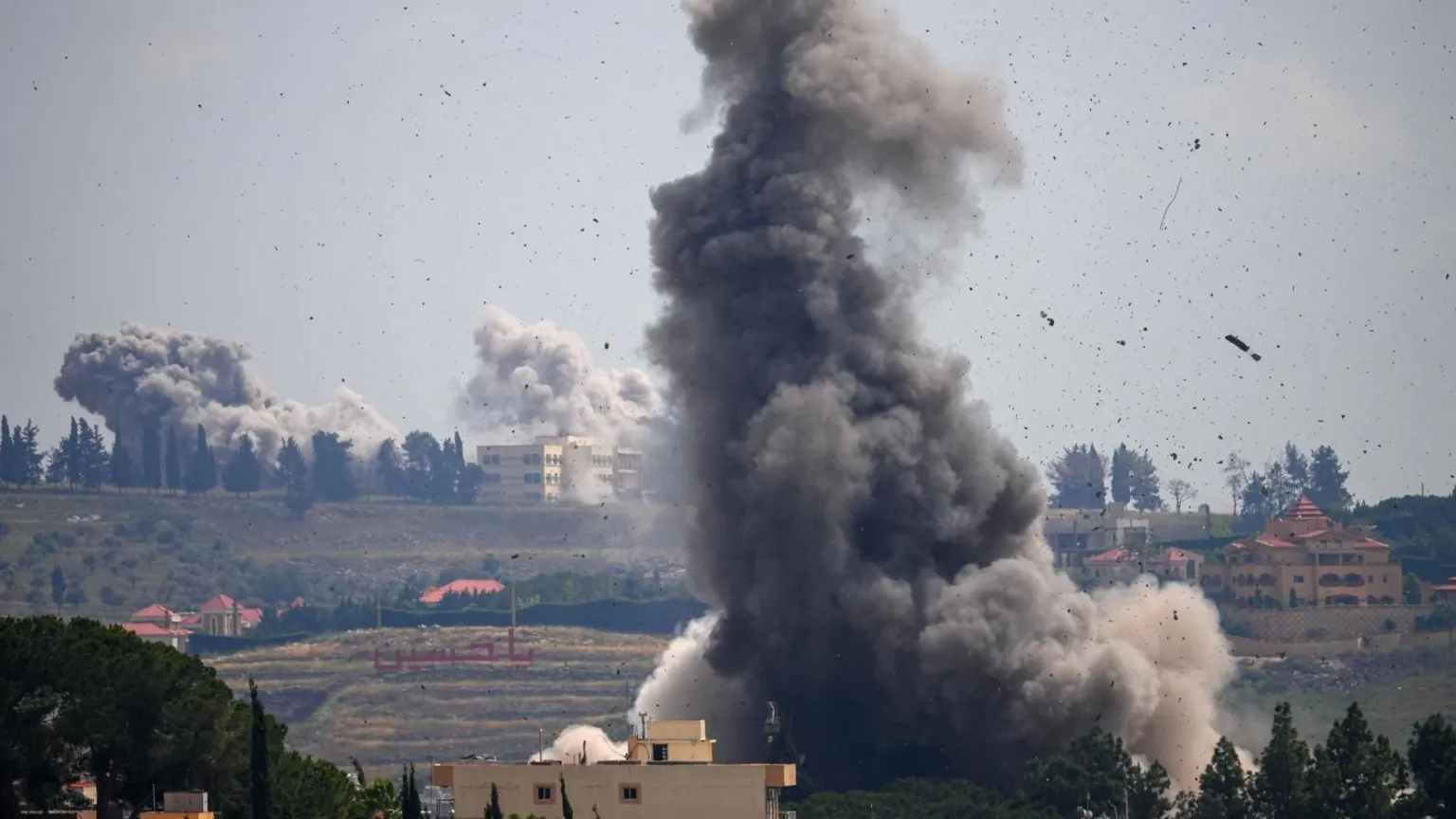
BEIRUT — A fragile partial ceasefire brokered by US President Donald Trump between Israel and Hezbollah showed immediate signs of strain Tuesday, as Israeli forces pressed ahead with strikes across southern Lebanon, Hezbollah fighters targeted Israeli armoured units, and the Israeli military intercepted two projectiles fired into northern Israel hours after the agreement was announced.
Israel-Hezbollah Ceasefire — Trump declared late Monday that both sides had agreed to halt hostilities, posting on Truth Social that all shooting would stop — Israel would not attack Hezbollah, and Hezbollah would not attack Israel. The arrangement, as described by Lebanon’s embassy in Washington, centres on Hezbollah suspending attacks on Israeli territory in exchange for Israel refraining from striking Beirut and its southern suburbs.
The announcement marked an extraordinary diplomatic moment: Trump stated he had communicated with Hezbollah through "highly placed representatives," making him the first US president to engage with the group either directly or through intermediaries. Washington has long designated Hezbollah a terrorist organisation.
Recommended Reading
![First responders gather at the site of an Israeli strike that hit near a hospital in the southern Lebanese city of Tyre on June 1, 2026 [AFP]](https://world-tension.s3.us-east-2.amazonaws.com/articles/1250/38dac2339f3d48b2bbbef12da7e644e4.webp)
Trump confirmed he spoke personally with Israeli Prime Minister Benjamin Netanyahu and persuaded him to pull back troops preparing to advance on Beirut. Lebanese President Joseph Aoun contacted US Secretary of State Marco Rubio regarding the proposal, and Trump personally informed Lebanese ambassador Nada Moawad that Netanyahu had given his approval. Lebanon’s UN Ambassador Ahmad Arafa praised the Trump administration for "constructive efforts aimed at giving diplomacy a chance."
The path to the agreement was turbulent. Trump placed an expletive-laden call to Netanyahu demanding he stand down from planned Beirut strikes, according to two US officials. Netanyahu had already ordered strikes on Beirut’s southern suburbs in response to rocket and drone attacks, and he made clear Tuesday that Israel would resume targeting the capital if Hezbollah launched further assaults on Israeli cities. He also stated unambiguously that Israeli ground forces would continue operating in southern Lebanon as planned.
That position drew sharp domestic criticism from opposing directions. Far-right National Security Minister Itamar Ben Gvir condemned Netanyahu for yielding to Trump’s pressure, while opposition leader Yair Lapid declared Israel had become "a client state in full."
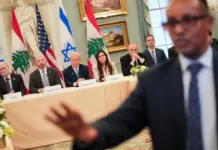
Within Hezbollah, the ceasefire’s reception was similarly divided. Senior lawmaker Hassan Fadlallah rejected any arrangement he characterised as one-sided, calling instead for a comprehensive ceasefire. Parliamentary Speaker Nabih Berri, however, signalled the group would accept what he termed a "real ceasefire." Further negotiations between Israeli and Lebanese diplomats were scheduled for Tuesday and Wednesday in Washington.
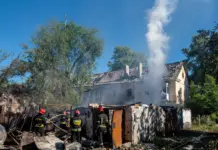
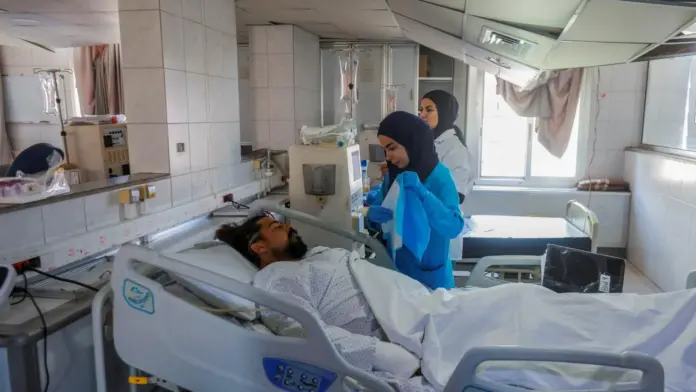
On the ground, the violence that preceded the announcement left deep wounds. On Monday afternoon, Israeli air strikes hit buildings adjacent to Jabal Amel hospital in the southern city of Tyre, killing four people and injuring 127 others, including 39 hospital staff — four of them critically. The hospital’s director, Dr Wael Mroueh, oversaw the chaos that followed. Among those in the maternity ward at the time of the strike was a newborn named Fares, delivered just four hours earlier. The Israeli military said it struck Hezbollah terrorist infrastructure in the vicinity and acknowledged damage to the hospital, but denied the facility was a target.
The strike was not an isolated incident. Lebanon’s health ministry reported that 128 paramedics and healthcare workers have been killed in 159 attacks on ambulances and medical facilities over the past three months. On Tuesday morning, an Israeli strike hit the civil defence agency centre in Kfar Sir in the Nabatieh district, causing structural damage but no casualties. A dentist from Qlayaa village was killed alongside his daughter and son in a drone strike on the road between Marjayoun and Nabatieh. The Israeli military subsequently issued a fresh evacuation order for Nabatieh town Tuesday afternoon.
Israel-Hezbollah Ceasefire: Regional Implications
Hezbollah’s military wing confirmed its fighters struck Israeli tanks and troops in Haddatha, Bayada and Zawtar al-Sharqiya using drones, missiles and artillery shells.
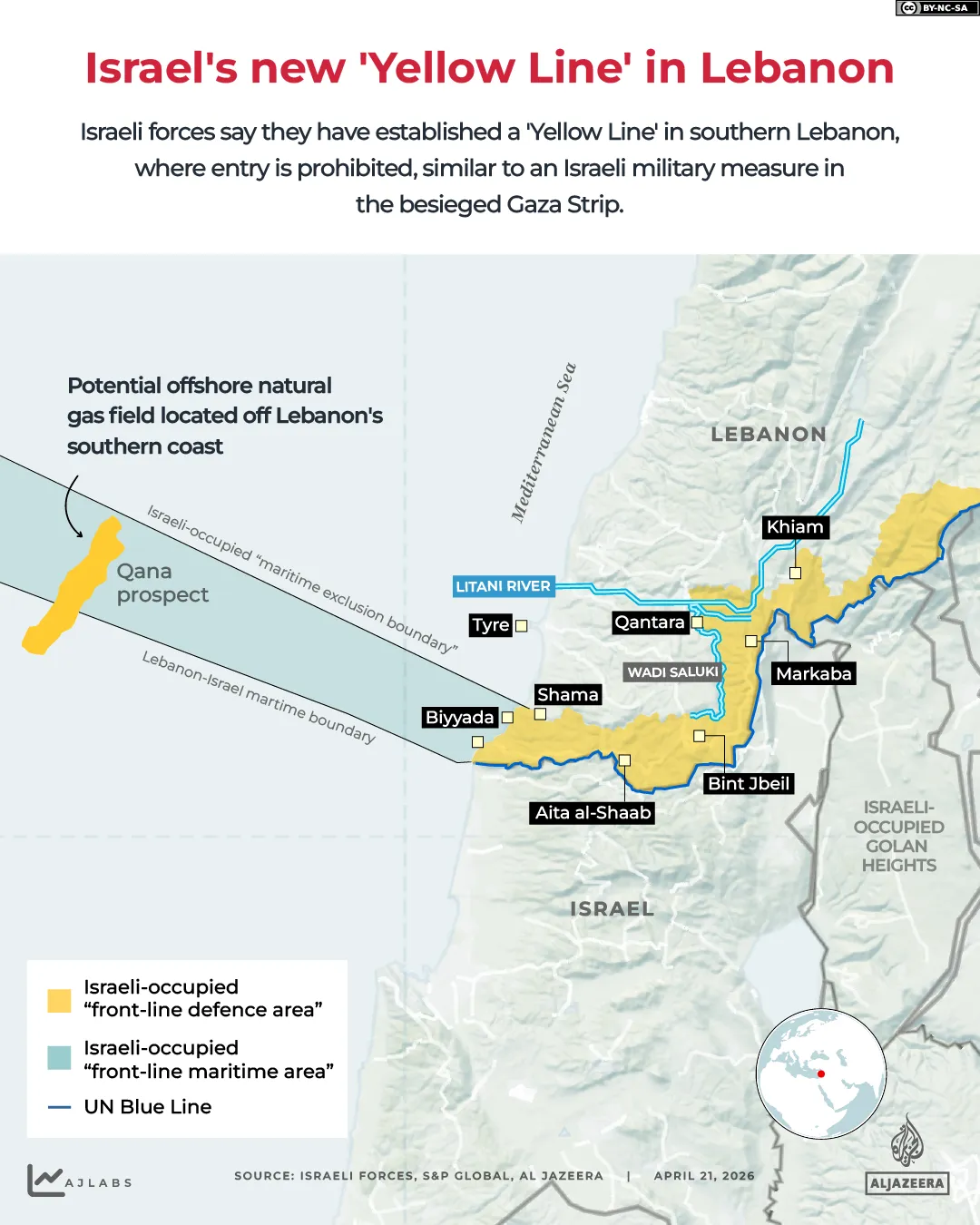
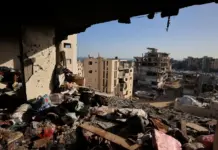
The broader humanitarian toll is staggering. Lebanon’s health ministry recorded more than 3,468 deaths and 10,269 wounded since the current escalation began in early March, when Hezbollah launched rockets into Israel following US-Israeli strikes on Tehran that killed Iran’s supreme leader. Over one million people have been displaced, and Israeli evacuation orders now cover more than one-eighth of Lebanese territory. Israel has occupied roughly one-fifth of the country since that escalation. Israel has reported 25 soldiers and four civilians killed during the conflict.
The war’s regional dimensions further complicate any ceasefire. Iranian Foreign Minister Abbas Araghchi described the US-Iran truce as encompassing all fronts, including Lebanon, and Tehran has stated that an Israeli withdrawal from Lebanon is among its conditions for ending hostilities with Washington. Iranian state media reported Sunday that Tehran had suspended message exchanges with Washington in protest over Israeli military actions, and Iran’s Tasnim news agency indicated that indirect US-Iran negotiations could be paused over the Lebanon situation.
A previous ceasefire announced in November 2024 failed to hold, with near-daily Israeli breaches reported in the months that followed. Whether the latest agreement proves more durable will depend heavily on the diplomatic talks scheduled in Washington this week — and on whether both sides can restrain forces that have shown little appetite for restraint.