Iran Water Crisis — Military strikes targeting Iranian water infrastructure have pushed one of the world’s most water-stressed nations closer to the edge of collapse, compounding a crisis years in the making and threatening millions of civilians as Tehran engages in negotiations to end a three-month war with the United States.
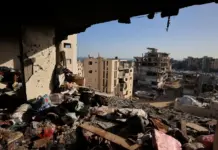
On March 7, Iranian Foreign Minister Abbas Araghchi confirmed that US forces had bombed a freshwater desalination plant on Qeshm Island, a strategically positioned landmass in the Strait of Hormuz. The strike cut water supplies to 30 villages, delivering a targeted blow to civilian infrastructure in a country already struggling to provide its population with adequate water. US and Israeli forces have attacked desalination plants and broader water infrastructure across Iran during the conflict.
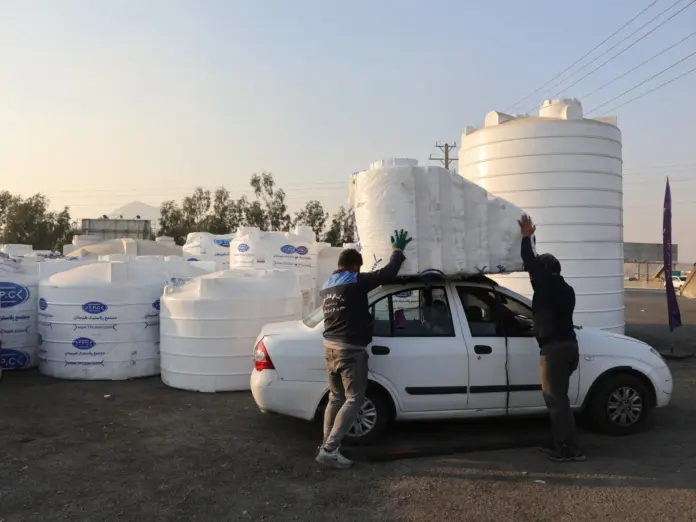
The military campaign has unfolded against a backdrop of extraordinary environmental fragility. By November 2025, Iran was enduring its worst water crisis in decades — the culmination of five consecutive years of drought. Nineteen major dams had run completely dry. Tehran’s Amir Kabir Dam, a critical reservoir for the capital, held just 8 percent of its capacity. President Masoud Pezeshkian issued a stark public warning: without significant rainfall before December 2025, the government would be forced to ration water supplies.
Recommended Reading
The warning proved prescient. Water shortages triggered widespread protests in December 2025 and into January, with demonstrators citing worsening living conditions and surging inflation. The unrest echoed earlier episodes of water-driven civil discontent — protests erupted in the southern Khuzestan province in 2021, and demonstrations in 2018 saw Iranians directly accuse their government of chronic water mismanagement.
The scale of Iran’s structural water problem is staggering. The World Resources Institute’s Aqueduct Data places Iran in the ‘extremely high’ baseline water stress category — the most severe classification available. In an average year, the country consumes more than 80 percent of its total renewable water supplies. Professor Kaveh Madani, Director of the United Nations University Institute for Water, Environment and Health (UNU-INWEH), coined the term ‘water-bankruptcy’ to describe precisely this condition: a nation systematically drawing down water reserves faster than they can be replenished.
A central driver of that overconsumption is policy. Since the Islamic Revolution in 1979, Iran has pursued aggressive agricultural self-sufficiency, a political priority that now accounts for roughly 90 percent of the country’s total water use. To support this ambition, Iran became one of the world’s most prolific dam builders — a construction boom that has altered river systems and depleted aquifers. The Zayandeh Rud river in Isfahan province, once a symbol of Persian civilisation, now runs dry for most of the year, choked off by water-intensive industries upstream.
Facing the crisis before the war began, Iranian authorities attempted a range of emergency measures. In November 2025, the government launched cloud seeding operations to artificially induce rainfall. Officials announced penalties for households and businesses exceeding water consumption thresholds. President Pezeshkian publicly condemned the unauthorised drilling of wells and the excessive extraction of groundwater — practices that have accelerated aquifer depletion across the country.
Iran Water Crisis: Regional Implications
There is a narrow environmental silver lining: the current year has brought above-normal precipitation levels to much of Iran, a marked contrast to the five predominantly dry years that preceded it. But that reprieve does little to offset the structural deficit, the damaged infrastructure, or the environmental toll of the conflict itself. An analysis by LiveScience calculated that between February 28 and March 14, the war generated approximately 5.6 million tonnes of carbon dioxide and other greenhouse gases — emissions that contribute directly to the warming and drying trends already devastating the region’s water systems.
Iran is currently engaged in negotiations with the United States aimed at ending the three-month conflict. The outcome of those talks will determine whether damaged civilian infrastructure — including the Qeshm desalination plant — can be repaired and whether the country can begin addressing a water emergency that experts warn is approaching a point of no return. For the 30 villages cut off by the Qeshm strike, and for millions more Iranians dependent on a system already stretched beyond its limits, the stakes could not be higher.