Iran Nuclear Deal — The United States and Iran have reached a preliminary memorandum of understanding that would extend their ceasefire for 60 days and lay the groundwork for permanently ending their conflict, though the agreement has yet to receive final approval from either government.
The proposed framework, reached on Thursday, addresses some of the most combustible flashpoints between the two nations: the militarisation of the Strait of Hormuz, Iran’s advanced nuclear enrichment programme, and the broader regional proxy network Tehran has cultivated across the Middle East. Official US sources confirmed the framework’s existence but noted it still requires President Donald Trump‘s sign-off. Iran’s Tasnim news agency cautioned that the text had not yet been finalised or formally confirmed by Tehran.
At the heart of the maritime provisions is a commitment to restore unrestricted commercial shipping through the Strait of Hormuz — a waterway through which roughly 20 percent of the world’s oil and liquefied natural gas supplies flow during peacetime. Since early March, Iran has required vessels to negotiate transit with the Islamic Revolutionary Guard Corps (IRGC), with some operators paying tolls of as much as $2 million per ship. Under the proposed MOU, Iran would have 30 days to remove all mines it has laid in the strait. In exchange, the US naval blockade imposed on Iranian ports in April would be lifted proportionally as commercial shipping is restored.
Recommended Reading
Washington has also agreed to waive a number of sanctions, allowing Iran to sell oil freely on international markets, and committed to broader discussions on sanctions relief and the unfreezing of Iranian assets held overseas. A mechanism for Iran to receive humanitarian aid is also included in the draft text.
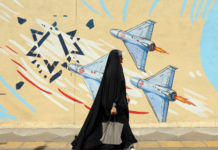
The nuclear dimension of the agreement carries particular weight. Iran would commit to not pursuing the development of a nuclear weapon — a pledge that comes as Tehran is believed to hold an estimated 440 kilograms of uranium enriched to 60 percent purity. Weapons-grade material requires enrichment to 90 percent, while civilian nuclear energy programmes typically operate between 3 and 5 percent. During informal talks in Geneva on February 26, Iranian negotiators offered to downblend their stockpile to 3.67 percent — the ceiling permitted under the 2015 Joint Comprehensive Plan of Action, the landmark nuclear deal from which Trump withdrew during his first term. The fate of that stockpile is designated as the first substantive issue to be addressed during the 60-day negotiating window.
The Trump administration has also signalled its intention to use the talks to press Iran on its support for regional armed groups, including Hezbollah in Lebanon, the Houthis in Yemen, and affiliated factions operating in Iraq and Syria.
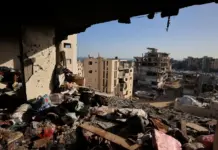
The Lebanon dimension of the agreement is significant. The MOU reportedly includes provisions for ending Israel’s war on Lebanon, a conflict that has killed more than 3,000 people — among them paramedics and civilians. Hezbollah began striking northern Israel following the first US-Israeli attacks on Tehran on February 28. Israel intensified its military campaign on March 2, expanding its invasion and occupation of towns and villages across southern Lebanon, where it now controls a substantial portion of territory.
Iran Nuclear Deal: The Nuclear Dimension
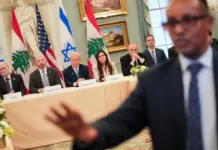
Diplomatic momentum behind the deal has been building across multiple channels. Pakistan has played a notable mediating role, and its Deputy Prime Minister and Foreign Minister Ishaq Dar is scheduled to meet US Secretary of State Marco Rubio in Washington on Friday. An Iranian delegation led by senior officials also travelled to Qatar for a separate round of negotiations.
Despite the diplomatic activity, hostilities have not ceased. On Thursday, US Central Command (CENTCOM) announced it had shot down five Iranian attack drones and struck a ground control station in Bandar Abbas, a city that serves as a critical hub for Iranian naval forces. The US military had also launched a series of strikes near the Strait of Hormuz last week. Kuwait’s military separately reported that its air defence systems intercepted hostile missiles and drones in the early hours of Thursday.
The preliminary agreement represents the most substantive diplomatic opening between Washington and Tehran in years, but significant obstacles remain. The gap between a preliminary MOU and a binding accord is wide, and both governments face domestic pressures that could complicate ratification. Whether the 60-day window proves sufficient to bridge decades of mutual hostility — over nuclear ambitions, regional influence, and maritime rights — remains deeply uncertain.