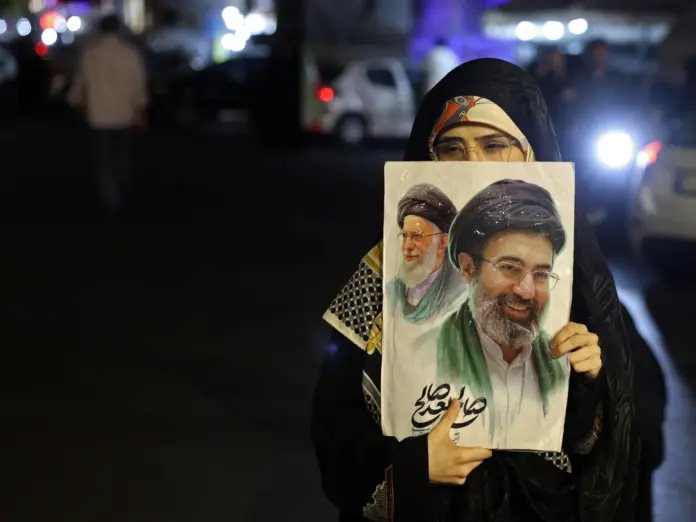
Iran Us Nuclear Talks — Diplomatic efforts to resolve the fate of Iran’s enriched uranium stockpile have stalled, with Tehran and Washington locked in a deepening dispute that threatens to unravel fragile nuclear negotiations. Iran’s supreme leader Ayatollah Mojtaba Khamenei has issued a directive forbidding the transfer of enriched uranium out of the country, while President Donald Trump declared Thursday that the United States will not permit Iran to retain the material under any circumstances.
Speaking at the White House, Trump was unambiguous: ‘We will get it. We don’t need it, we don’t want it. We’ll probably destroy it after we get it, but we’re not going to let them have it.’ Trump has also assured Israeli officials that any peace agreement will include a binding clause requiring the removal of Iran’s enriched uranium from its territory.
At the centre of the dispute sits roughly 440 kilograms — approximately 970 pounds — of uranium enriched to 60 percent purity. While that falls well short of the 90 percent threshold required for weapons-grade material, nuclear experts warn that 60 percent enrichment represents a critical inflection point from which the leap to weapons-grade becomes significantly faster. International Atomic Energy Agency chief Rafael Grossi stated in early March that if Iran’s current stockpile were enriched to 90 percent, it would be sufficient to produce more than ten nuclear warheads.
Recommended Reading
Iran’s top diplomat Abbas Araghchi, speaking to reporters on the sidelines of a BRICS foreign ministers meeting in New Delhi, acknowledged the impasse directly. He described the enriched uranium question as a ‘deadlock’ and said the topic was being ‘postponed’ to later stages of ongoing talks. The admission underscores how central — and contentious — the issue has become in negotiations that were already proceeding cautiously.
During informal talks held in Geneva on February 26, Iran offered a potential compromise: downblending its 60 percent stockpile to 3.67 percent in an irreversible process. That offer has not broken the stalemate, with Washington insisting the material must leave Iranian soil entirely.
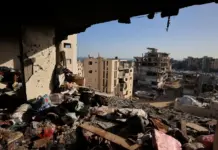
The physical reality of the stockpile adds further complexity. Almost all of Iran’s enriched uranium exists in the form of uranium hexafluoride gas, stored in small canisters roughly the size of scuba tanks. The substance poses severe hazards — when released, it forms highly toxic and corrosive fluoride compounds that are lethal when inhaled and can cause severe burns on contact with skin. Much of the stockpile is believed to be located underground, beneath the rubble of nuclear facilities destroyed during last year’s 12-day Iran-Israel war.
In June 2025, Trump declared that US strikes had ‘obliterated’ three Iranian nuclear enrichment facilities at Fordow, Natanz, and Isfahan. The fate of the uranium stored at those sites — and the logistical challenge of safely recovering and transporting it — remains a formidable obstacle to any agreement.
The IAEA maintains specific protocols for transporting enriched uranium, using heavily fortified standardised steel cylinders known as Type 30B containers, engineered to withstand extreme pressure and heat and deliberately kept small to prevent criticality risks. Historical precedent exists for large-scale nuclear material transfers: in 1994, in an operation codenamed Project Sapphire, US forces airlifted approximately 600 kilograms of weapons-grade uranium out of Kazakhstan following the collapse of the Soviet Union. Teams worked 12-hour shifts, six days a week, for four weeks to move the material safely from a metallurgical plant to a local airport.
Iran Us Nuclear Talks: The Nuclear Dimension
The current crisis is rooted in a decade of escalating tensions. Iran signed the Joint Comprehensive Plan of Action (JCPOA) with the United States in 2015, agreeing to cap uranium enrichment at 3.67 percent in exchange for sanctions relief. International inspectors confirmed Iran was meeting its obligations when Trump withdrew from the agreement in 2018 and reimposed sweeping sanctions. The bombing of Iran’s Natanz facility in 2021 — which Tehran attributed to Israel — prompted Iran to dramatically accelerate enrichment, pushing levels to nearly 60 percent.
Israeli Prime Minister Benjamin Netanyahu has set out conditions he says must be met before the conflict can be considered resolved: Iran’s enriched uranium must be removed, Tehran must cease support for proxy armed groups, and its ballistic missile programme must be dismantled. The enriched uranium question sits at the intersection of Israeli security demands, American non-proliferation policy, and Iranian sovereignty — a combination that has so far proven resistant to compromise.
With Khamenei’s directive effectively ruling out voluntary transfer and Washington refusing to accept any arrangement that leaves the material inside Iran, the path to a negotiated settlement remains unclear. The coming weeks of diplomacy will test whether the deadlock Araghchi described in New Delhi can be broken before the window for a negotiated resolution closes entirely.