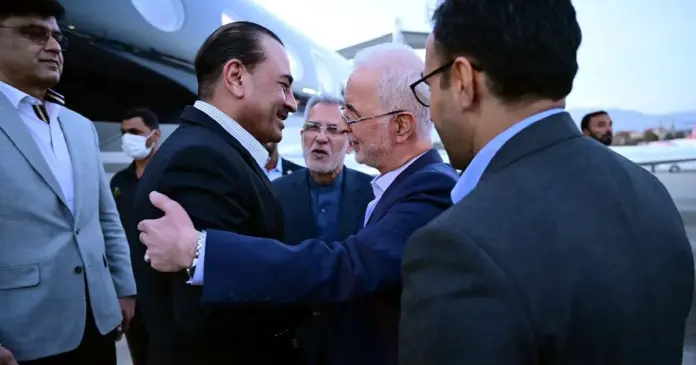
Iran Us Nuclear Talks — Diplomatic efforts to avert a broader Middle East conflict intensified Friday as Pakistan’s Field Marshal Asim Munir arrived in Tehran alongside a Qatari delegation, seeking to bridge a widening chasm between Iran and the United States over nuclear negotiations — even as Israeli air strikes killed roughly a dozen people in southern Lebanon and a landmark UN disarmament conference ended in failure.
Iran’s Interior Minister Eskandar Momeni received Munir upon his arrival in the Iranian capital, where the Pakistani military chief has been leading a mediation push that dates to an initial ceasefire effort on April 8. The visit comes amid cautious signals from both sides. US Secretary of State Marco Rubio described ‘slight progress’ in Friday’s talks, while Iran’s Foreign Ministry spokesman characterised the differences between Tehran and Washington as ‘deep and significant.’
Iran’s Foreign Minister Abbas Araghchi told UN Secretary-General Antonio Guterres that Washington’s ‘excessive demands’ remain the central obstacle to any deal. Tehran’s spokesman Esmaeil Baghaei added that current negotiations are focused on ending the conflict, with the finer details of the nuclear issue not yet on the table. President Trump, speaking to supporters in New York state, struck a more optimistic tone, declaring the US-Israel confrontation with Iran ‘will be over with soon’ — and separately claiming that Venezuelan oil revenues had ‘paid for the cost of the war about 25 times over.’
Recommended Reading
As diplomats talked, Iran’s Islamic Revolutionary Guard Corps reported that 35 ships transited the Strait of Hormuz with Iranian permission over a single 24-hour period, a pointed demonstration of Tehran’s continued leverage over one of the world’s most critical energy chokepoints.
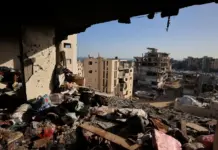
The diplomatic backdrop grew darker with fresh violence in Lebanon. Israeli air strikes on the country’s south killed approximately a dozen people Friday, adding to a mounting toll that the Lebanese Health Ministry places at least 3,111 dead and 9,432 wounded since March 2. Israel also issued a forced displacement order targeting a specific building in the coastal city of Tyre, deepening fears among civilians already caught in a grinding campaign of bombardment.
The humanitarian picture in Gaza drew sharp condemnation from London. UK Foreign Secretary Yvette Cooper declared that Gaza’s healthcare system had collapsed entirely — a statement carrying particular weight given that Britain continues to maintain arms sales, intelligence sharing and military cooperation with Israel. Separately, at least 15 activists aboard a Gaza aid flotilla reported incidents of sexual assault, including rape, by Israeli forces following their abduction from vessels in international waters, allegations that are certain to intensify international scrutiny of Israeli military conduct.
Nine countries — among them Australia, Canada, France and Germany — issued a joint statement demanding Israel halt illegal settlement construction in the occupied West Bank, reflecting growing frustration among traditional Western allies over Israeli policies in Palestinian territories.
Iran Us Nuclear Talks: The Nuclear Dimension
Against this volatile backdrop, a month-long UN conference on nuclear nonproliferation ended without agreement, compounding anxieties about the global arms control architecture. Vietnam’s Do Hung Viet, who presided over the conference, confirmed it could not achieve agreement on its substantive work after four weeks of negotiations among member states of the Treaty on the Non-Proliferation of Nuclear Weapons, which counts 191 signatories.
The collapse is a significant setback for disarmament advocates. The NPT recognises five nuclear-armed states — China, France, Russia, the United Kingdom and the United States — all of which possessed weapons before January 1, 1967. Four additional countries — India, Pakistan, Israel and North Korea — have since developed nuclear arsenals outside the treaty framework. According to the Stockholm International Peace Research Institute, the US and Russia together held roughly 90 percent of the world’s 12,241 nuclear warheads as of January 2025, underscoring the stakes of any breakdown in arms control diplomacy.
The simultaneous failure of the nonproliferation conference and the stalling of Iran-US nuclear talks paint a troubling picture for global security. With mediation efforts in Tehran ongoing and Israeli military operations continuing on multiple fronts, the coming days will test whether Pakistan and Qatar’s diplomatic intervention can produce the breakthrough that formal multilateral channels have so far failed to deliver.