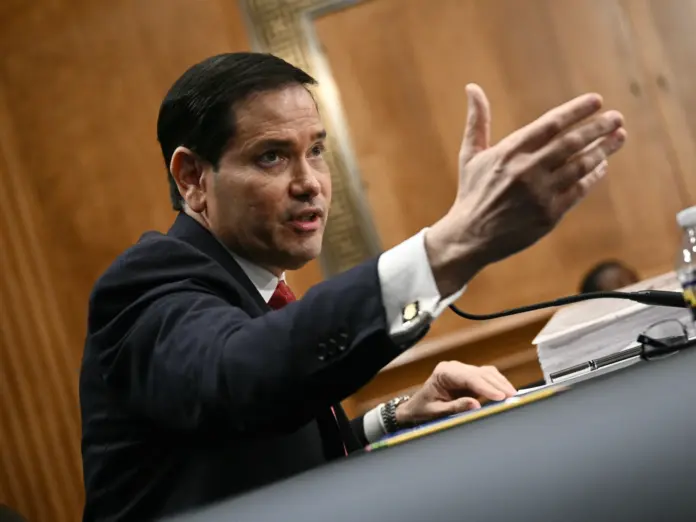
WASHINGTON, DC — US Secretary of State Marco Rubio told the Senate Foreign Relations Committee on Tuesday that Washington is broadening its nuclear demands on Iran, signalling a hardening American posture even as both sides claim talks are ongoing. The testimony offered the most detailed public account yet of the diplomatic landscape surrounding a war that has killed thousands of people across Iran and Lebanon since it began on February 28.
Iran Nuclear Demands — Rubio confirmed that Iran’s Supreme Leader Mojtaba Khamenei appears to be taking a more direct role in negotiations, though his engagement has been limited to written communications passed through intermediaries. Khamenei has not appeared publicly since US air strikes killed his father and predecessor on the opening day of the conflict. The opacity surrounding his involvement has complicated efforts to gauge Tehran’s true intentions.
Iran is currently reviewing the latest version of a US peace proposal, one that President Donald Trump reportedly tightened in recent days. Trump posted on Truth Social that conversations with Iran have been continuous, a claim that sits in tension with a statement from Iran’s Mehr news agency indicating Tehran had not communicated with Washington for several days. The contradictory signals reflect the fragile and contested nature of a diplomatic process that has yet to produce a durable ceasefire.
Recommended Reading
The April 8 truce between the two countries has not held comprehensively. Israel continued deadly strikes on towns across southern Lebanon on Tuesday, a day after a US-mediated partial ceasefire was announced. The persistence of those attacks drew a sharp warning from Iran’s parliament speaker and chief negotiator, Mohammad Bagher Ghalibaf, who said that if Israeli aggression against Lebanon continues, Tehran will halt negotiations with the United States entirely and move toward direct confrontation with the enemy.
Rubio outlined Washington’s core conditions for any settlement. The first, he said, was Iran’s agreement to reopen the Strait of Hormuz, which Tehran effectively closed after the war began. Before the conflict, the waterway carried approximately 20 percent of the world’s oil and liquefied natural gas supplies, making its closure a significant shock to global energy markets. Trump has also demanded that Iran commit to never developing nuclear weapons.
Beyond those baseline requirements, Rubio disclosed that talks may now encompass aspects of Iran’s nuclear programme that were previously off the table. Iran must commit to negotiations over its stockpile of highly enriched uranium, he said, and any sanctions relief would only follow substantial concessions on both the nuclear programme and that enriched material. The expanded scope of demands represents a notable escalation in what Washington is seeking from a deal.
Rafael Grossi, director-general of the UN International Atomic Energy Agency, offered a cautiously encouraging assessment, noting that Iran has halted many nuclear activities that were previously underway. Grossi nonetheless stressed that any agreement ending the war must include robust verification and monitoring mechanisms — a condition that has historically proven contentious in negotiations with Tehran.
Iran Nuclear Demands: The Nuclear Dimension
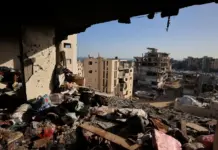
The war, now entering its fourth month, has reshaped the region dramatically. Israel has invaded deep into Lebanon and struck parts of the capital Beirut, while the closure of the Strait of Hormuz has reverberated through global commodity markets. The death toll, concentrated primarily in Iran and Lebanon, numbers in the thousands, with no authoritative final count yet established.
The diplomatic picture remains deeply uncertain. Iran’s parliament speaker has tied continued talks explicitly to Israeli behaviour in Lebanon — a variable Washington does not fully control. Trump’s tightening of the US proposal adds further complexity, raising the question of whether Tehran will view the revised terms as a basis for negotiation or a reason to walk away. With the supreme leader communicating only through intermediaries and the partial ceasefire already under strain, the path to a comprehensive settlement appears narrow and fraught.