Israeli Forces Lebanon Heritage — Israeli forces have captured Beaufort Castle, a 900-year-old Crusader fortress perched 700 meters above southern Lebanon, as part of an offensive that has pushed deeper into Lebanese territory than any Israeli military operation in a quarter-century. The seizure of the medieval stronghold — known in Arabic as Qalaat al-Shaqif — came on Saturday, with Lebanon’s Culture Minister warning that the campaign is placing the country’s ancient heritage in grave jeopardy.
The castle, which rises above the Litani River near the city of Nabatieh and once served as one of the region’s most strategically commanding fortifications, was directly struck by bombardments, according to Culture Minister Ghassan Salame. The 12th-century structure, originally built by Crusaders and rebuilt repeatedly over the centuries, had previously been seized by Israel during its 1982 invasion of Lebanon, with Israeli forces withdrawing in 2000 after an 18-year occupation.
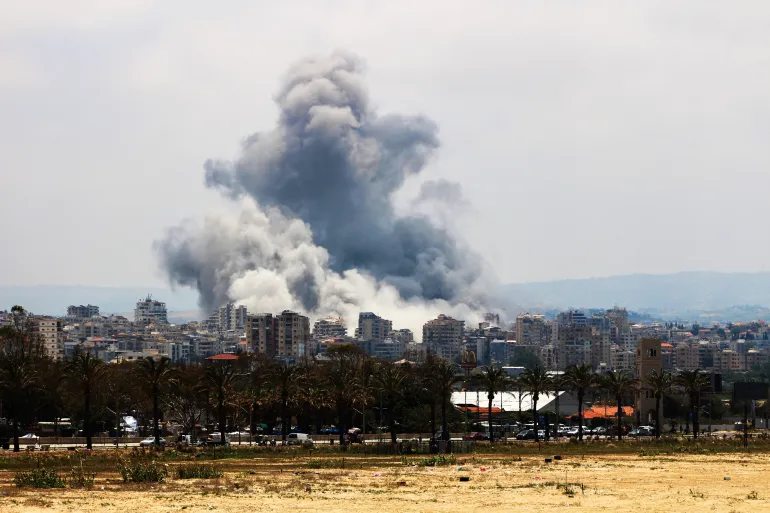
Israeli troops have now crossed north of the Litani River and advanced toward the Zahrani River, marking the deepest Israeli incursion into Lebanon in 26 years. The military push has triggered a humanitarian catastrophe, uprooting more than one million people across the country. Around the ancient city of Tyre alone, forced displacement orders and sustained bombardment have driven an estimated 200,000 people from their homes.
Recommended Reading
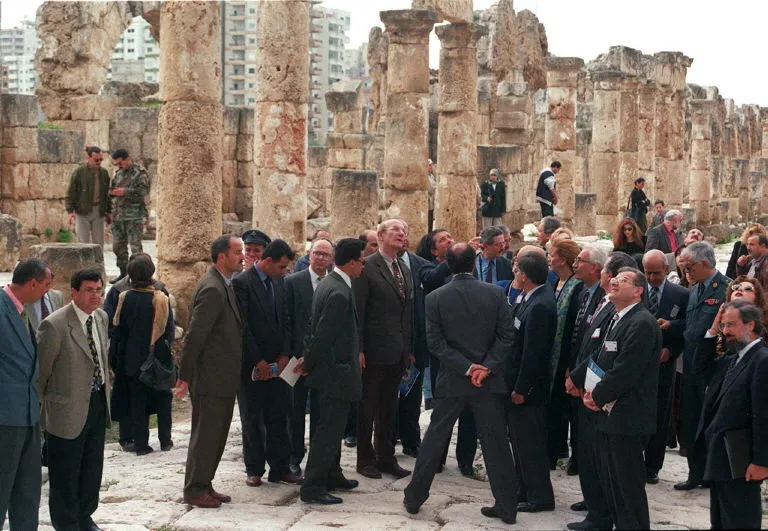
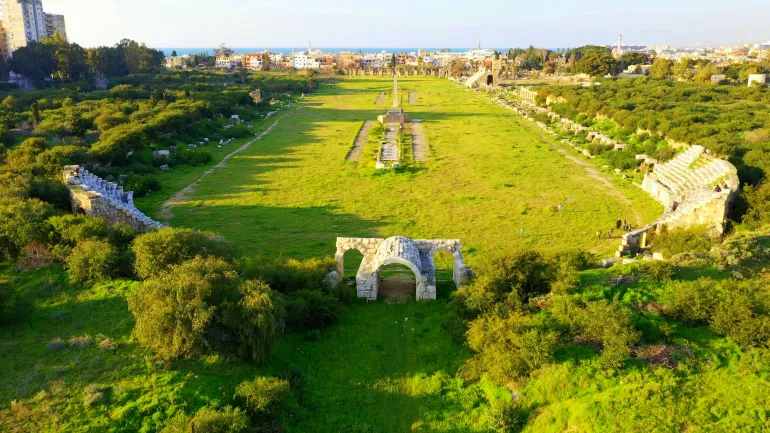
Minister Salame stated that Israeli strikes have fallen very close to the ruins of Tyre, a city dating to the third millennium BC that grew into one of the Mediterranean’s dominant maritime powers. Located approximately 83 kilometers south of Beirut, Tyre contains some of the most significant remains of the ancient Phoenician world, including extensive Roman-era ruins and the site of one of the largest hippodromes of the Roman Empire. The city’s history includes Alexander the Great‘s famous siege in 332 BC, during which he constructed a causeway linking the island city to the mainland — a feat of military engineering that permanently altered the city’s geography.
The threat to Tyre is part of a broader pattern of cultural endangerment that Salame has publicly condemned. Lebanon is home to at least 39 cultural sites granted provisional enhanced protection under international law — a designation that provides the highest level of legal safeguard available under the 1954 Hague Convention and its 1999 Second Protocol. Non-compliance with that protection constitutes a serious breach of international humanitarian law.
"Israeli attacks are putting heritage sites in serious danger," Salame warned, as concern mounted over the fate of sites that have survived millennia of conquest, trade, and transformation.
Beyond Tyre and Beaufort Castle, the conflict zone encompasses a constellation of irreplaceable archaeological and historical sites. Four other medieval castles — Qalaat Tibnin, Qalaat Chakra, Qalaat Deir Kifa, and Qalaat Chamaa — stand in the Mount Amel region, all originating as Crusader strongholds in the 12th century. Near Sidon, roughly 40 kilometers south of Beirut, the Eshmun sanctuary — a 3.6-hectare complex on the banks of the Awali River dedicated to the Phoenician healing god Eshmun — sits within the conflict’s expanding shadow. Sidon itself rose to prominence as one of Phoenicia’s leading ports, accumulating wealth through Mediterranean trade, purple dye production, glassmaking, and metalwork.
Israeli Forces Lebanon Heritage: Regional Implications
Other endangered sites include the Chhim Archaeological Site in Lebanon’s Chouf region, which preserves the remains of a Roman and Byzantine village; the Hasbaiyya fortress, a Crusader stronghold later held by the Chehab emirs; the Qabr Hiram near Tyre, traditionally associated with Hiram, the Phoenician king of Tyre; and the Shawakeer Archaeological Tell, which contains evidence of human activity stretching back to the Lower Palaeolithic period.
Lebanon counts six UNESCO World Heritage Sites among its cultural treasures, a remarkable density for a small nation whose layered history spans Phoenician, Greek, Roman, Byzantine, Arab, and Crusader civilisations. The prospect of irreversible damage to that legacy has drawn international attention as the military campaign continues to expand northward.
The current offensive represents a significant escalation from previous Israeli operations in southern Lebanon. The advance beyond the Litani River — a boundary that had served as a de facto limit in prior engagements — signals a broadened military objective, even as the humanitarian and cultural toll mounts with each passing day.