Israel Beaufort Castle — Israeli forces seized control of Beaufort Castle, a 12th-century hilltop fortress near the southern Lebanese city of Nabatieh, as part of what the military described as a large-scale operation across the Beaufort Ridge and Wadi al-Salouqi corridor — marking the deepest Israeli ground incursion into Lebanon in 26 years.
Military spokeswoman Ella Waweya confirmed the operation’s scope, while Israeli Defence Minister Israel Katz called the capture a significant tactical victory. The fortress, which commands sweeping views over southern Lebanon, was previously seized by Israel during its 1982 invasion and held for 18 years before a withdrawal. Israeli forces crossed the Litani River on Friday for the first time since 2006, a threshold long considered a red line in the conflict.
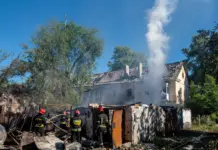
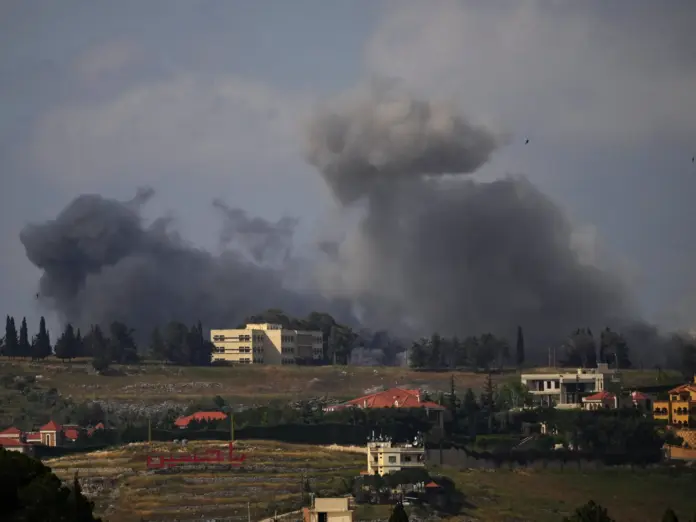
The military issued more than ten displacement orders within a single 24-hour period, instructing all residents living south of the Zahrani River to evacuate immediately northward. Arabic-language military spokesperson Avichay Adraee broadcast the directive on Sunday morning, as Israeli air raids struck the towns of Arnoun, Kfar Tebnit, and Kfar Remman. Shelling also hit the Kfarjouz area in the Nabatieh district and the town of Dbeibine in the Marjayoun district.
Recommended Reading
![Smoke rises from an Israeli air strike on the village of Arnoun, as seen from the Marjayoun area in southern Lebanon [AFP]](https://world-tension.s3.us-east-2.amazonaws.com/articles/1214/db6a9f22b7ee4e9982a59e7293028357.webp)
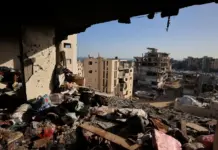
The cumulative effect of the campaign has rendered approximately one-fifth of Lebanese territory inaccessible to its own citizens. Lebanese Prime Minister Nawaf Salam condemned the offensive in stark terms, accusing Israel of pursuing a ‘scorched-earth policy’ and imposing ‘collective punishment’ on the population of the south. Nabatieh, Lebanon’s fifth-largest city and a cultural and economic hub for the region, sits at the heart of the contested zone.
The human cost of the expanded ground war continues to mount. One Israeli soldier was killed Saturday in a Hezbollah drone strike, confirmed by the military on Sunday. A separate incident the same day left a 21-year-old soldier dead and four others wounded. Since fighting escalated on March 2, 25 Israeli soldiers have been killed in Lebanon.
Hezbollah has increasingly deployed fibre-optic drones that resist electronic jamming and are nearly undetectable by radar, enabling them to penetrate Israel’s multi-billion-dollar layered air defence architecture. The Iran-backed militant group’s evolving drone capability has complicated Israeli defensive operations and prompted fresh precautionary directives following identified launches toward communities in northern Israel.
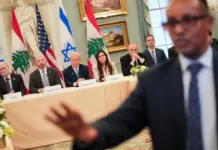
Meanwhile, diplomatic efforts to contain the broader regional crisis remained turbulent. President Donald Trump told Fox News that US-Iran negotiations are advancing ‘slowly but surely,’ while insisting he is ‘in no hurry’ to conclude a deal. His singular condition, he said, is unambiguous: ‘there will be no nuclear weapons.’ Trump met with senior White House officials in the Situation Room on Friday to review proposed amendments to a preliminary framework agreement.
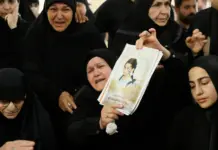
![A woman holds a portrait of Iran's Supreme Leader Mojataba Khamenei during a protest against the US and Israel in Tehran on May 29, 2026 [AFP]](https://world-tension.s3.us-east-2.amazonaws.com/articles/1214/71f5fa285fb945c291bd5ece97d9e4e4.webp)
The terms under discussion appear to have hardened. Trump is reported to have requested several amendments to the draft accord, toughening the conditions Iran would need to meet. Iranian state media had reported that a proposed memorandum of understanding included the release of $12 billion in frozen Iranian assets — a claim the White House flatly rejected as a ‘fabrication.’
Israel Beaufort Castle: Regional Implications
Tehran, for its part, accused Washington of acting in bad faith. The Islamic Revolutionary Guard Corps said it shot down a US drone operating in Iranian territorial waters, and Iran’s government condemned the US military’s interception of a Gambia-flagged vessel attempting to reach an Iranian port — an action the US military described as ‘disabling’ the ship — as a betrayal of the diplomatic process.
Iran’s military signalled it would not absorb further pressure without consequence. Rear Admiral Habibollah Sayyari, deputy army commander for coordination, issued a pointed warning against any additional attacks on Iranian territory or forces. In a ceremony held at Tehran’s Enqelab Square, the IRGC unveiled a new naval attack craft designated the 27 Rajab, capable of reaching speeds of up to 100 knots — approximately 185 kilometres per hour — and equipped to launch long-range cruise missiles, a demonstration of military capability timed to coincide with the diplomatic standoff.
On Capitol Hill, the US Congress advanced a military integration plan with Israel designed to deepen bilateral cooperation on weapons research, production, and technology development. Trump, referencing past American interventions, argued that Washington had deliberately avoided targeting Iran’s military infrastructure — citing the Iraq war as a cautionary example of what he characterised as a failed approach to regional conflict.
With Israeli ground forces pushing deeper into Lebanese territory, Hezbollah drones breaching Israeli defences, and US-Iran nuclear talks mired in competing narratives, the interlocking crises show little sign of resolution. Day 93 of the broader war on Iran finds the region balanced between fragile diplomacy and expanding military confrontation.