Us-Israel Military Cooperation — A bipartisan proposal embedded in the United States Congress’s defence spending blueprint would dramatically expand military technology cooperation between Washington and Tel Aviv, establishing a dedicated coordination structure that extends joint work into artificial intelligence, autonomous systems, and cyber operations.
Section 224 of the House Armed Services Committee’s version of the fiscal year 2027 National Defense Authorization Act introduces the ‘United States-Israel Defense Technology Cooperation Initiative.’ The provision, co-sponsored by Republican committee chairman Mike Rogers and its most senior Democrat Adam Smith, would require the US defence secretary to appoint an ‘executive agent’ tasked with coordinating the full spectrum of military collaboration between the two countries — from joint research and development to shared weapons production and the integration of military systems and data networks.
The two nations already maintain deep defence ties, most visibly through co-development of missile defence architecture including the Iron Dome. The new initiative would push that partnership into emerging domains, reflecting a broader strategic calculation that future warfare will be defined by networked intelligence, unmanned platforms, and offensive cyber capabilities.
Recommended Reading
The bill must first clear the House Armed Services Committee in early June before advancing to votes in the full House and Senate — a legislative path that has grown more politically fraught in recent months.
The proposal arrives against a backdrop of acute regional tension. In February, US and Israeli forces conducted a joint military operation against Iran, triggering five weeks of open conflict. Iran retaliated with strikes against Israel and American bases across the Gulf before a ceasefire took hold in April. That episode has sharpened debate in Washington over the depth and direction of the US-Israeli military relationship.
Josh Paul, a former US State Department official and founder of the advocacy group A New Policy, warned that the provision would give Israel access to American defence technology on an unprecedented scale and, critically, force the integration of Israeli defence technologies into US military supply chains — a structural entanglement that would be difficult to reverse regardless of future political shifts.
Opinion polls indicate growing unease among Democratic voters and a segment of Republicans over continued military support for Israel, which faces genocide allegations brought by South Africa before the International Court of Justice over its conduct in Gaza.
The financial dimensions of the relationship are substantial. Under a 10-year military aid agreement signed during the Barack Obama administration and running through 2028, Washington provides Israel with approximately $3.8 billion per year in military assistance — nearly all of it in the form of defence funding. Since 1948, Israel has been the largest single recipient of US foreign aid, with cumulative assistance exceeding $300 billion in inflation-adjusted terms. US law has also required Washington, since 2008, to protect Israel’s ‘qualitative military edge’ over its regional neighbours.
Us-Israel Military Cooperation: Regional Implications
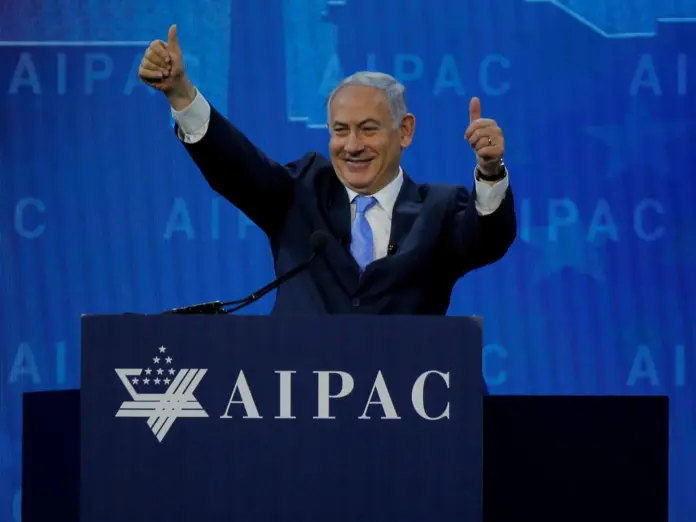
Paradoxically, Israeli Prime Minister Benjamin Netanyahu has recently declared his intention to end Israel’s dependence on US military aid within a decade, asserting that Israel has ‘come of age’ in terms of its own defence industrial capacity. That stated ambition sits in tension with a congressional initiative that would deepen, rather than reduce, the technological interdependence between the two militaries.
Proponents of the measure argue that formalising cooperation through a dedicated executive agent would eliminate bureaucratic friction and accelerate joint development timelines in domains where both countries face shared adversaries. Opponents contend it would lock the United States into an increasingly controversial partnership at a moment when the strategic and moral calculus demands greater scrutiny.
The committee vote in early June will serve as an early indicator of whether Congress is prepared to institutionalise an expanded defence relationship — or whether the shifting political landscape will force a more cautious approach to one of Washington’s most enduring and consequential alliances.