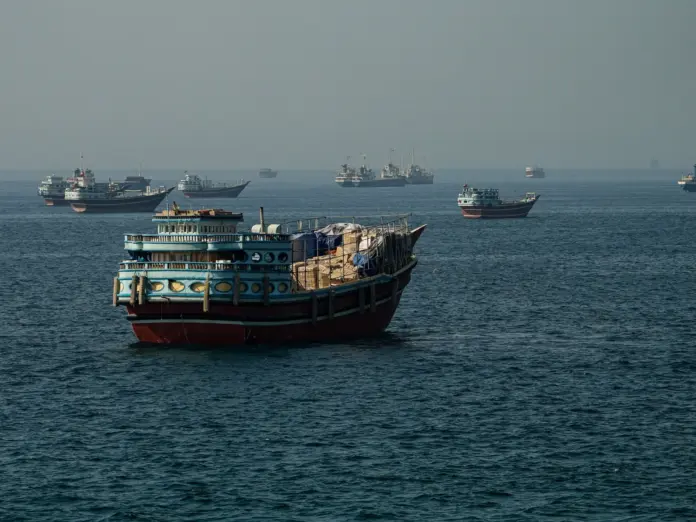
Tehran has moved to assert sweeping control over one of the world’s most critical maritime chokepoints, ordering all commercial and military vessels transiting the Strait of Hormuz to follow designated routes and secure permission from the Islamic Revolutionary Guard Corps Navy — a declaration that deepens an already volatile standoff with the United States even as both governments claim to be on the cusp of a diplomatic breakthrough.
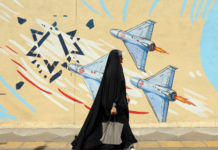
Iran Hormuz Control — The Khatam al-Anbiya Central Headquarters, the operational nerve centre of Iran’s armed forces, issued a formal statement Saturday asserting Tehran’s full authority over the strait. The directive applies to tankers, commercial ships, and foreign military vessels alike. Iranian officials warned that any failure to comply would jeopardise vessel security, and that foreign military forces attempting to interfere with Iran’s maritime management would face a direct response.
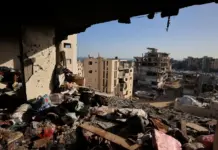
The announcement arrived against a backdrop of active hostilities. US strikes struck the Iranian port of Bandar Abbas earlier this week, drawing retaliatory fire from Iranian forces. On Saturday, Iran’s state news agency IRNA reported that air defences had shot down an American drone. US Central Command confirmed its forces remain present and vigilant across the region, and Iranian ships are reportedly receiving warnings from CENTCOM to halt and not cross an existing US blockade line.
Recommended Reading
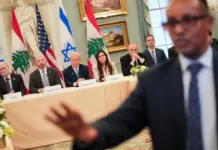
President Donald Trump convened his advisers in the White House Situation Room on Friday to weigh options on a potential agreement, though no decision emerged from that session. Trump subsequently stated that a "final determination" on a possible deal would come soon, describing an arrangement in which Iran would remove mines from the strait and end its closure without imposing tolls, while Washington would lift its own blockade. He added that both countries would coordinate on removing and destroying Iran’s enriched uranium stockpile, and that "no money will be exchanged, until further notice."
Tehran offered a sharply different picture. Foreign Ministry spokesperson Esmaeil Baghaei said Friday that no final agreement had been reached. Iranian sources cited by the Fars news agency said Tehran is demanding the immediate release of $12 billion in frozen assets and that no clause guaranteeing toll-free passage through Hormuz appears in any agreement text. Meanwhile, legislator Alireza Salimi, quoted by the ISNA news agency, said a plan formally enshrining Iran’s management and sovereignty over the strait would soon be put to a parliamentary vote — a move that would institutionalise the very claims Washington is seeking to roll back.
Pete Hegseth, the US Secretary of Defense, addressed the tensions Saturday while attending a defence summit in Singapore, declaring that Washington was "more than capable" of resuming military operations if a satisfactory deal is not secured. A White House official reinforced that position, stating Trump would only accept terms that meet his red lines — chief among them a permanent prohibition on Iran developing nuclear weapons.
From Tehran’s side, the tone was equally uncompromising. Mohsen Rezaei, an adviser to Iran’s Supreme Leader Mojtaba Khamenei, accused Trump of "betraying diplomacy for the third time," a characterisation that signals deep scepticism within the Iranian leadership about Washington’s intentions even as lower-level contacts continue.
Iran Hormuz Control: Regional Implications
The Strait of Hormuz carries roughly a fifth of the world’s oil supply, and any sustained disruption to navigation would send immediate shockwaves through global energy markets. Iran’s insistence on IRGC Navy oversight of all transiting vessels represents a direct challenge to the principle of freedom of navigation that the United States has long defended by force in the Persian Gulf. The US blockade, still in place according to Iranian state media, adds another layer of pressure on a waterway already strained by weeks of strikes and counter-strikes.
The gap between the two governments’ public accounts of where negotiations stand is itself a measure of how fragile the diplomatic track remains. Trump frames a deal as close and its terms largely settled; Tehran’s officials and legislators are simultaneously denying any agreement and legislating to formalise the very sovereignty claims Washington wants dismantled. Whether the White House’s promised "final determination" produces a breakthrough or an escalation may become clear within days.