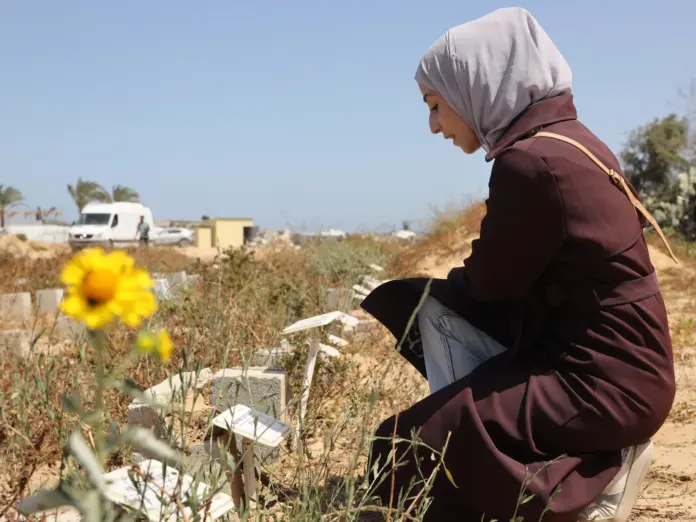
Gaza Mass Graves — In a makeshift hospital room at the Nasser Medical Complex in Khan Younis, Lina al-Assi spent more than two weeks staring at the faces of the dead. The 26-year-old mother of two — Hanaa, five, and Jouri, four — was searching for her husband, Jihad Tafesh, who vanished on October 8, 2023, the second day of Israel‘s war on Gaza. He was 28 years old when he was last seen in the Shujayea neighbourhood of Gaza City. He has not been seen since.
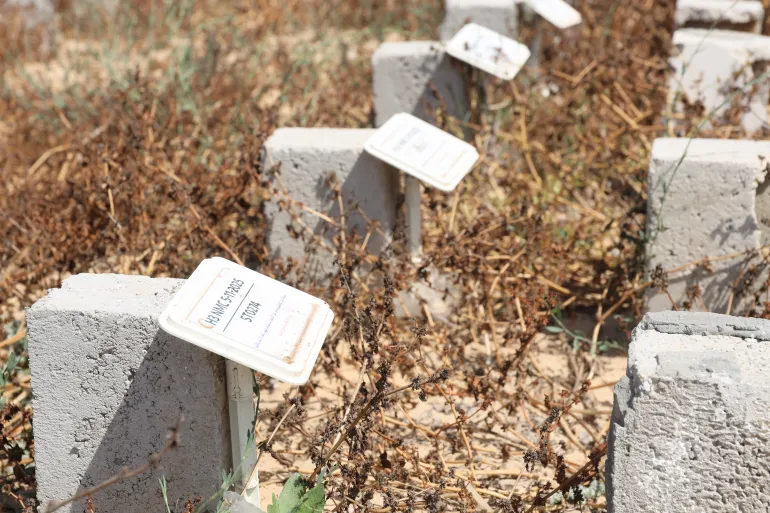
Al-Assi eventually identified a body she believed to be Tafesh’s. By the time she was certain, it had already been buried — one of hundreds of unidentified remains interred in the Deir el-Balah cemetery, an emergency burial ground established in October 2025 that now holds approximately 1,200 unmarked graves.
The cemetery was created out of necessity. Most burial sites in Gaza City and northern Gaza were either destroyed, closed, or located in areas too dangerous to reach. Bodies were arriving from under rubble, from streets, from hospital courtyards and school grounds — many so severely decomposed or disfigured that visual identification was effectively impossible.
Recommended Reading
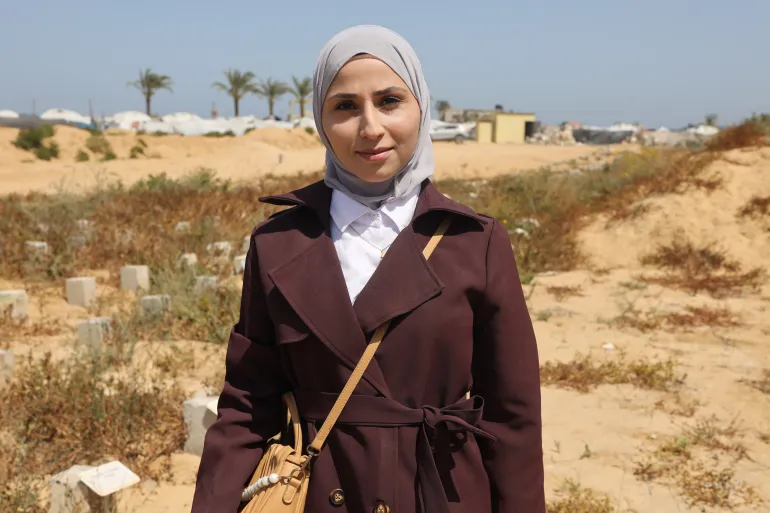
Ziad Obaid, head of the cemeteries department at Gaza’s Ministry of Religious Endowments, oversees a system stretched far beyond its capacity. Each unidentified body is assigned a unique code by either the Ministry of Health or the Ministry of Religious Endowments. Those remains are then displayed in hospital rooms for between six and ten days, giving families a narrow window to attempt identification before burial.
The process is agonising and, for many, inconclusive. Gaza currently has no functioning DNA analysis laboratories capable of genetic testing. When Israel returns bodies, it occasionally includes DNA reference codes — but those codes are largely unusable given the absence of any infrastructure to process them. Samples collected from recovered bodies are being stored under proper conditions with support from the International Committee of the Red Cross, pending future analysis that may be months or years away.
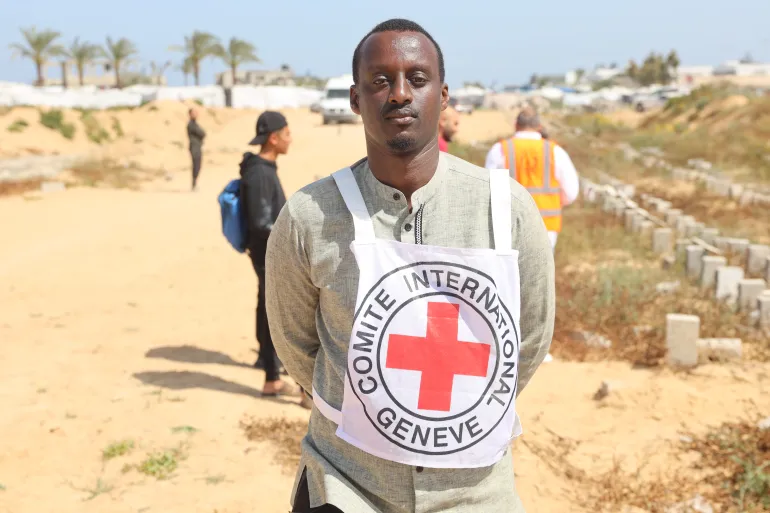
Herbert Mushumba, a forensic specialist at the ICRC, has been central to efforts to preserve what little forensic evidence remains. The ICRC-managed section of the cemetery contains around 1,400 graves, of which approximately 350 remain unused. The Red Cross also mediated the exchanges that brought hundreds of bodies back into Gaza following a ceasefire agreement reached in October 2025 between Israel and Hamas.
Under that deal, bodies of dead Palestinians held by Israeli authorities were transferred via the Red Cross to the Nasser Medical Complex. By November 5, 2025, the facility had received 285 bodies through that mechanism. For families like al-Assi’s, each transfer represents both hope and dread — the possibility of closure, and the possibility of confirmation of the worst.
Gaza Mass Graves: Regional Implications
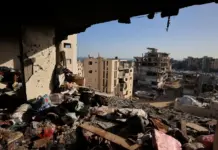
The scale of the unidentified dead reflects the broader devastation wrought across Gaza since October 2023. Entire neighbourhoods were reduced to rubble during the conflict, burying unknown numbers of civilians whose remains have only gradually been recovered as fighting paused or ceased in specific areas. The condition of many bodies — recovered long after death, often from collapsed structures — makes the task of identification without DNA technology nearly insurmountable.
For al-Assi, the bureaucratic and logistical failures compound a grief that has no clear endpoint. Her husband’s fate remains officially unconfirmed. Her children are growing up without answers. And in the Deir el-Balah cemetery, the rows of unmarked graves continue to grow — each one a name that someone, somewhere, is still searching for.
International forensic and humanitarian organisations have called for the establishment of DNA identification capacity within Gaza as a matter of urgency, warning that without it, thousands of families may never achieve the certainty they need to mourn, to claim inheritance, or simply to know what happened to the people they lost.