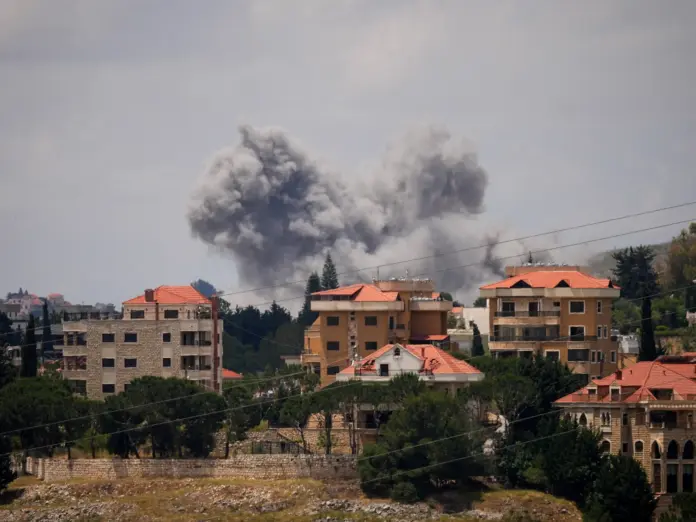
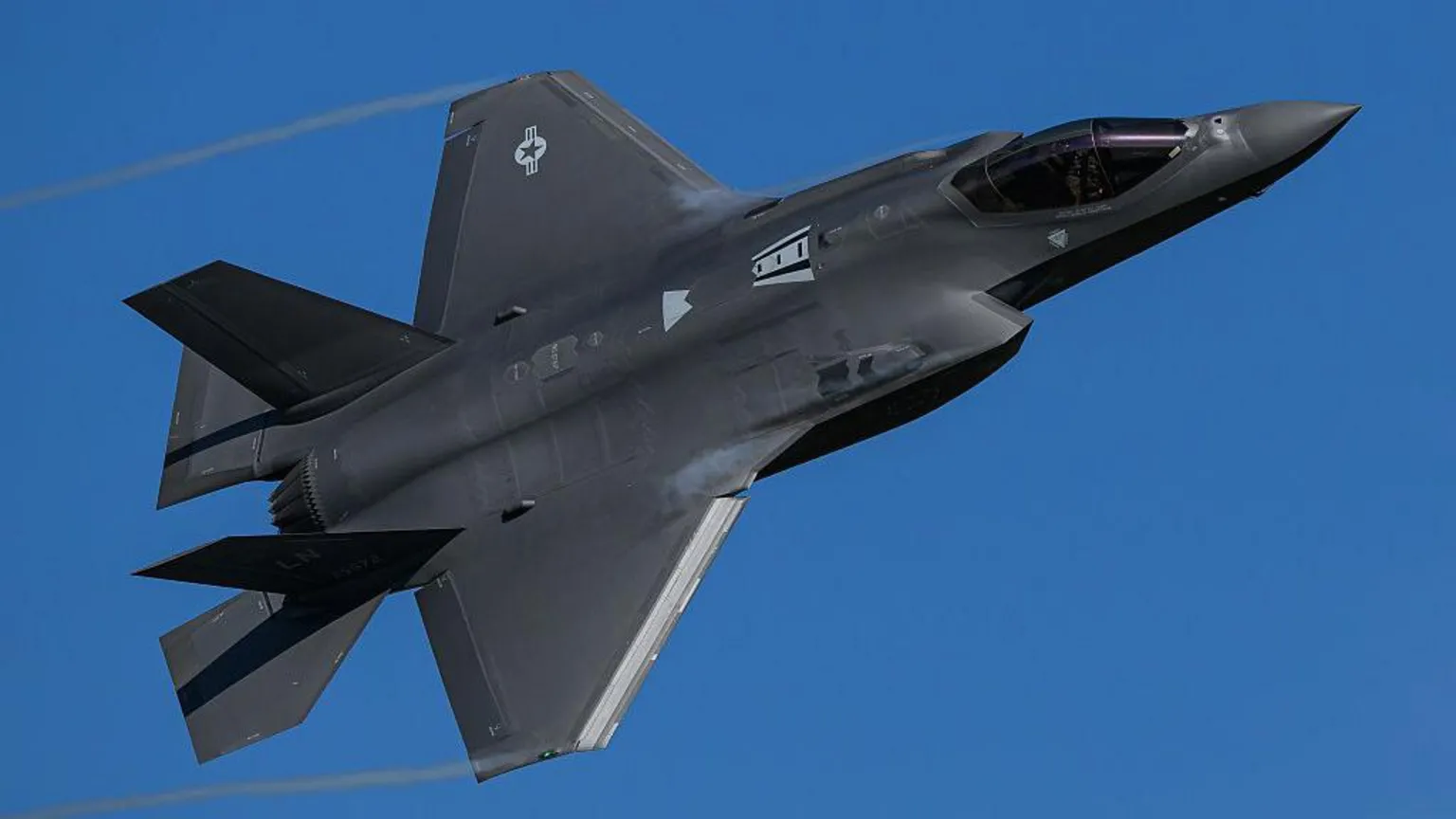
Us Strikes Iran — United States military forces launched fresh strikes against Iranian missile launch sites and mine-laying vessels in the waters near Bandar Abbas on Sunday, even as diplomats from both countries gathered in Doha to negotiate a framework that could formally end the conflict ignited when the US and Israel launched wide-ranging attacks on Iran on 28 February.
US Central Command spokesperson Capt. Tim Hawkins described the operations as acts of self-defence, stating that American forces were responding to direct threats posed by Iranian military activity while continuing to exercise restraint under an ongoing ceasefire that has been in place since 8 April. No US personnel were reported injured in the strikes.
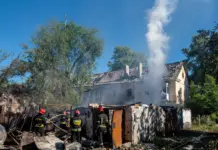
Explosions were heard across Bandar Abbas, a strategically vital southern port city that hosts a major Iranian naval base on the Strait of Hormuz. Iranian state media reported that local officials were investigating the blasts. Tehran had not issued a formal military response at the time of reporting.
Recommended Reading
The strikes unfolded against a backdrop of cautious diplomatic momentum. Iran’s Foreign Minister and top negotiator travelled to Qatar, where they met with the Qatari prime minister to discuss a potential memorandum of understanding with Washington. Iranian Foreign Ministry spokesman Esmail Baqai acknowledged that some progress had been achieved in the talks but was careful to temper expectations, stating that a deal to end the conflict is not imminent.
The memorandum under discussion reportedly encompasses three core elements: a 60-day extension of the existing ceasefire, the reopening of the Strait of Hormuz — which Iran has used to maintain leverage over Gulf shipping — and a structured plan for further negotiations over Iran’s nuclear programme. The US Navy has simultaneously sought to blockade Iranian ports, making control of the strait a central pressure point in the broader standoff.
President Donald Trump sent mixed signals over the weekend, suggesting at one point that the two sides were close to an agreement, then later stating he had instructed negotiators not to rush. Secretary of State Marco Rubio was more direct, indicating a deal could potentially be reached as early as Monday. Trump also outlined his conditions for any lasting settlement, calling for Saudi Arabia, Pakistan, and Turkiye to sign onto the Abraham Accords as part of a broader regional normalisation framework.
On the nuclear question, Trump said Iran’s stockpile of enriched uranium — estimated at approximately 440 kilograms enriched to 60 percent purity at the outset of the conflict — must either be transferred immediately to the United States or destroyed at an acceptable location. Weapons-grade uranium requires enrichment to 90 percent purity. Trump said he would be open to the material being destroyed in place.
US intelligence assessments have added a layer of uncertainty to the Iranian leadership picture. Officials believe Supreme Leader Mojtaba Khamenei was wounded in an Israeli strike on the first day of the war — the same strike that killed his father and predecessor — and is currently sheltering at an undisclosed location.
In a separate but related diplomatic development, Rubio held a phone call with Russian Foreign Minister Sergey Lavrov, during which the two discussed both the Iran situation and the ongoing conflict in Ukraine, signalling the degree to which the Middle East crisis has become entangled with broader great-power diplomacy.
Us Strikes Iran: Regional Implications
Oil markets reacted sharply to the prospect of a diplomatic breakthrough. US crude futures dropped 6.1 percent in early Asian trading, with West Texas Intermediate falling $5.90 to $90.73 per barrel, as traders priced in the possibility that the Strait of Hormuz — a chokepoint for roughly a fifth of global oil flows — could soon reopen to normal traffic.
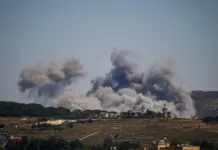
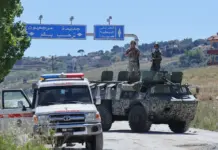
On the Lebanese front, Israeli Prime Minister Benjamin Netanyahu escalated his rhetoric significantly, declaring that Israel is ‘at war’ with Hezbollah and ordering what he described as ‘strong blows’ against the group. Netanyahu stated Israel would ‘wipe out’ Hezbollah entirely and pledged to intensify military operations despite a recent ceasefire extension. Israeli air strikes struck Lebanon’s eastern Bekaa Valley and targets in the south. Lebanon’s Health Ministry reported that Israeli attacks have killed at least 3,185 people and wounded a further 9,633 since 2 March. Israeli military officials also reported alerts for a hostile aircraft infiltrating the airspace over Sassa, an Israeli settlement in the north.
Iran’s President Masoud Pezeshkian ordered the restoration of internet services across the country after a blackout that had lasted more than 87 days — a move observers interpreted as a potential signal of domestic stabilisation ahead of any formal agreement. Canadian Prime Minister Mark Carney, meanwhile, condemned Israel’s treatment of activists aboard a Gaza-bound flotilla as ‘appalling,’ adding another voice to growing international criticism of Israeli conduct in the region.
Sunday marked Lebanon’s Liberation Day, the anniversary of Israel’s withdrawal in 2000 after a 22-year occupation of southern Lebanon — a date that carries deep symbolic weight as Israeli forces once again strike Lebanese territory and Netanyahu speaks openly of eliminating Hezbollah as a fighting force.