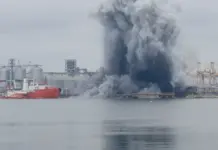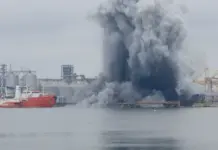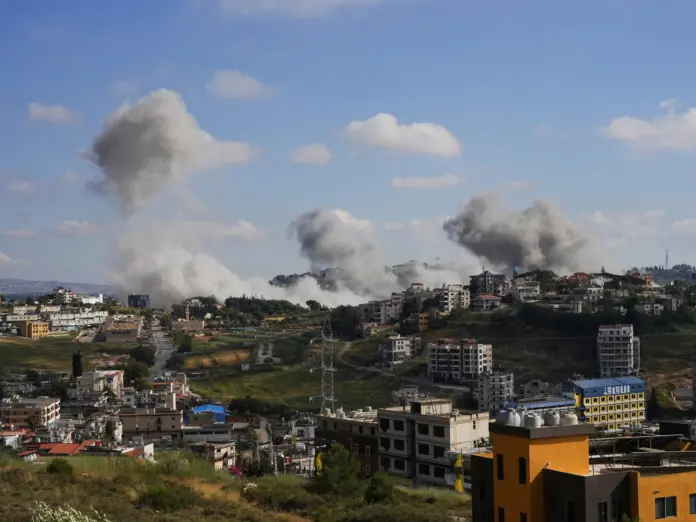
BEIRUT — Israeli Prime Minister Benjamin Netanyahu announced a sharp escalation of military operations against Hezbollah on Monday night, vowing to intensify strikes across Lebanon as the conflict’s death toll climbed past 3,185 and residents fled parts of the capital in fear of renewed bombardment.
Lebanon Strikes Escalation — In a video posted to Telegram, Netanyahu declared that Israel would ‘step on the gas even more’ rather than ease its military campaign. ‘We are at war with Hezbollah, and we will intensify our strikes,’ he said, adding that Israeli forces had already ‘eliminated over 600 terrorists’ during the campaign.
The announcement came on a symbolically charged date. Lebanon was marking Liberation Day — the 25th anniversary of Israel’s 2000 withdrawal from southern Lebanon, ending an 18-year military occupation. Within hours of Netanyahu’s statement, Israeli forces launched strikes against Hezbollah infrastructure across the Bekaa Valley in eastern Lebanon, near the Syrian border, as well as in the southern districts of Tyre and Nabatieh.
Recommended Reading
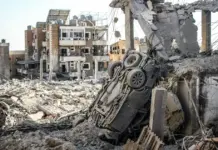
In the town of Kfar Reman in the Nabatieh district, four people were killed and three others injured. Strikes also hit the al-Midan neighbourhood in Nabatieh, damaging residential buildings and a Shia Muslim community centre. Israeli aircraft dropped incendiary phosphorus munitions over forests in the Qlailah municipality, igniting fires that spread through citrus groves and agricultural land.
Lebanon’s National News Agency reported a mass exodus from the southern suburbs of Beirut — the Dahiyeh district — following Netanyahu’s announcement, as residents scrambled to leave ahead of anticipated strikes on the densely populated Hezbollah stronghold.
The escalation follows a fragile ceasefire agreement signed on 16 April, which was subsequently extended for a further 45 days earlier this month. Despite the truce, Israeli attacks have continued, largely concentrated in southern Lebanon. Since the ceasefire was agreed, more than 400 people have been killed by Israeli bombardment, and Israel has issued near-daily evacuation orders to Lebanese civilians in new areas of the south. Over one million people remain displaced across the country.
Monday also brought Israeli casualties. One Israeli soldier was killed and another severely injured in a drone strike during combat operations in southern Lebanon. The wounded soldier was evacuated for medical treatment. Ten Israeli soldiers have now been killed since the initial ceasefire agreement was reached.
The drone threat has prompted a significant financial response from Jerusalem. Israel approved a special budget of approximately 2 billion shekels — roughly $692 million — to fund technological countermeasures against drone attacks.
Lebanon Strikes Escalation: Regional Implications
Netanyahu’s far-right coalition partners used the moment to push for even more aggressive action. Finance Minister Bezalel Smotrich demanded that ten buildings in Beirut be destroyed for every explosive drone fired at Israel. National Security Minister Itamar Ben-Gvir called for a return to ‘intense war,’ urging the government to cut off electricity to Lebanon and launch a ground offensive to seize the Dahiyeh district.
The broader regional context has driven the conflict’s intensity. Israel entered open war with Hezbollah on March 2, following a joint US-Israeli military campaign against Iran that began on February 28. Hezbollah launched rocket attacks into Israel in retaliation for an Israeli strike that killed Iranian Supreme Leader Ayatollah Ali Khamenei, prompting Israel to respond with a sustained air campaign and ground invasion across Lebanon.
The Iranian government has insisted that any emerging peace agreement with the United States must include a comprehensive ceasefire across all fronts of the regional war. Israel’s government has resisted any halt to its operations against Hezbollah, even as Lebanon’s government — which has been actively pursuing Hezbollah’s disarmament — argues that a ceasefire is a prerequisite for completing that process.
Lebanon’s Ministry of Public Health confirmed the cumulative death toll of 3,185 since March 2, a figure that underscores the devastating human cost of a conflict that shows no sign of abating despite diplomatic efforts and a ceasefire agreement that has done little to stop the bloodshed.