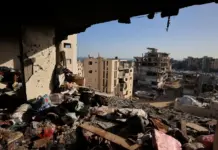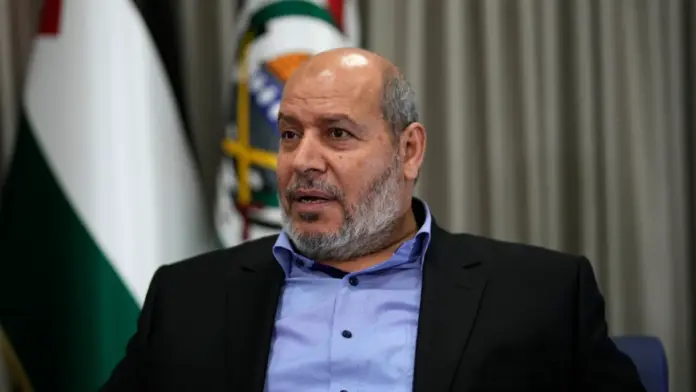
Cairo — Egypt has mounted an emergency diplomatic intervention to salvage a crumbling Gaza ceasefire, warning Israel against further territorial expansion while racing to convene negotiations before the week’s end, as the death toll from renewed Israeli strikes continues to climb.
Gaza Ceasefire Collapse — An Egyptian intelligence official confirmed that Cairo is working urgently to arrange talks, having invited a senior Hamas delegation led by chief negotiator Khalil al-Hayya for direct consultations. A senior Hamas official said the Cairo meeting was expected within days, as the movement called on the United States and guarantor countries to take ‘serious and urgent’ steps to compel Israel to honour its commitments under the agreement.
The diplomatic scramble follows a directive issued Thursday by Israeli Prime Minister Benjamin Netanyahu ordering the military to expand the area under its control from 53% to 70% of Gaza — a move Egypt swiftly condemned. Cairo has also rejected any measures designed to push Gaza’s residents toward emigration or direct them toward the Rafah crossing into Egyptian territory, a clear rebuke of a blueprint publicly revived by Israeli Defence Minister Israel Katz for the so-called ‘voluntary migration’ of Palestinians out of the enclave.
Recommended Reading
Egypt has coordinated its efforts with mediators in Qatar and Turkiye, as well as US officials, in a bid to return the process to a negotiating track. Cairo also contacted Washington directly, urging President Donald Trump to restrain Netanyahu. The ceasefire was originally brokered under the Trump administration and signed in October 2025, ending two years of fighting that killed more than 72,000 Palestinians and left the vast majority of Gaza’s population homeless.
Since that agreement took effect, at least 929 Palestinians have been killed in Israeli attacks — including 141 in just the past two weeks, reflecting a sharp intensification of military operations. Hamas has declared the ceasefire to be on the brink of collapse, citing what it describes as repeated Israeli violations.
The crisis has been compounded by the targeted killing of senior Hamas figures. Mohammed Odeh, the movement’s newly appointed military chief, was assassinated in an Israeli strike, as was military figure Izz al-Din al-Haddad. The eliminations have deepened tensions and raised questions about Israel’s commitment to the terms of the October agreement.
The ceasefire had been hailed as a landmark achievement, halting a conflict that began in October 2023 and left Gaza in near-total ruin. Over two years of fighting, the enclave’s civilian infrastructure was devastated, and the overwhelming majority of its population was displaced. The October 2025 agreement, facilitated by the United States under the Trump administration alongside Egyptian and Qatari mediation, was intended to provide a pathway toward a more durable political settlement.
Gaza Ceasefire Collapse: Regional Implications
Egypt’s latest intervention underscores the fragility of that framework. Cairo has long positioned itself as an indispensable broker between Israel and Hamas, and its willingness to engage directly with Hamas leadership — while simultaneously pressing Washington to rein in Israeli military ambitions — reflects the dual pressure it faces as a neighbouring state with direct stakes in Gaza’s stability.
The expansion of Israeli military control, combined with the revival of displacement proposals and the continued killing of Palestinian civilians, has placed the ceasefire under its most severe stress since it was signed. Whether Egypt’s diplomatic push can arrest the deterioration before the agreement formally unravels remains deeply uncertain.