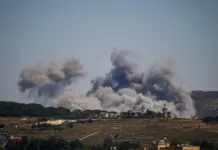
Iran Hormuz Strikes — The United States military struck targets near the Strait of Hormuz in southern Iran, hitting missile launch sites and boats attempting to lay mines in the strategically vital waterway, even as Iranian and American negotiators edged closer to a landmark agreement in parallel diplomatic talks.
US Central Command (CENTCOM) described the operations as self-defence strikes designed to protect American forces in the region. Navy Captain Tim Hawkins confirmed the targets included Iranian vessels engaged in mine-emplacement activity as well as fixed missile launch positions. Secretary of State Marco Rubio, speaking while on a visit to India, echoed that characterisation, identifying the same categories of targets and suggesting a negotiated deal with Iran could be finalised within days.
Iranian state media reported explosions in Bandar Abbas, a port city approximately 70 kilometres from the Strait of Hormuz. Iranian sources also indicated that several Islamic Revolutionary Guard Corps (IRGC) personnel were killed in the attack, and that IRGC forces had targeted a vessel at sea in response. Separately, Iranian news agencies claimed the country’s air defences had downed a hostile stealth drone using a newly deployed air defence system.
Recommended Reading
The strikes occurred against a backdrop of intensifying diplomacy. A high-level Iranian delegation arrived in Doha, Qatar’s capital, to address remaining obstacles to a permanent peace arrangement. The delegation includes Foreign Minister Abbas Araghchi, Parliament Speaker Mohammad Bagher Ghalibaf, and Central Bank Governor Abdolnaser Hemmati — a composition that signals both political and economic dimensions are central to the negotiations.
Iran’s Foreign Ministry spokesman Esmaeil Baghaei said a ‘large portion’ of the outstanding issues between Tehran and Washington had been resolved, though he stressed that Iran’s nuclear programme was not on the table ‘at this stage.’ The statement reflects the carefully managed scope of the current talks, which appear focused on immediate security and economic concerns rather than the broader strategic questions that have long divided the two countries.
President Donald Trump offered an optimistic assessment on his Truth Social platform, describing the talks as going ‘nicely’ and stating that a memorandum of understanding had been ‘largely negotiated.’ The White House has not provided further details on the MoU’s contents.
The Strait of Hormuz carries roughly a fifth of the world’s oil and gas supply under normal conditions, making any sustained military confrontation there a potential trigger for global energy market disruption. The combination of active strikes and active diplomacy in the same theatre reflects the high-stakes balancing act both governments are attempting to manage.
Iran Hormuz Strikes: Regional Implications
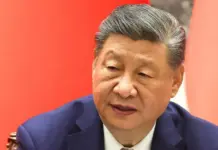
The military exchanges come despite a ceasefire brokered by Pakistan that has nominally been in place since April 8. Pakistani Prime Minister Shehbaz Sharif was on a four-day visit to China at the time of the latest incidents, where Field Marshal Asim Munir held separate talks with Chinese President Xi Jinping and Premier Li Qiang — meetings that may carry implications for the broader regional diplomatic architecture surrounding the Iran situation.
The diplomatic momentum in Doha, if sustained, could represent a significant shift in US-Iran relations. The Abraham Accords, signed during Trump’s first term in 2020, normalised relations between Israel and the United Arab Emirates, Bahrain, Morocco, and Sudan. Arab nations have since indicated willingness to extend diplomatic recognition to Israel contingent on the realisation of a sovereign Palestinian state — a framework that any broader regional deal would need to navigate.
For now, the situation near the Strait of Hormuz remains defined by contradiction: missiles and mines on one hand, negotiators and memoranda on the other. Whether the diplomatic track can outpace the military one may determine the trajectory of one of the most consequential geopolitical standoffs of the year.