Hormuz Blockade Operations — Three Indian sailors are dead and dozens more were rescued from burning vessels this week after the United States military conducted a series of strikes against tankers in the Strait of Hormuz and Gulf of Oman, targeting ships it accused of transporting Iranian oil in defiance of a US-enforced blockade.
The deadliest incident occurred on Tuesday, when US forces struck the Palau-flagged tanker Settebello, killing three Indian crew members. India’s shipping minister Sarbananda Sonowal confirmed the deaths, stating that three sailors initially reported missing had been found dead. The remaining 21 Indian crew members aboard the vessel were rescued following the strike.
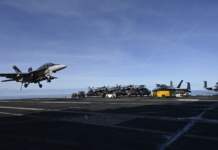
The day before, on Monday, a US Navy F-18 Super Hornet launched from the aircraft carrier USS Abraham Lincoln fired a precision munition into the engineering and steering spaces of the Palau-flagged Marivex, setting the ship ablaze. All 24 Indian crew members aboard were rescued by the Omani military. No fatalities were reported in that strike.
Recommended Reading
US Central Command stated that its forces had disabled a third tanker in the Gulf of Oman after the vessel attempted to transport Iranian oil, violating the blockade Washington has imposed on Tehran. Indian foreign ministry spokesperson Randhir Jaiswal publicly acknowledged that three ships carrying Indian crews had been struck by US forces within the space of a single week.
By Thursday, the Indian embassy in Oman was investigating a further incident involving a vessel off the port of Shinas in the early hours of the morning. The MT Jalveer, a tanker with 20 Indian crew members according to the Forward Seamen’s Union of India, was reported to be involved.
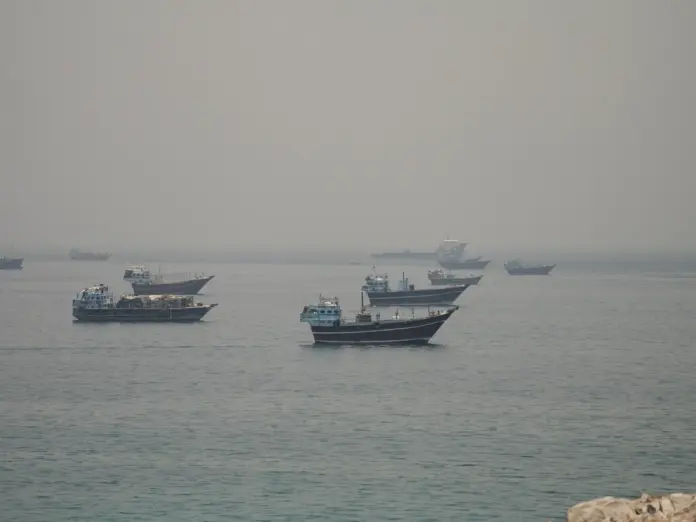
The week’s events are not isolated. The toll on Indian seafarers in the region has been mounting steadily. On March 1, an Indian crew member aboard the Marshall Islands-flagged tanker MKD Vyom was killed by an unmanned surface missile off the Omani coast. On the same day, two Indian crew members died when the Palau-flagged tanker Skylight was attacked near Oman’s Musandam Peninsula, with a third sailor left missing. Two Indian vessels were struck in the Strait of Hormuz on April 18, and on May 8, an Indian sailor died when a wooden dhow carrying Indian crew members caught fire near the strait. In total, at least seven Indian sailors have been killed during the conflict.
Iran’s foreign ministry spokesperson Esmaeil Baghaei condemned the strikes in unequivocal terms, describing them as brutal acts of state piracy. The International Maritime Organization secretary-general Arsenio Dominguez issued a strong condemnation of any action that endangers the lives of seafarers and threatens the safety of international shipping.
The legal dimensions of the strikes are significant. The Strait of Hormuz passes through the territorial waters of both Oman and Iran, with its outer edges extending into the territorial waters of the United Arab Emirates. Article 38 of the United Nations Convention on the Law of the Sea guarantees all ships and aircraft the right of transit passage through international straits, while Article 17 affirms the right of innocent passage through any nation’s territorial waters. Critics argue the US strikes directly contravene these provisions.
Hormuz Blockade Operations: Regional Implications
The human stakes are considerable. India’s Directorate General of Shipping estimates that more than 300,000 Indian sailors serve aboard vessels in global fleets, making Indian nationals among the most numerous seafarers operating in the region. The repeated targeting of ships with Indian crews has placed New Delhi in a diplomatically sensitive position.
The incidents are set to complicate an already fraught diplomatic landscape. A ceasefire between the United States and Iran, first brokered in April by Islamabad, remains in place, and both President Donald Trump and Iranian officials were speaking optimistically about extending the arrangement. Trump is expected to meet Indian Prime Minister Narendra Modi at the Group of Seven summit in France next week, where the deaths of Indian nationals at the hands of US military forces will almost certainly feature in bilateral discussions.
The Strait of Hormuz, through which a significant share of the world’s oil supply passes, has become the central arena of a US campaign to enforce economic pressure on Tehran. For the hundreds of thousands of Indian sailors who crew the tankers and cargo vessels transiting that narrow waterway, the conflict has extracted a price measured not in barrels, but in lives.