Washington / Caracas — A United States military airstrike has killed Héctor Rusthenford Guerrero Flores, the founder and leader of Tren de Aragua, the Venezuelan criminal organisation that Washington has designated a foreign terrorist organisation. President Donald Trump announced the strike, which was carried out by United States Southern Command in what both American and Venezuelan authorities described as a coordinated joint operation.
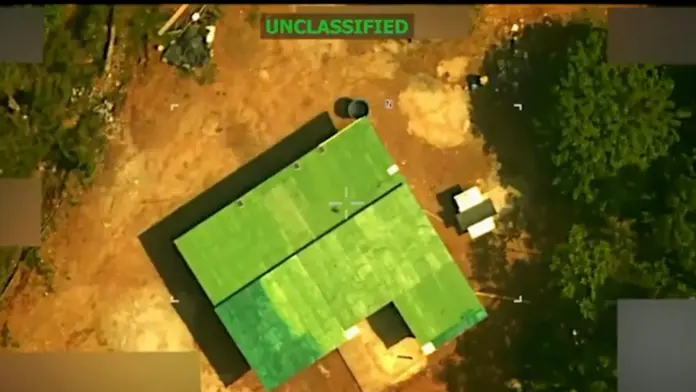
Tren De Aragua Airstrike — Trump posted footage of the strike on social media, showing a green building and an adjacent shed being obliterated. Venezuelan authorities confirmed their participation, framing the operation as a collaborative effort — a striking development given the historically adversarial relationship between Caracas and Washington.
Guerrero Flores, widely known as Niño Guerrero, had been named as a co-conspirator in the federal indictment of former Venezuelan President Nicolás Maduro, whom American forces seized from his compound in an overnight raid in January. Maduro was transferred to face criminal charges in New York, with the US accusing him of collaborating with Tren de Aragua. The US has since lifted sanctions on Delcy Rodríguez, Maduro’s successor, and is actively pursuing cooperation with Caracas over the extraction of Venezuela’s substantial oil reserves — a geopolitical realignment that appears to have enabled the joint strike.
Recommended Reading
The State Department had offered millions of dollars in reward money for information leading to Guerrero’s capture, underscoring how seriously Washington regarded him as a threat. His criminal biography is extraordinary in its audacity. In 2012, he escaped prison by bribing a guard, was rearrested the following year, and subsequently transformed Tocorón Prison in Aragua state into what amounted to a private fiefdom — complete with a zoo, restaurants, a nightclub, a betting shop and a swimming pool. The facility became a command centre from which he directed a transnational criminal empire.
In September 2023, Maduro dispatched 11,000 soldiers to storm Tocorón and reassert state control. Guerrero escaped during the assault and continued to run the organisation from hiding. Under his leadership, Tren de Aragua evolved far beyond its origins as a prison gang. What began as an extortion racket targeting migrants metastasised into a diversified criminal enterprise engaged in sex trafficking, contract killing and kidnapping, with tentacles stretching across Colombia, Ecuador, Peru and Chile. The US State Department has documented the gang’s control over gold mines in Bolivar state, drug corridors along Venezuela’s Caribbean coast and clandestine border crossings between Venezuela and Colombia. Nodes believed to be affiliated with the organisation have been identified in at least eight countries outside Venezuela, including the United States.
The gang’s international reach has drawn it into alliances with other major criminal networks. In Ecuador, Tren de Aragua is believed to operate alongside groups affiliated with Mexico’s Sinaloa cartel. In Colombia, allegations have emerged of cooperation with factions of the left-wing National Liberation Army guerrilla group, known by its Spanish acronym ELN.
Trump has framed the gang’s activities as a form of irregular warfare against the United States, and his administration’s response has been aggressive. Since September, the US military has launched dozens of strikes on vessels it claims are linked to drug smuggling and Tren de Aragua operations, with more than 200 people killed in those strikes. The campaign has drawn sharp criticism from legal experts, some of whom argue the strikes may violate international law by targeting individuals without due process and without publicly presented evidence that the vessels carried drugs or traffickers.
Tren De Aragua Airstrike: Regional Political Context
The broader context is Venezuela’s decade-long collapse. The country entered a humanitarian and economic emergency in 2014, a crisis that fuelled mass emigration and created the conditions in which Tren de Aragua thrived — exploiting desperate migrants and corrupted institutions alike. Guerrero’s death removes the organisation’s founding figure, but with nodes across the hemisphere and diversified revenue streams, the gang’s operational capacity is unlikely to dissolve overnight.
The killing nonetheless represents a significant moment in the Trump administration’s hardline approach to Latin American criminal organisations and signals that the new dynamic between Washington and Caracas — forged through Maduro’s removal and the prospect of oil cooperation — is already yielding concrete security dividends, at least as defined by the White House.