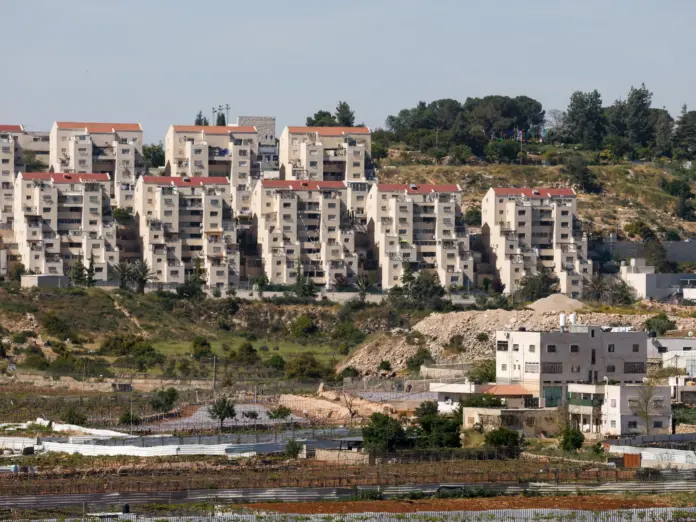
West Bank Settlement Plans — The Israeli government has earmarked 152 million shekels — approximately $51 million — to prepare construction plans for 69 illegal settlements and outposts in the occupied West Bank, in what advocacy groups are calling one of the most aggressive expansions of settlement infrastructure in decades.
The allocation represents the first tranche of an anticipated $388 million in new settlement construction funding. A separate, far larger package — a 1-billion-shekel ($338 million) appropriation for broader settlement expansion — was postponed by the cabinet and referred to the Security Cabinet, which was expected to convene on Sunday to take up the measure.
The Israeli settlement watchdog Peace Now disclosed the initial allocation on Thursday, warning that construction under the yet-to-be-approved plan would proceed despite required planning protocols not having been completed in accordance with Israeli law. The organisation accused the government of deliberately circumventing planning and construction regulations. If the full package is approved, analysts say it would represent one of the largest expansions of illegal Israeli settlements in decades.
Recommended Reading
Since taking office in December 2022, the current Israeli government has approved 103 settlements in the West Bank, of which 51 are entirely new. Israeli settlements in the occupied West Bank are considered illegal under international law.
The announcement came as six Western governments moved in concert to impose sanctions on networks linked to settler violence. The United Kingdom, Australia, New Zealand, Canada, France and Norway announced coordinated measures on Tuesday targeting individuals and entities involved in financing, enabling and carrying out settler attacks against Palestinians in the West Bank.
The diplomatic pressure was compounded on Wednesday when Amnesty International published a report directly accusing the Israeli government of playing a central role in the ethnic cleansing of Palestinians in the occupied West Bank. The findings aligned with data from the United Nations Office for the Coordination of Humanitarian Affairs, which documented that at least 117 villages across the West Bank have experienced either complete or partial displacement as a result of settler attacks.
Against this backdrop, a promotional event titled the "Great Israeli Real Estate Event" is scheduled to take place in London on Sunday. The event, which has previously been held in the United States and Canada, markets properties located in the occupied West Bank to prospective buyers. Critics argue such commercial activity normalises and financially sustains settlement expansion in territory where construction is prohibited under international law.
West Bank Settlement Plans: Regional Implications
The convergence of expanded government funding, bypassed legal protocols, and a coordinated international sanctions response underscores the deepening fault lines between Israel and its Western allies over settlement policy. The Security Cabinet's expected deliberations on the billion-shekel package will be closely watched as a signal of whether the government intends to accelerate its settlement agenda despite mounting diplomatic and legal pressure.
The West Bank has seen a sharp deterioration in conditions for Palestinian communities in recent years. Displacement driven by settler violence, combined with state-backed construction programmes, has drawn sustained criticism from human rights organisations and United Nations bodies. The Amnesty International report published this week adds to a growing body of documentation alleging systematic dispossession, placing the Israeli government's latest funding decisions in an increasingly fraught international context.