MOSCOW/KYIV — President Vladimir Putin conceded Friday that Ukraine’s escalating strikes on Russian energy infrastructure are inflicting genuine damage on the country’s economy and society, a rare public admission that underscores the growing effectiveness of Kyiv’s long-range campaign.
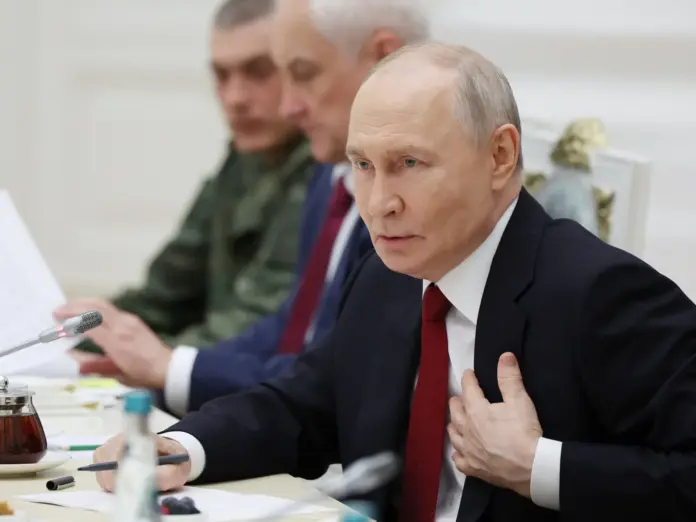
Ukraine Strikes Russia Energy — Speaking in comments carried by the state-run TASS news agency, Putin acknowledged the toll directly: ‘They are certainly causing us damage, but we are recovering quickly.’ He insisted the surge in Ukrainian attacks would not fracture Russian society, characterising the strikes as an attempt to ‘sow confusion’ among the population — a goal he dismissed as futile.
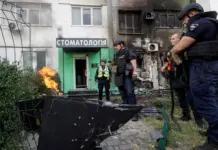
The remarks came a day after Ukraine claimed responsibility for a strike on a major oil refinery in Nizhnekamsk, deep inside Russian territory. The attack was part of a broader and increasingly sophisticated Ukrainian campaign targeting refineries, fuel depots, and pipelines that are critical to Russia‘s oil and gas export capacity.
Recommended Reading

The Institute for the Study of War assessed that Ukraine’s longer-range strikes are measurably reducing Russia’s production capacity, while a parallel midrange campaign is degrading the country’s ability to transport gasoline domestically and to occupied territories. The dual-track approach has had particularly acute consequences in Crimea, where Ukrainian forces have targeted fuel trucks supplying the peninsula. Kremlin spokesman Dmitry Peskov acknowledged earlier this week that Crimea is experiencing fuel shortages, promising that ‘measures were being taken’ to address the crisis. Analysts and officials describe the situation as the worst fuel crunch the peninsula has faced since Russia’s illegal annexation in 2014.
Ukraine frames the strikes as legitimate retaliation for Russia’s relentless barrage of drones and missiles against Ukrainian towns and cities. Kyiv argues it is striking back against the very infrastructure that sustains Moscow’s war machine.
Putin, for his part, vowed escalation. He pledged that Russia’s military would intensify attacks on ‘the enemy’s infrastructure’ to deter Ukraine from targeting Russian civilian facilities — a threat that mirrors language Kyiv has used to justify its own campaign. He also called on Moscow to strengthen its air defences, the second such public demand this month, signalling ongoing concern within the Kremlin about Russia’s vulnerability to Ukrainian strikes.
On the battlefield, the picture has also shifted. Ukrainian commander-in-chief Oleksandr Syrskii reported that Ukrainian forces reclaimed more territory in May than they lost — reversing a trend in which Russia had recorded net territorial gains each month. Moscow’s advances in eastern Ukraine have slowed considerably in recent weeks, adding pressure to a Kremlin narrative built on the promise of steady military progress.
Ukraine Strikes Russia Energy: The Wider European Impact
Despite the shifting dynamics, prospects for a negotiated end to the conflict remain remote. Putin recently rejected any possibility of direct face-to-face talks with Ukrainian President Volodymyr Zelenskyy, foreclosing a diplomatic off-ramp that some international observers had hoped might gain traction.
The energy infrastructure campaign represents a strategic evolution for Ukraine, which has increasingly sought to impose economic costs on Russia beyond the front lines. By striking refineries and disrupting fuel logistics, Kyiv is targeting the financial arteries that fund Moscow’s military operations — a pressure point that Putin’s own words now confirm is drawing blood, even if he insists the wounds are not fatal.
Whether Russia’s recovery is as swift as Putin claims remains contested. The Crimea fuel crisis, the acknowledged damage to refinery output, and the Kremlin’s repeated calls for improved air defences collectively paint a picture of an energy sector under sustained and effective pressure — one that Ukraine shows no sign of easing.