Nato Asset Cuts — The United States is moving to substantially reduce its military footprint across Europe, withdrawing fighter jets, surveillance aircraft, aerial refuelling tankers, and key naval assets from NATO-designated operations in a strategic reorientation that is sending shockwaves through the alliance ahead of a pivotal summit next month.
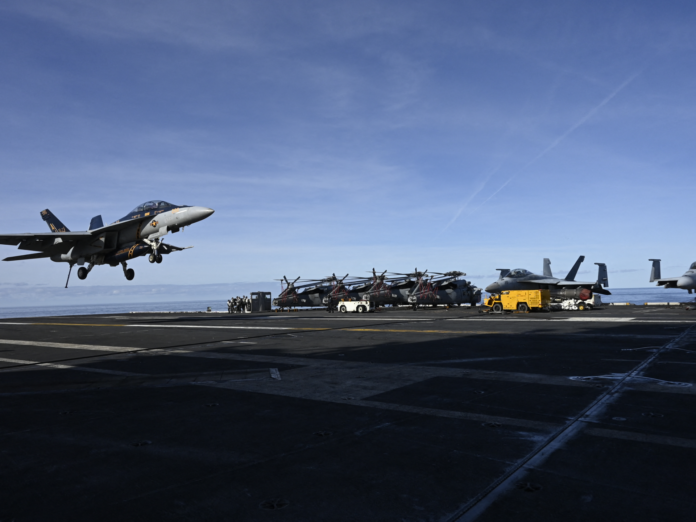
The planned reductions would see the number of US fighter jets assigned to NATO operations fall from approximately 150 to 100 aircraft, with F-16 and F-15E jets among those affected. The number of maritime surveillance aircraft would be cut from 26 to 15, while eight aerial refuelling aircraft are set to be withdrawn entirely. One of two bomber task force groups previously designated for European defence would be redeployed to another region, and both a missile-capable submarine and an aircraft carrier would be repositioned away from European waters.
European officials confirmed the planned reductions on Friday. The cuts form part of a broader American strategic recalibration, with Washington seeking to redirect military resources toward the Middle East, Asia, and the Americas — theatres that the Trump administration has identified as higher priorities.
Recommended Reading
The implications for NATO’s operational capacity are significant. The drawdown would directly erode the alliance’s reconnaissance capabilities and long-range strike power at a moment when European governments are acutely focused on the threat posed by Russia. Critics warn the reductions introduce dangerous instability into transatlantic security arrangements that have underpinned European defence for decades.
NATO spokesperson Allison Hart sought to temper alarm, stating that the pullback would ultimately benefit the alliance’s long-term sustainability. General Alex Grynkewich, NATO’s supreme allied commander and a US officer, addressed the issue during an appearance at an airshow in Berlin on Thursday, as alliance officials acknowledged awareness of some of the planned American reductions.
The announcement lands just weeks before President Donald Trump is expected to attend a NATO summit in Turkiye on July 7 and 8. Secretary of State Marco Rubio characterised the gathering as "probably the most important meeting in NATO’s history" — a striking assessment that underscores the depth of uncertainty surrounding the alliance’s future direction.
Trump has made no secret of his frustration with European allies. He has repeatedly described NATO as a "paper tiger" and accused member governments of chronically underinvesting in their own defence. He is now pressing both European and Asian allies to raise military spending to 3.5 percent of GDP, a threshold that would represent a dramatic increase for most alliance members.
The timing of the cuts sharpens the dilemma facing European capitals. Governments across the continent have been scrambling to bolster their defence budgets in response to Russia’s ongoing aggression in Ukraine, yet they now face the prospect of doing so against a backdrop of diminishing American military commitment. The withdrawal of surveillance aircraft and refuelling tankers in particular would constrain NATO’s ability to project power and sustain operations across the continent’s eastern flank.
Nato Asset Cuts: The Wider European Impact
For alliance planners, the loss of bomber task force coverage and the repositioning of naval assets compounds the challenge. A missile-capable submarine and an aircraft carrier represent not merely hardware but strategic deterrence — their absence from European waters alters the calculus that adversaries must weigh.
The reductions reflect a tension that has defined Trump’s approach to alliances since his return to office: demanding that partners shoulder more of the collective burden while simultaneously reducing the American contribution that has long anchored the alliance’s credibility. Whether the Turkiye summit produces a new framework for burden-sharing — or deepens the fractures already visible within NATO — will be closely watched by governments from Tallinn to Warsaw to Paris.
European officials have so far responded with measured public statements, but the private anxiety is palpable. The continent’s security architecture, built over seventy years of American military presence, faces its most consequential stress test in a generation.