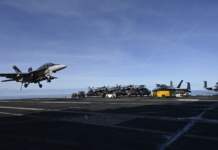
Us Strike Oil Tanker — Three Indian sailors lost their lives when the United States military struck the MT Settebello, an oil tanker operating in the Gulf of Oman, in an operation Washington described as part of its ongoing effort to enforce a blockade on Iran-linked shipping.
The dead have been identified as Patnala Suresh, the vessel’s chief engineer, Aditya Sharma, 23, and Shivanand Chaurasia, 35. Twenty-one other crew members were rescued following the strike. The US military stated the tanker had ignored repeated warnings and was transporting Iranian oil. The vessel’s managers flatly rejected both claims, insisting the ship had no connection to Iran and received no warning before it was hit.
India responded with rare diplomatic force. New Delhi lodged a strong protest with Washington and summoned a senior US diplomat, signalling deep displeasure over the deaths of its nationals in what the government regards as an unjustified military action against a civilian vessel.
Recommended Reading

Shipping Minister Sarbananda Sonowal confirmed on social media that efforts were under way to repatriate the sailors’ remains to their families.
The human cost of the strike is etched into communities spread across three Indian states. Patnala Suresh, a marine engineer from Visakhapatnam in Andhra Pradesh, had spent roughly 15 years at sea. He was below deck inspecting a fault in one of the ship’s generators when the strike occurred. His wife, Patnala Bhargavi, had been looking forward to celebrating their 15th wedding anniversary in the same month the attack took place. Video calls between the couple had grown increasingly difficult from 5 June before stopping entirely by 9 June — a silence that preceded the worst news. Suresh leaves behind two sons and two nieces he had helped raise. As the household’s sole breadwinner, his absence will be felt in ways that extend far beyond grief.
Aditya Sharma, just 23 years old, was from Hamirpur district in Himachal Pradesh. He was the only son of his family, a detail that compounds the devastation for those he leaves behind. Shivanand Chaurasia, a 35-year-old fitter from Deoria district in Uttar Pradesh, had left home approximately eight months before the strike to take up work with a foreign shipping company. His family had been awaiting his return.
The strike on the MT Settebello sits within a broader and increasingly volatile pattern of US military operations targeting vessels Washington accuses of facilitating Iranian oil exports. The Trump administration has escalated pressure on Iran-linked shipping lanes as part of a maximum-pressure economic strategy, but the deaths of civilian mariners from a non-belligerent nation have sharpened international scrutiny of how such operations are conducted and whether adequate safeguards exist to protect non-combatants.
Us Strike Oil Tanker: The Energy Security Dimension
The tanker’s managers maintain their vessel was a legitimate commercial operation with no ties to Tehran, and their account directly contradicts the Pentagon’s justification for the strike. The dispute over whether warnings were issued — and whether the crew had any meaningful opportunity to respond — is likely to form the core of India’s diplomatic challenge to Washington in the days ahead.
For the families in Visakhapatnam, Hamirpur, and Deoria, the geopolitical arguments offer little comfort. Three men who left home to earn a living at sea will not be coming back.