Gaza Flotilla Sanctions — The United States Treasury Department imposed sanctions Tuesday on four activists involved in organising flotillas attempting to break Israel’s blockade of Gaza, as Israeli forces moved to intercept the latest fleet of ships attempting to reach the besieged enclave.
Treasury Secretary Scott Bessent announced the measures, which freeze the targeted individuals’ assets held in the United States and broadly prohibit Americans from conducting any financial transactions with them. The Treasury Department simultaneously issued a warning to banks against providing services to organisers of the humanitarian vessels.
The four sanctioned individuals include two representatives from the Popular Conference for Palestinians Abroad (PCPA) and two members of Samidoun, a Palestinian prisoner solidarity network. The activists are based in Jordan, Spain, and Belgium. Among those targeted is Mohammed Khatib, a Samidoun organiser who was previously detained in both Belgium and Greece in connection with his activism, and his colleague Jaldia Abubakra.
Recommended Reading
Washington alleged that flotilla organisers are acting in support of Hamas, though no evidence was presented to substantiate the claim. The PCPA had already been sanctioned by the US in January for its backing of the flotilla campaign.
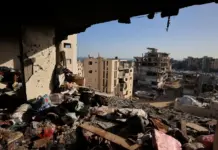
The sanctions arrive against a backdrop of acute humanitarian suffering inside Gaza. At least 880 people have been killed in Israeli attacks on the territory since a ceasefire brokered by President Donald Trump came into effect in October. The enclave remains almost entirely destroyed, with reconstruction yet to begin in any meaningful way. Hundreds of thousands of Palestinians are living in tents amid the rubble.
Human rights advocates have launched dozens of vessels toward Gaza over the past two years in an effort to deliver aid and draw international attention to the blockade. Every one of those ships has been intercepted by the Israeli military in international waters. Israel has detained hundreds of activists from around the world as part of its crackdown on the flotilla movement, including Swedish climate campaigner Greta Thunberg. Most detainees have been released and deported within days, though many have accused Israeli forces of physical and psychological abuse during their detention.
The financial pressure on flotilla supporters extends beyond Tuesday’s formal sanctions. Palestinian rights advocates in Germany and the United Kingdom have reported having their bank accounts frozen over the past two years, a pattern that critics argue amounts to a coordinated effort to suppress civilian-led humanitarian initiatives.
The move drew sharp scrutiny given the broader trajectory of US policy. On the first day of his second term in January 2025, Trump revoked sanctions that had been imposed on violent Israeli settlers targeting Palestinian communities in the occupied West Bank. The administration has also sanctioned judges of the International Criminal Court after the court issued arrest warrants against Israeli officials on charges of war crimes in Gaza.
Gaza Flotilla Sanctions: Regional Implications
The juxtaposition — penalising those attempting to deliver aid to Gaza while lifting penalties on settlers accused of violence against Palestinians — has intensified debate over Washington’s role in the conflict. Critics argue the sanctions against flotilla organisers criminalise civilian humanitarian action while shielding those responsible for documented abuses.
Israel maintains that its blockade of Gaza is a legitimate security measure designed to prevent weapons from reaching Hamas, which governs the territory. The flotilla movement disputes that characterisation, arguing the vessels carry only humanitarian supplies and that the blockade constitutes collective punishment of Gaza’s civilian population under international law.
With the latest fleet now being intercepted and fresh legal and financial pressure applied to its organisers, the prospects for civilian-led relief efforts reaching Gaza by sea appear increasingly constrained — even as conditions inside the territory continue to deteriorate.