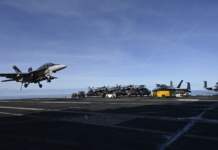
Gulf Of Oman Tanker Strike — A US Navy carrier-based aircraft struck a commercial tanker south of the Strait of Hormuz on June 8, setting the vessel ablaze and prompting the emergency evacuation of its entire 24-member Indian crew, all of whom survived. The incident represents one of the most direct American military actions against a commercial vessel in the Gulf of Oman amid sustained tensions between Washington and Tehran.
An F/A-18 Super Hornet launched from the USS Abraham Lincoln (CVN 72) fired a precision munition into the engineering and steering spaces of the MT Marivex, a Palau-flagged tanker that US Central Command said had violated an ongoing blockade against Iran by attempting to sail to an Iranian port. The crew had failed to comply with directions issued by US forces prior to the strike, according to the command.
Fire broke out aboard the vessel at approximately 1330 local time. Crew members transmitted urgent distress messages reporting that the ship was ablaze and sinking. Omani authorities responded swiftly, deploying helicopters that extracted all 24 sailors and transported them to Masirah Island off the Omani coast. The tanker was unladen at the time of the strike, carrying no cargo.
Recommended Reading
Opesh Kumar Sharma of India’s Ministry of Ports, Shipping and Waterways confirmed the incident to reporters, acknowledging the involvement of Indian nationals. The All India Seafarers Union had received distress communication from a crew member shortly after the fire erupted, raising immediate alarm within maritime labour circles. The Forward Seamen’s Union of India described the episode as a "matter of serious concern," reflecting the anxiety felt across India’s seafaring community over the safety of nationals working aboard vessels transiting one of the planet’s most volatile maritime corridors.
The MT Marivex had previously been sanctioned by US authorities over alleged connections to Iran, making it a vessel already under heightened scrutiny before Monday’s confrontation. US Central Command framed the strike as an enforcement action consistent with its stated policy of interdicting shipping that supports Iranian interests in defiance of American-led restrictions.
The broader context underscores the gravity of the location. The Strait of Hormuz, the narrow chokepoint separating the Gulf of Oman from the Persian Gulf, serves as the transit route for roughly one-fifth of the world’s energy supplies under normal conditions. Any sustained disruption to navigation in these waters carries immediate consequences for global oil and gas markets. The waters south of the strait, where the Marivex was struck, have seen a marked increase in military activity and commercial shipping incidents as Iran-US-Israel tensions have intensified in recent months.
Monday’s strike is the latest in a series of confrontations that have made the Gulf of Oman and surrounding waters increasingly hazardous for commercial operators. Shipping companies, insurers, and maritime unions have all raised alarms over the growing risk environment, with vessels flagged to smaller registries — such as Palau — often operating in legal and regulatory grey zones that complicate accountability when incidents occur.
Gulf Of Oman Tanker Strike: The Energy Security Dimension
The safe recovery of the crew offered a measure of relief, but the episode is certain to intensify debate over the rules of engagement governing US naval operations against commercial shipping, the legal framework underpinning maritime blockades, and the exposure of civilian seafarers — many of them from South Asian nations — to the consequences of geopolitical confrontations they have no part in shaping. Indian maritime unions are expected to press their government for stronger diplomatic protections for nationals serving aboard vessels operating in high-risk zones.
With the USS Abraham Lincoln operating in the region and US Central Command maintaining an active enforcement posture, the incident signals that Washington is prepared to use direct military force against vessels it deems in violation of Iran-related restrictions — a posture that will reverberate through shipping lanes, insurance markets, and diplomatic channels for weeks to come.