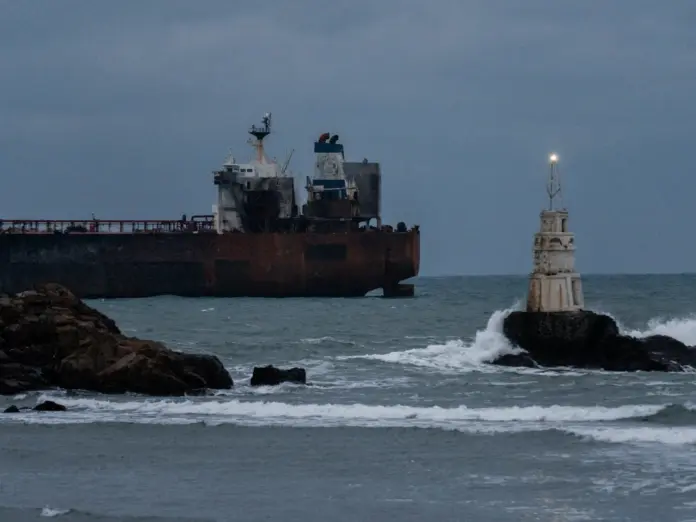
Russia Shadow Fleet — French and British naval forces have intercepted a sanctioned Russian-linked oil tanker in the Atlantic Ocean, the latest strike against the sprawling network of vessels Moscow uses to circumvent international sanctions and sustain its war economy.
The tanker Tagor, which had departed from Murmansk in northwestern Russia, was boarded on Sunday approximately 400 nautical miles — roughly 740 kilometres — west of the Brittany coast. French President Emmanuel Macron announced the operation on X, formerly Twitter, on Monday, framing it as part of a sustained campaign to disrupt what Western governments describe as Russia’s shadow fleet.
When naval personnel boarded the vessel, it was found to be almost empty. The Tagor had been flying a Cameroonian flag at the time of interception, falsely suggesting registration in Cameroon, and was charted on a course toward Limbe, a port city on Cameroon’s western coast. The deception ran deeper still: just one week earlier, the same vessel had been observed sailing off the Norwegian coast while flying a Madagascan flag. The frequent changing of flags is a hallmark tactic of shadow fleet operators seeking to obscure a ship’s true ownership and origin.
Recommended Reading
The Tagor is subject to sanctions imposed by both the European Union and the United States. Guillaume Le Rasle, spokesman for the Atlantic maritime prefecture, confirmed the decision to divert the vessel was taken on Sunday evening.
Russia is widely believed to operate a fleet of hundreds of vessels specifically assembled to move oil and other commodities beyond the reach of Western sanctions. Oil revenue remains a cornerstone of the Russian economy and a critical source of financing for the Kremlin’s military campaign in Ukraine, now in its fifth year. Russian President Vladimir Putin has repeatedly condemned the detention of Russia-linked ships as an act of piracy.
The Tagor interception is the fourth such operation conducted by French naval forces since September. In that month, the Boracay — a vessel claiming Beninese registration — was boarded, and its Chinese captain was subsequently tried in absentia. A French court issued an arrest warrant and a one-year custodial sentence against him in March. In January, French forces impounded the Grinch, another suspected Russian tanker. Then in March, the Deyna, which had also sailed from Murmansk under a Mozambican flag, was detained in the southern port of Marseille.
France has moved to sharpen its legal arsenal in parallel with these operations. In April, Paris announced plans to double financial penalties for vessels that fail to fly a legitimate flag or refuse to comply with boarding orders — a signal that enforcement pressure will continue to escalate.
Russia Shadow Fleet: The Energy Security Dimension
The pattern of flag manipulation documented across these cases illustrates the lengths to which shadow fleet operators go to evade detection. Ships cycle through the registries of smaller nations, exploiting gaps in maritime oversight and making it harder for authorities to establish jurisdiction. The involvement of the United Kingdom in Sunday’s operation underscores the increasingly coordinated nature of Western efforts to police these routes.
Analysts note that while individual interceptions may not dramatically reduce Russia’s overall oil export capacity, the cumulative effect of seizures, prosecutions, and heightened naval patrols raises the operational costs and risks for shadow fleet operators. Each detained vessel also generates intelligence about the networks, financing structures, and flag-of-convenience registries that underpin the system.
Russia has been waging war against Ukraine for more than four years. Western governments have consistently argued that squeezing Moscow’s oil revenues is among the most effective non-military tools available to limit the Kremlin’s capacity to sustain prolonged combat operations. The shadow fleet represents one of the primary mechanisms through which Russia has sought to neutralise that pressure — and the Atlantic interception of the Tagor suggests that effort is facing growing resistance on the open seas.