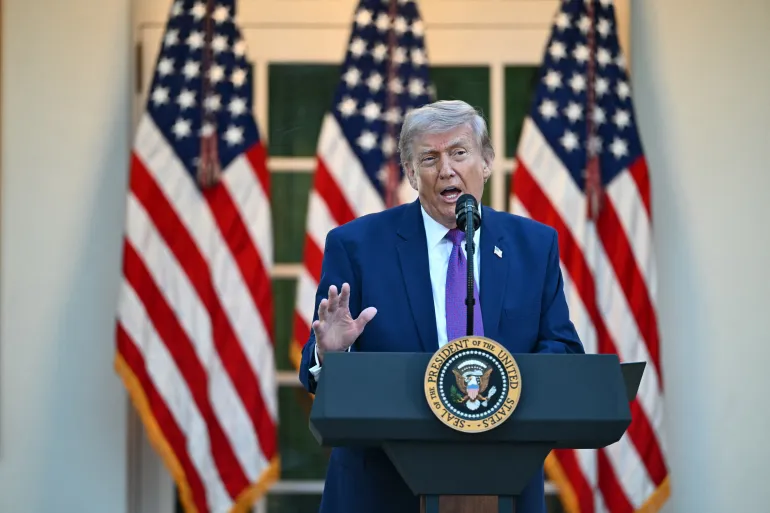
Us-Iran Nuclear Talks — The fragile ceasefire between the United States and Iran is teetering on the edge of collapse, with President Donald Trump declaring it on ‘massive life support’ and dismissing Tehran’s latest peace overture as ‘a piece of garbage’ he had not even finished reading.
The blunt rejection came in response to an Iranian proposal delivered through Pakistani intermediaries on Sunday. The document demanded US war reparations, full Iranian sovereignty over the Strait of Hormuz, an end to all sanctions, and the release of frozen assets — while explicitly deferring any discussion of nuclear negotiations to a later stage. Washington, by contrast, is demanding that Iran formally abandon its nuclear programme and surrender its stockpile of uranium enriched to 60 percent, a level that brings the country within technical reach of weapons-grade material.
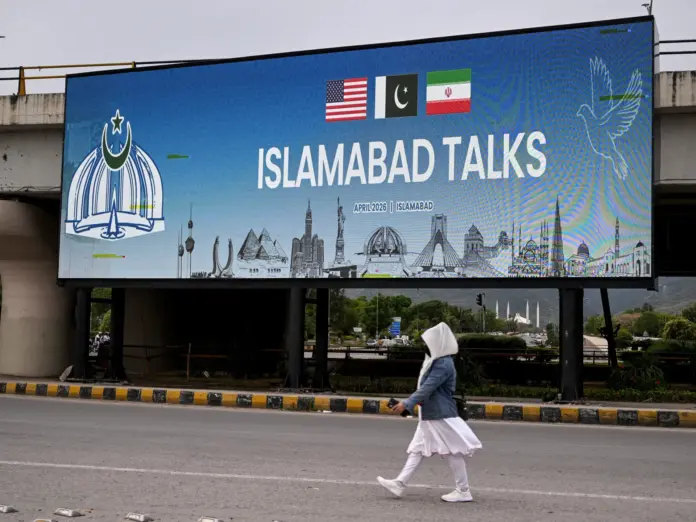
The two sides have not met directly since talks in Islamabad broke down without agreement on April 12. Tehran has since insisted that nuclear negotiations can only begin after the lifting of sanctions and the termination of a US naval blockade imposed on its ports on April 13. The positions remain irreconcilable, and the diplomatic gap is widening.
Recommended Reading
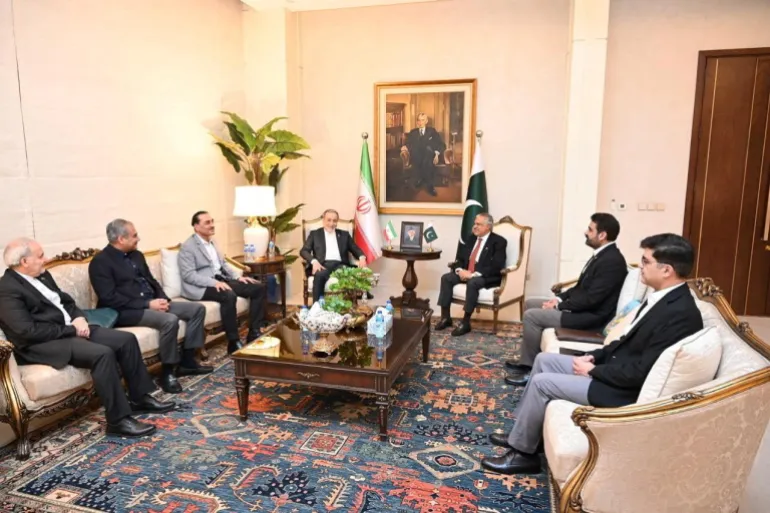
Complicating the picture further, Pakistan’s Ministry of Foreign Affairs was forced to rebut allegations that it had sheltered Iranian military aircraft from potential US strikes. A report published Monday claimed that Iran had moved several military aircraft — including an RC-130 reconnaissance plane — to Pakistan Air Force Base Nur Khan near Rawalpindi following the April 8 ceasefire. Islamabad pushed back firmly, stating that the Iranian aircraft arrived at the base as part of diplomatic logistics connected to the senior-level talks held on April 11, not as a military refuge.
Despite the turbulence, Pakistan is pressing forward with its mediating role. On May 4, Deputy Prime Minister and Foreign Minister Ishaq Dar held a phone call with Iranian Foreign Minister Abbas Araghchi to discuss Islamabad’s ongoing mediation efforts. That same day, 22 crew members from the Iranian container ship MV Touska — seized by US forces — were evacuated to Pakistan before being transferred to Iran. Pakistan characterised the evacuation as a confidence-building measure coordinated with both sides, a signal that back-channel communication, however strained, has not entirely ceased.
Qatar has also pledged support for Pakistan’s mediation efforts. US Secretary of State Marco Rubio met Qatari Prime Minister Sheikh Mohammed bin Abdulrahman bin Jassim Al Thani in Miami, Florida, on Saturday, underscoring the multilateral diplomatic architecture being assembled around the crisis.
Iran, meanwhile, is pursuing its own parallel diplomatic track. Foreign Minister Araghchi met Chinese Foreign Minister Wang Yi in Beijing last week, and is expected to attend a BRICS foreign ministers meeting in India on Thursday and Friday. China, Iran’s largest economic and strategic partner, is emerging as a key variable in the standoff. Trump is expected to raise the Iran crisis directly with Chinese President Xi Jinping during a visit to Beijing this week — a conversation that could prove pivotal given Beijing’s leverage over Tehran.
Iran’s lead negotiator is Parliamentary Speaker Mohammad Bagher Ghalibaf, whose hardline positioning on nuclear sovereignty reflects the domestic political constraints facing the Iranian government. Any agreement that is seen as capitulating on the nuclear file would carry enormous political risk inside Iran.
Us-Iran Nuclear Talks: The Nuclear Dimension
The crisis is also drawing scrutiny toward Pakistan’s mediating role itself. US Senator Lindsey Graham called for ‘a complete reevaluation’ of Pakistan’s position as an intermediary, a statement that could complicate Islamabad’s delicate balancing act between Washington and Tehran.
Adding a further dimension to the conflict’s regional reach, Israeli Prime Minister Benjamin Netanyahu said in a television interview broadcast Sunday that Israel viewed the conflict as unresolved. He confirmed that Israel and the United States had agreed they could ‘re-engage militarily’ if Iran’s nuclear material cannot be removed through negotiations — a stark reminder that the diplomatic window, however narrow, remains the only alternative to renewed military confrontation.
With no direct talks scheduled, a peace proposal already dismissed, and military options explicitly kept on the table by both Washington and Jerusalem, the coming days — particularly Trump’s Beijing visit and Araghchi’s appearance at the BRICS meeting — may determine whether the ceasefire survives or collapses entirely.