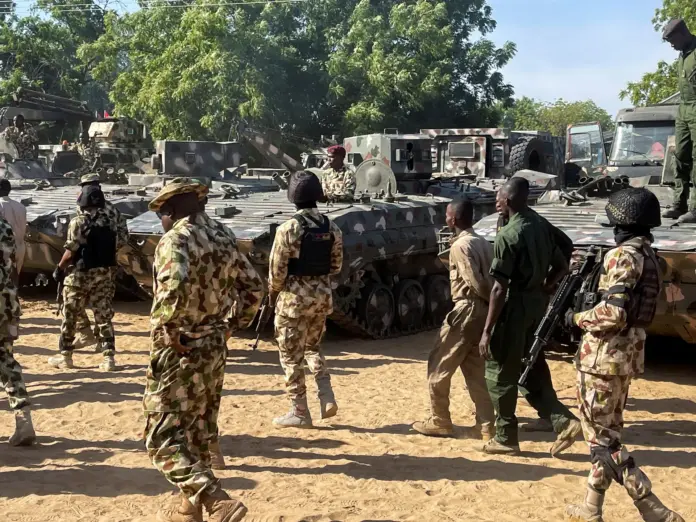
Nigeria Airstrikes Civilians — The United Nations human rights chief has called for urgent independent investigations into separate air operations by Nigerian and Chadian forces in the Lake Chad region, after strikes killed scores of civilians and drew widespread condemnation from rights groups.
Volker Turk, the UN High Commissioner for Human Rights, demanded that both governments conduct prompt, thorough, impartial and independent inquiries into the attacks. He stressed that all military operations must be carried out in full compliance with international humanitarian law and international human rights law.
The most deadly incident occurred on 10 May, when Nigerian army airstrikes struck a crowded market in Tumfa village in Zamfara state, in the country’s northwest. Amnesty International confirmed that at least 100 civilians were killed in the attack, with the organisation emphasising that many of the dead were women and children who had gathered at the busy market.
Recommended Reading
The Nigerian military flatly rejected the casualty figures. Major-General Michael Onoja, spokesman for the defence headquarters, dismissed reports of large death tolls as unverified and misleading. He maintained that the strike targeted a confirmed high-level gathering identified through intelligence sources, that several terrorists were neutralised, and that the operation was conducted in accordance with international humanitarian law. The military stated on Wednesday that no evidence of civilian casualties in Zamfara state this month had been found.
The divergence between official military accounts and on-the-ground findings by rights organisations has deepened concern among international observers. Nigeria’s armed forces have been engaged in a protracted campaign against armed groups — variously described as bandits and terrorists — across the northwest, while simultaneously fighting a 17-year insurgency in the northeast against Boko Haram and its offshoot, ISWAP, the Islamic State affiliate operating in West Africa Province.
A separate but related crisis unfolded in the remote marshlands of the Lake Chad basin, a vast and porous territory shared by Nigeria, Cameroon, Niger and Chad. Chadian jets conducted bombardments against Boko Haram camps situated on islands within the region beginning last Friday. The islands, largely inaccessible and under militant control, are home to civilian populations — including fishermen — who are compelled to pay taxes to Boko Haram under threat of violence.
Dozens of Nigerian fishermen working on those islands were reportedly killed in the bombardments. Footage verified from Bosso, a town in Niger, showed several fishermen receiving hospital treatment for severe burns sustained during the strikes — stark visual evidence of the human cost of the military campaign in the region.
The Lake Chad basin has long served as a sanctuary for Boko Haram fighters, who exploit the difficult terrain and the overlapping jurisdictions of four nations to evade security forces. Coordinated military operations across borders have periodically targeted militant strongholds, but such campaigns have repeatedly raised concerns about civilian protection in areas where combatants and non-combatant populations are deeply intermingled.
Nigeria Airstrikes Civilians: What This Means for the Sahel
Turk’s intervention reflects growing alarm at the United Nations over the conduct of counterinsurgency operations across the Sahel and Lake Chad region. His call for accountability comes as Nigeria faces mounting pressure to explain the Zamfara strike, which — if Amnesty International’s figures are confirmed — would represent one of the deadliest single incidents of civilian harm attributed to the Nigerian military in recent years.
Rights advocates argue that the pattern of denials following high-casualty strikes, combined with limited independent access to affected areas, makes accountability exceptionally difficult to achieve. The Nigerian military’s insistence that the Tumfa operation was lawful and targeted stands in direct contradiction to witness accounts and the findings of international monitors.
With the insurgency in the northeast entering its second decade and banditry in the northwest showing no signs of abating, the Nigerian government faces intensifying scrutiny over whether its military campaign is being waged within the boundaries of international law — and whether those responsible for civilian deaths will ever face consequences.