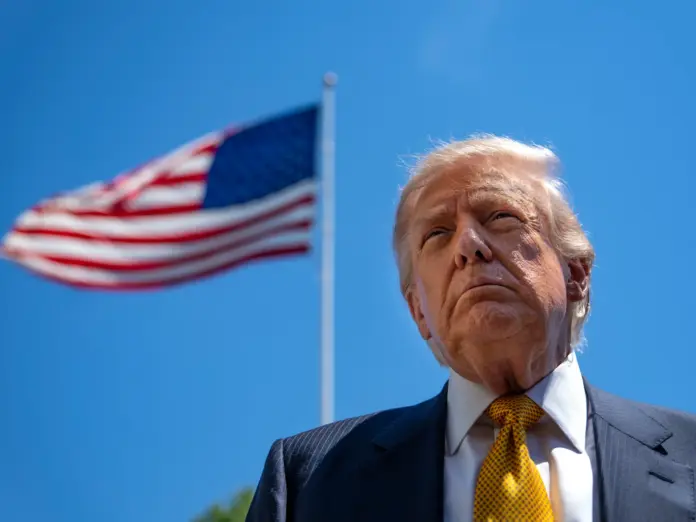
Us-Iran Ceasefire — The ceasefire between the United States and Iran is on ‘life support’, President Donald Trump warned, as diplomatic efforts to end the conflict collapsed under the weight of irreconcilable demands and escalating regional tensions that have rattled global energy markets and strained Washington’s military readiness.
The truce, which has held since April 8 following five weeks of intensive US bombing campaigns that depleted American ammunition stockpiles, now appears increasingly fragile. Trump publicly dismissed Iran’s most recent negotiating position as ‘garbage’, signalling a sharp deterioration in the diplomatic atmosphere that had briefly offered hope of a durable settlement.
At the heart of the impasse lie fundamental disagreements over Iran’s nuclear programme. Tehran has flatly rejected any dismantling of its enrichment infrastructure, even as US and Israeli strikes in June left the country’s enrichment sites buried under rubble. Crucially, Iran’s enriched uranium remains inside the country, and the enrichment facilities themselves have not been dismantled. Israeli Prime Minister Benjamin Netanyahu has warned that Tehran retains both its extensive proxy networks and its ballistic missile arsenal — capabilities that Israel regards as existential threats.
Recommended Reading
Iran, for its part, is demanding the lifting of international sanctions and formal recognition of its influence over the Strait of Hormuz, the world’s most critical oil transit chokepoint through which roughly a fifth of global energy exports passes each day. Tehran has also insisted on an end to hostilities across all fronts, including Lebanon, where its proxy forces remain active.
The Hormuz question erupted into open confrontation last week when Trump announced ‘Project Freedom’, an initiative designed to force the strait open to unrestricted international shipping. Iran responded swiftly and forcefully, launching a barrage of missiles and drones targeting the United Arab Emirates. The attack prompted Trump to suspend the initiative within 24 hours of its announcement, though a naval blockade of vessels linked to Iran seeking passage through the strait remains in place.
Regional instability deepened further when Kuwait announced it had foiled an infiltration operation by Iran’s Islamic Revolutionary Guard Corps, underscoring the extent to which the conflict continues to bleed into neighbouring states. In a parallel development, a US envoy confirmed that Israel has deployed Iron Dome anti-missile batteries and personnel to the UAE, a move reflecting the growing security anxieties of Gulf states caught between the two warring powers.
The war’s economic consequences are now registering sharply inside the United States. Rising gas, oil, and fertiliser prices have pushed inflation higher, and a new Reuters/Ipsos survey published Tuesday found that two-thirds of Americans polled report feeling direct financial strain from the conflict. The same survey revealed that an equal proportion of respondents — two-thirds — believe Trump has failed to provide a clear rationale for the war. His approval rating has fallen to 36 percent, down from 47 percent last year, with midterm elections scheduled for November adding urgency to the political calculus in Washington.
Us-Iran Ceasefire: Regional Implications
The military costs extend beyond economics. A report from the Center for Strategic and International Studies warned that the sustained bombing campaign has significantly reduced Washington’s readiness for other potential confrontations, with analysts specifically flagging the implications for any future crisis involving China. The five-week air campaign drew down US precision munitions and strained logistics chains that would be critical in an Indo-Pacific contingency.
The path to a negotiated settlement remains deeply unclear. Iran’s core demands — sanctions relief, nuclear programme preservation, and Hormuz recognition — are incompatible with Washington’s stated objectives of preventing Tehran from acquiring a nuclear weapon and maintaining freedom of navigation in international waters. With the ceasefire fraying, proxy networks intact, and domestic pressure mounting on both sides, the window for diplomacy appears to be narrowing rapidly.
The coming weeks will test whether the April 8 ceasefire can survive the weight of accumulated grievances, or whether the region slides back toward open hostilities with consequences that would reverberate far beyond the Persian Gulf.