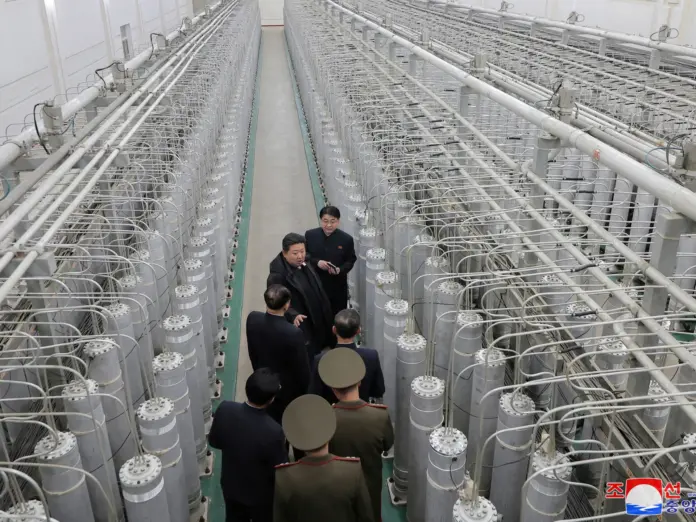
North Korea Nuclear Npt — North Korea’s ambassador to the United Nations, Kim Song, delivered a stark warning to the international community this week, declaring that Pyongyang will never be constrained by any treaty governing atomic weapons. The statement, broadcast by North Korean state media on Thursday, was timed to coincide with the 11th Nuclear Non-Proliferation Treaty (NPT) Review Conference, currently under way at UN headquarters.
The declaration represents one of Pyongyang’s most direct rejections of the global non-proliferation framework. North Korea withdrew from the NPT in 2003 and has since conducted six nuclear tests, steadily expanding an arsenal now believed to comprise dozens of warheads. The country’s constitution formally enshrines its status as a nuclear-armed state, and officials have repeatedly characterised the weapons programme as an irreversible strategic choice.
The United States and other participating nations used the conference to condemn North Korea’s continued nuclear development. Washington’s criticism carries particular weight given the scale of its own arsenal — the US and Russia together account for nearly 90 percent of all nuclear weapons globally. According to data published by the Stockholm International Peace Research Institute (SIPRI), the world’s nine nuclear-armed states — Russia, the United States, France, the United Kingdom, China, India, Pakistan, Israel and North Korea — collectively held 12,241 warheads as of January 2025.
Recommended Reading
Both Washington and Moscow have pursued major modernisation programmes for their nuclear forces in recent years, a trend that arms control advocates warn is eroding the spirit of the NPT even among its founding signatories. The treaty, designed to prevent the spread of nuclear weapons and promote disarmament, faces mounting pressure from multiple directions as geopolitical rivalries intensify.
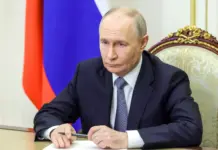
North Korea’s posture at the conference is further complicated by its deepening military relationship with Russia. Pyongyang has dispatched ground troops and artillery shells to support Moscow’s ongoing invasion of Ukraine. Observers tracking the arrangement believe North Korea is receiving military technology assistance from Russia in exchange for that support — a transaction that could accelerate Pyongyang’s weapons capabilities and alarm Western governments already frustrated by the lack of diplomatic progress on denuclearisation.
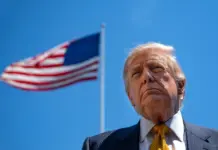
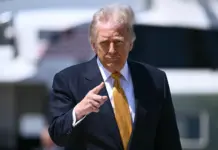
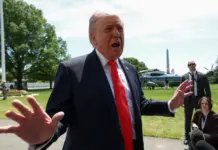
The NPT review conference also drew attention to Iran, another flashpoint in global nuclear diplomacy. Unlike North Korea, Tehran remains a signatory to the treaty and continues to deny pursuing an atomic weapon. Iran has long insisted that Washington formally acknowledge its right to enrich uranium — a demand that has repeatedly stalled negotiations. US President Donald Trump has stated unequivocally that Iran will never be permitted to acquire a nuclear weapon, a position that leaves little apparent room for compromise as talks remain deadlocked.
The contrast between Iran’s position within the NPT framework and North Korea’s outright rejection of it underscores the treaty’s structural vulnerabilities. North Korea has faced multiple rounds of UN Security Council sanctions following its nuclear tests, yet those measures have failed to halt or reverse the programme. Pyongyang’s willingness to absorb economic penalties while pressing ahead with weapons development has led many analysts to conclude that diplomatic tools alone are insufficient to alter its calculus.
North Korea Nuclear Npt: The Nuclear Dimension
The 11th Review Conference convenes against a backdrop of what SIPRI describes as the largest and most complex nuclear landscape in decades. With two major powers modernising ageing arsenals, a rogue state openly defying international norms, and a Middle Eastern nation under intense scrutiny, the conference faces the challenge of preserving a framework that its own members are straining from within.
Ambassador Kim Song’s statement leaves little ambiguity about where Pyongyang stands. For North Korea, nuclear weapons are not a bargaining chip — they are, in the regime’s own words, a permanent and constitutional feature of the state.