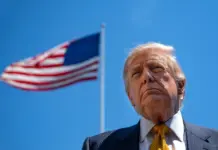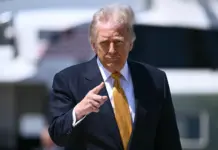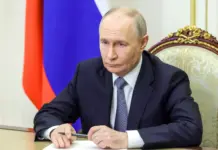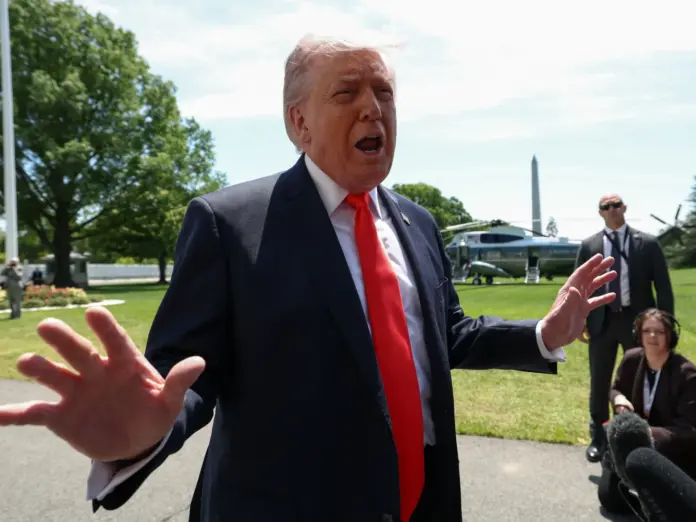
WASHINGTON / BEIJING — President Donald Trump departed for the Chinese capital on Tuesday afternoon for a high-stakes summit with President Xi Jinping, pledging to hold a "long talk" about Iran even as he insisted trade would dominate the agenda. The visit comes as the United States’ military campaign against Iran enters its 74th day, having already cost American taxpayers at least $29 billion in munitions and equipment alone.
Trump Beijing Iran Crisis — Trump’s framing of the Iran conflict has grown increasingly stark. "We’re either going to make a deal or they’re going to be decimated. One way or the other, we win," he declared before boarding. On the question of economic hardship at home, the president was equally blunt: he said he "doesn’t think about Americans’ financial situation" when prosecuting the war, adding that the sole imperative driving his policy is preventing Tehran from acquiring a nuclear weapon. "The only thing that matters when I’m talking about Iran: They can’t have a nuclear weapon," he said.
That position is landing hard on American households. US grocery prices surged 0.7 percent in April alone — the steepest single-month rise in nearly four years, according to the Bureau of Labor Statistics. Fresh vegetable prices have climbed more than 44 percent compared with three months ago. Bread is up 8 percent, milk 5 percent, and grocery coffee is rising at an annualised rate exceeding 22 percent. A Reuters poll found two-thirds of Americans are financially stressed by elevated gas prices, and an equal proportion say they remain uncertain about what the administration is ultimately trying to achieve in Iran.
Recommended Reading
The financial strain is compounding pressure on a White House already seeking enormous defence outlays. Defense Secretary Pete Hegseth has requested $1.5 trillion from Congress for military spending, while the Congressional Budget Office estimates Trump’s proposed "Golden Dome" missile defence architecture will cost $1.2 trillion over 20 years. Congress has so far approved roughly $24 billion for the programme, which Trump ordered during his first week in office and expects to be operational before January 2029. The president had previously cited a figure of $175 billion for the shield.
Iran’s government is showing no sign of capitulation. Foreign Ministry spokesman Esmaeil Baghaei characterised the confrontation as a contest between "a proud people" and "professional liars who fabricated justifications for atrocity," a formulation that signals Tehran intends to frame the conflict in civilisational rather than purely strategic terms.
The crisis is simultaneously reshaping security architecture around one of the world’s most critical maritime chokepoints. A UN Security Council draft resolution calling for freedom of navigation in the Strait of Hormuz and the protection of international shipping and energy supplies has attracted the backing of 112 member states. Co-sponsors span a remarkably broad coalition — India, Japan, South Korea, Kazakhstan, Kenya, Senegal, Argentina, and the majority of European and Gulf nations. The United Kingdom separately announced it will contribute weaponry to a multinational defensive mission securing the strait.
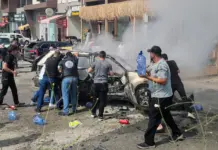
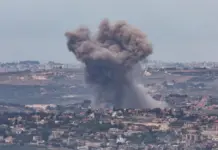
Regional tensions are also flaring beyond Iran’s borders. Kuwait detected an attempted incursion by four members of Iran’s Islamic Revolutionary Guard Corps on Bubiyan Island. The United Arab Emirates blacklisted 16 Lebanese citizens and five Lebanese organisations over alleged ties to Hezbollah. In Lebanon itself, Israeli strikes have killed 2,883 people and wounded 8,787 since March 2, according to the country’s Health Ministry. The latest victims include two paramedics killed and a third wounded in a targeted Israeli strike on emergency workers in the south of the country.
Trump Beijing Iran Crisis: Regional Implications
On the diplomatic front, US Ambassador to Israel Mike Huckabee expressed optimism about broadening the Abraham Accords, suggesting Washington still sees a pathway to regional normalisation even as the conflict intensifies.
The war’s political and cultural reverberations are reaching well beyond the region. The Cannes Film Festival opened under a cloud of division over the Gaza conflict, while the Eurovision Song Contest in Vienna became a flashpoint after Israel qualified for the final despite protests and a boycott by five nations — Slovenia, the Netherlands, Ireland, Iceland, and Spain. Ireland’s national broadcaster described participation alongside Israel as "unconscionable given the ongoing and appalling loss of lives in Gaza." Israeli contestant Noam Bettan performed a song titled Michelle as Austrian police prepared for demonstrations outside the venue.
With Trump now in Beijing and nuclear negotiations with Tehran at an impasse, the coming days may prove decisive in determining whether diplomacy or escalation defines the next phase of a conflict already reshaping economies, alliances, and institutions across the globe.