Us-Iran Nuclear Deal — Diplomatic efforts to end the US-Iran war intensified on Wednesday as Washington and Tehran exchanged proposals through Pakistani intermediaries, with the White House expressing cautious optimism that a framework agreement could be within reach — even as American forces disabled an Iranian oil tanker attempting to break a naval blockade in the Gulf of Oman.
The United States has put forward a 14-point memorandum of understanding — described as a single-page document intended to establish a framework for more detailed negotiations — that would require Iran to suspend its nuclear enrichment programme, allow the lifting of US sanctions, and restore free transit through the Strait of Hormuz. The strait, effectively blockaded since the US and Israel launched Operation Epic Fury against Iran on February 28, normally carries approximately one-fifth of the world’s oil and liquefied natural gas supply.
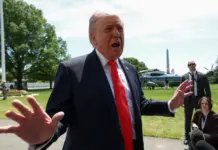
President Donald Trump told reporters he had held ‘very good talks with Iran in the last 24 hours’ and declared it ‘very possible that we will make a deal.’ He expressed hope that an agreement could be reached before his scheduled trip to China. The optimism, however, came wrapped in a stark warning. ‘If it doesn’t end, we have to go back to bombing the hell out of them,’ Trump said, adding that any resumed bombardment would come ‘at a much higher level and intensity than it was before.’
Recommended Reading
![US President Donald Trump speaks during a 'Military Mother's Day' event on May 6, 2026 at the White House in Washington, DC, the United States [Kent Nishimura/AFP]](https://world-tension.s3.us-east-2.amazonaws.com/articles/806/59f61153026c42cda98d51dca4b3eba6.webp)
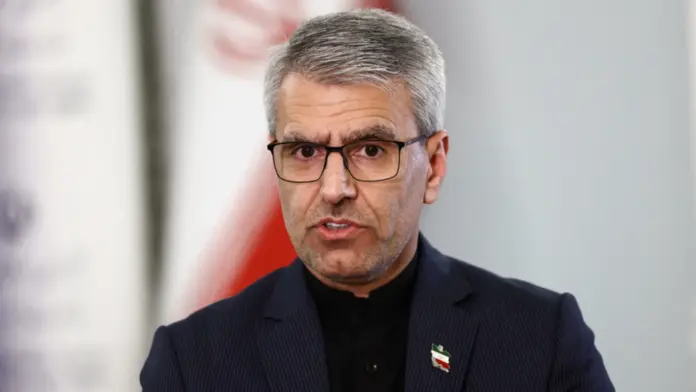
Iran’s response remained measured and non-committal. Foreign Ministry spokesman Esmaeil Baghaei confirmed that Tehran was still reviewing the American proposal and had not yet issued a formal reply. Iranian lawmaker Ebrahim Rezaei was considerably blunter, dismissing the document as ‘more of an American wish list than a reality.’ Iran’s state-aligned Tasnim news agency reported that the proposal contained provisions Tehran considers unacceptable, and Iranian officials have long refused to surrender their stockpile of enriched uranium — a central demand from both Washington and Jerusalem.
Pakistani Foreign Minister Shah Mahmood Qureshi confirmed Islamabad’s active role as a diplomatic conduit, stating that Pakistan was ‘endeavouring to convert this ceasefire into a permanent end to this war.’ A Pakistani source and a separate independent source indicated that the two sides were close to agreeing on the one-page memorandum, which would formally end hostilities and open the door to broader negotiations on shipping, sanctions, and nuclear constraints.
On the ground, the conflict’s economic dimensions remained sharply visible. US Central Command forces intercepted and disabled the Iranian-flagged oil tanker M/T Hasna in the Gulf of Oman at approximately 14:00 GMT on Wednesday, after the vessel was observed transiting international waters toward an Iranian port in apparent violation of the US naval blockade. American forces issued multiple warnings before disabling the ship. The US has said it has stopped dozens of vessels as part of its blockade of Iranian ports — a countermeasure to Iran’s effective closure of the Strait of Hormuz since late February.
Trump also announced a pause in Project Freedom, a US military operation launched just one day earlier that had been designed to escort stranded commercial vessels safely through the strait. The suspension came as negotiations appeared to gain momentum, suggesting Washington may be using the operation as a diplomatic lever.
In Israel, Prime Minister Benjamin Netanyahu confirmed he would speak with Trump on Wednesday regarding the Iran negotiations, emphasising that the two leaders maintained ‘full coordination.’ Netanyahu stated that the paramount objective was ‘the removal of all enriched material from Iran and the dismantling of Iran’s enrichment capabilities’ — a maximalist position that aligns with Trump’s stated demands but stands in direct opposition to Tehran’s declared red lines.
Us-Iran Nuclear Deal: The Nuclear Dimension
The diplomatic activity unfolded alongside fresh military escalation on a separate front. Israel launched its first air strike on the Lebanese capital Beirut since a ceasefire was agreed in April, with Netanyahu stating that Israeli forces had targeted a senior Hezbollah commander responsible for attacks on Israeli settlements and soldiers. The strike underscored the fragility of that agreement: despite the April ceasefire, both Israel and Hezbollah have continued trading fire, each accusing the other of violations. Hezbollah began striking Israel in early March in retaliation for Israeli operations against Iran, and has since carried out rocket and drone attacks on Israeli troops in Lebanon and communities in northern Israel. The majority of Israeli air strikes have targeted southern Lebanon.
The broader conflict, now in its third month, has reshaped global energy markets and strained diplomatic relationships across the Middle East. A ceasefire announced in early April had seen Iran halt drone and missile strikes on Gulf states including the UAE, but the Strait of Hormuz has remained closed to normal commercial traffic, disrupting energy supplies worldwide. The proposed memorandum, if accepted, would represent the first formal step toward unwinding a conflict that has already fundamentally altered the region’s security architecture.
Whether Tehran will move beyond reviewing the proposal to formally engaging with it remains the central question. Iran’s insistence on retaining its enriched uranium stockpile and its domestic political pressures make any rapid agreement difficult, even as both sides acknowledge the economic and human costs of continued hostilities.