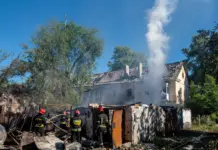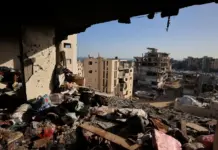
Ukraine Strikes Russian Energy — Ukraine struck deep into Russian territory overnight, targeting energy infrastructure across at least four regions in a coordinated drone campaign that ignited port fires, shut down a major oil refinery, and sent plumes of smoke rising above fuel depots hundreds of kilometres from the front line.
The most dramatic scenes unfolded in Taganrog, a port city in Rostov Oblast, where drones hit a tanker, a fuel tank, and an administrative building, triggering a large fire. Two civilians sustained injuries when a separate drone struck a private home in the city. Rostov Governor Yury Slyusar confirmed the attacks in an early Saturday post on Max, a Russian state-backed messaging platform, acknowledging that air defences had destroyed multiple drones across four districts in the region — including Taganrog itself, as well as Chertkovsky, Matveyevo-Kurgansky, and Neklinovsky districts.
In the village of Grekovo-Timofeyevka, a drone strike ignited a gas pipe inside a residential building, prompting the evacuation of local residents. No casualties were reported there. Windows in two homes were shattered in the village of Botsmanovo in Neklinovsky District, though again no injuries were recorded. Taganrog has faced repeated targeting in recent months; a late March 2026 strike on the city killed one person and wounded eight others.
Recommended Reading
The overnight campaign extended well beyond Rostov. An oil facility in Armavir, in Krasnodar Krai, was struck by Ukrainian drones, while giant fuel tanks burned near Yaroslavl following separate attacks. Russia’s Volgograd oil refinery was forced into an emergency shutdown after drone strikes disrupted operations — a significant blow to Russian fuel processing capacity.
Russia responded with its own aerial barrage, launching 90 drones and two Iskander-M/KN-23 ballistic missiles at Ukrainian territory overnight. The strikes left approximately 13,000 residents in Zaporizhzhia without electricity after attacks damaged energy infrastructure. The Sumy region also suffered damage to infrastructure, residential buildings, and vehicles.
The escalating exchange of strikes comes as Ukrainian President Volodymyr Zelenskyy issued a stark warning on Friday, stating that Russia is organising a new large-scale assault on Ukraine. Zelenskyy called on Ukrainian citizens to take protective measures and pressed allied governments to accelerate deliveries of Patriot air defence systems, arguing that faster weapons transfers are essential to blunting the anticipated offensive.
Russia, for its part, issued an unusual public warning to foreign nationals residing in Kyiv, stating it intends to carry out a series of systematic strikes on defence infrastructure in the Ukrainian capital. The warning raised alarm among diplomatic missions and underscored the intensifying pressure Moscow is placing on Ukraine’s rear areas.
Ukraine Strikes Russian Energy: The Wider European Impact
The conflict’s geographic reach was further illustrated when a Russian drone crashed into an apartment building in eastern Romania on Friday, injuring two people. The incident, occurring on NATO territory, adds to a pattern of stray munitions crossing Ukraine’s western borders and is likely to intensify calls within the alliance for stronger air defence coverage along its eastern flank.
The dual campaigns — Ukraine targeting Russian energy production and logistics, Russia striking Ukrainian power distribution and civilian areas — reflect a war increasingly defined by each side’s effort to degrade the other’s economic and military sustainability. Ukraine’s strikes on refineries and fuel storage facilities are designed to constrain Russian aviation fuel supplies and logistics chains, while Russian attacks on Ukrainian energy grids aim to erode civilian morale and industrial output ahead of what Kyiv describes as a coming major ground offensive.
With Zelenskyy’s warning of a large-scale Russian assault and Moscow’s public threats against Kyiv, pressure on Western governments to expedite military aid — particularly air defence systems — is expected to intensify in the days ahead.