Russia Ukraine Advance — Russia’s war machine in Ukraine is grinding forward at a dramatically reduced pace in 2026, with territorial gains collapsing to just 104 square kilometres between January 1 and May 26 — a 94 percent decline from the 1,619 square kilometres seized over the same period in 2025, according to the Institute for the Study of War. The figures paint a picture of a military campaign increasingly stalled by unsustainable losses, even as Moscow escalates its bombardment of Ukrainian cities.
The human cost of that diminished advance has been staggering. Ukrainian President Volodymyr Zelenskyy stated that Russian forces suffered 145,000 casualties in 2026 alone — 86,000 killed and 59,000 seriously wounded. Defence Minister Mykhailo Fedorov calculated that Russia is now losing 179 troops per square kilometre of advance, compared to 67 per square kilometre in 2025, a figure that underscores the dramatically worsening exchange rate for Moscow’s battlefield ambitions.
Ukraine has not merely held ground — it has recaptured it. A US Defence Intelligence Agency report delivered to Congress on May 18 confirmed that Ukrainian forces retook approximately 400 square kilometres in and around Dnipropetrovsk, and that Russia had lost territory it previously occupied elsewhere in the country.
Recommended Reading
The economic strain on Moscow is becoming acute. Russia sold 27.9 tonnes of gold reserves in 2026, valued at more than $4 billion, driving its gold holdings to their lowest level since the full-scale invasion began in February 2022. The country also exceeded its entire 2026 budget deficit allowance by April, four months before the fiscal year’s end.
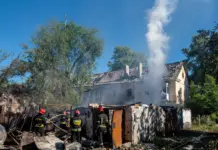
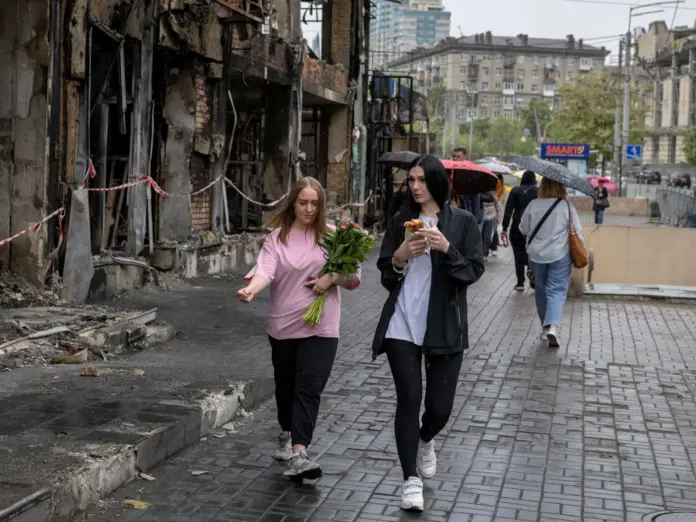
Despite the mounting losses, Russia continues to prosecute the war with overwhelming firepower. Its forces drop approximately 3,000 glide bombs per week across Ukrainian territory, weapons that have been retrofitted with guidance systems and fins enabling them to travel up to 100 kilometres from their launch point. On the night of May 24, Russia launched one of its most intense strikes of the war — 600 long-range drones and 90 missiles, including 36 ballistic missiles, targeting Kyiv and surrounding areas. Ukrainian air defences intercepted 91 percent of the drones and 81 percent of the cruise missiles, but the attack still killed at least two people and injured 87 others. The strikes damaged the Ukrainian Foreign Ministry, the Cabinet of Ministers building, two museums, and a food market.
Notably, Russia deployed the Oreshnik intermediate-range ballistic missile during the May 24 assault — a weapon it has forward-positioned in Belarus. The following day, Russian Foreign Minister Sergei Lavrov informed his US counterpart Marco Rubio that Russia intended to begin striking military sites in Kyiv, a declaration that appeared designed to signal escalation rather than de-escalation.
Ukraine has responded with its own long-range campaign deep inside Russian territory. On May 23, Ukrainian forces struck an oil depot and offloading terminal at Novorossiysk on the Black Sea. The following day, a strike hit the Tamanneftegaz oil terminal, also on the Black Sea coast. Ukrainian drones also reached the Metafrax Chemicals plant in Perm, located 1,700 kilometres inside Russia, and attacked the Taganrog Airbase in Rostov, igniting a fire at an aircraft repair facility.
Russia Ukraine Advance: The Wider European Impact
Russia claimed a Ukrainian strike on a college in occupied Luhansk two days before the Kyiv barrage killed six students and injured 39. Ukraine’s General Staff disputed the characterisation, stating the target was a centre for Advanced Unmanned Technologies operated by a company called Rubikon — not a civilian educational institution.
On the diplomatic and military supply front, Sweden announced on May 28 that it would donate 16 Gripen fighter jets to Ukraine. Under a separate arrangement, Ukraine will purchase an additional 20 Gripens through the EU’s Ukraine Support Loan in a deal valued at $2.9 billion, significantly expanding Kyiv’s future air combat capabilities.
The convergence of a near-stalled Russian advance, catastrophic personnel losses, deepening fiscal strain, and a growing Ukrainian arsenal suggests the war is entering a phase in which Moscow’s capacity to sustain offensive momentum is under serious pressure — even as it continues to inflict devastating strikes on Ukrainian civilians and infrastructure.