Ukraine Ai Drone — Ukraine is waging a sophisticated aerial interdiction campaign deep inside Russian-occupied territory, deploying artificial intelligence-guided drones to sever the supply arteries that sustain Moscow’s forces across the south of the country. The offensive, which Ukrainian Defence Minister Mykhailo Fedorov formally announced on Wednesday as a ‘logistics lockdown’ strategy, has already produced measurable results on the battlefield.
Verified footage confirms at least 14 separate vehicle strikes in the past week alone, targeting convoys carrying food, fuel, and ammunition along routes that connect Russia to Crimea and other occupied territories in southern Ukraine. Ten of those incidents were recorded along the corridor stretching from Russia’s border to the occupied port city of Mariupol, with a further strike documented south-west of Melitopol.
The scale of destruction extends well beyond the immediate front. Clément Molin of the conflict analysis organisation Atum Mundi confirmed the destruction of 150 vehicles at locations more than 20 kilometres from the front line — a figure that underscores how far Ukraine’s reach now extends into rear-area logistics networks. Drone strike ranges have stretched beyond 100 kilometres, a capability that would have been operationally inconceivable a year ago.
Recommended Reading
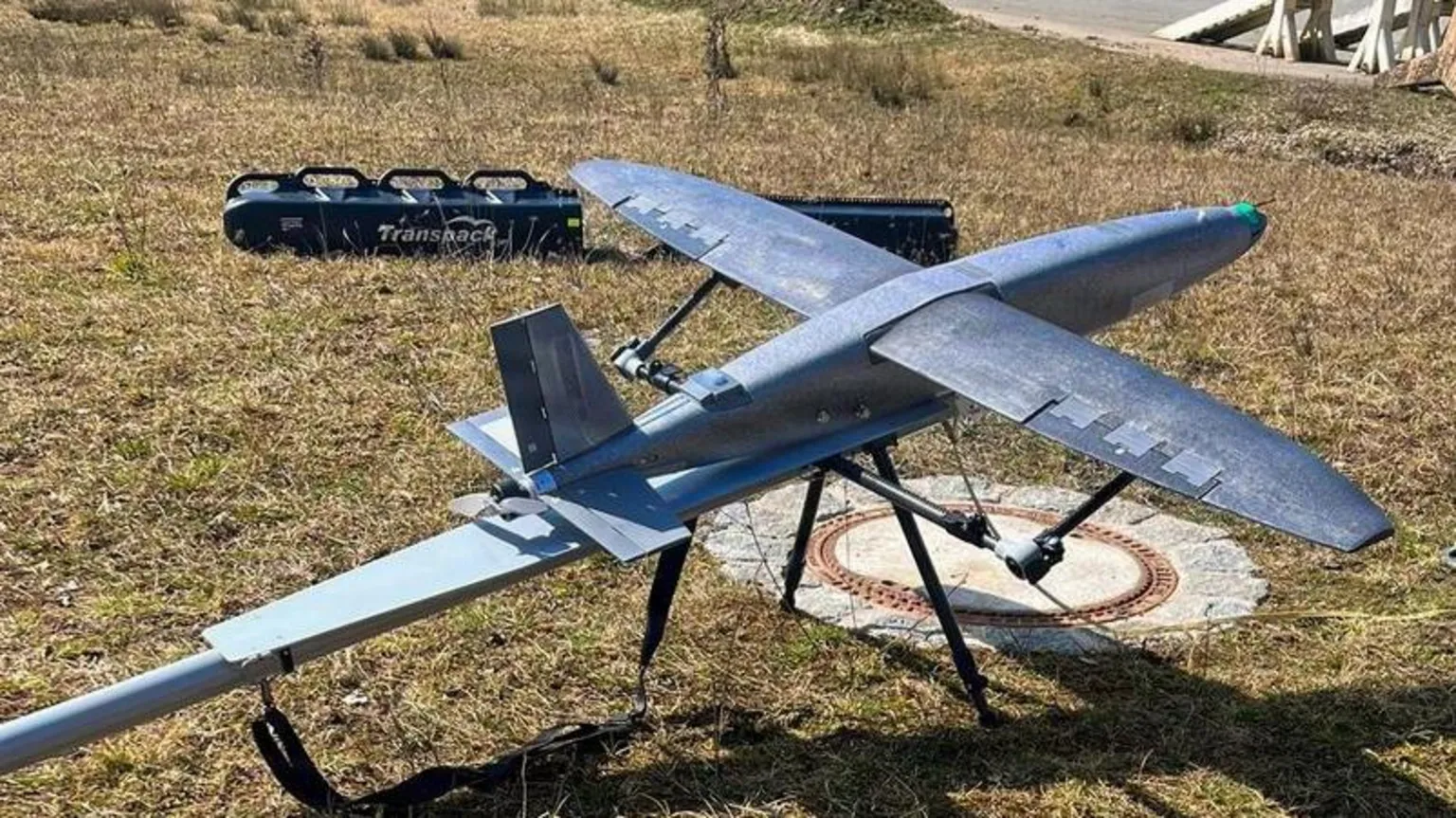
At the centre of this campaign is the Hornet drone, an AI-enabled loitering munition whose targeting system has been trained on thousands of hours of footage depicting Russian military vehicles and equipment. Crucially, the Hornet can connect to the Starlink satellite network, allowing operators to maintain control over far greater distances and making the system significantly more resistant to Russian electronic jamming — a persistent challenge for Ukrainian drone operations throughout the war.
Nick Brown of the defence intelligence firm Janes noted that Ukraine is now capable of launching hundreds of such loitering munitions simultaneously at targets more than 100 miles from launch points, representing a qualitative leap in Ukraine’s ability to project force without risking ground troops.
The pressure on Russian logistics is generating visible behavioural changes. Cristian Vlas of the Armed Conflict Location and Event Data Project (Acled) observed that Russian forces have begun shortening convoy lengths on key supply routes in an attempt to reduce their exposure. Ukraine’s 412th Nemesis Brigade reported that Russian commanders have curtailed the movement of heavy equipment across southern Ukraine, while troops on the ground are increasingly resorting to fields and unpaved dirt roads to avoid drone detection on established routes.
The logistical strain is severe. Robert Tollast of the Royal United Services Institute highlighted the scale of the challenge facing Russian commanders, noting that some brigades require up to 1,000 tonnes of fuel, food, ammunition, and supplies every single day. Disrupting even a fraction of that flow compounds over time, degrading combat readiness and limiting offensive options.
Russian-appointed authorities in the occupied territories are also responding to the threat. Vladimir Saldo, the Kremlin-installed administrator of the occupied Kherson region, has ordered restrictions on civilian traffic along the affected supply route — an acknowledgement that the drone campaign is creating dangerous conditions even for non-military movement.
Ukraine Ai Drone: The Wider European Impact
The strategic implications are significant. George Barros of the Institute for the Study of War stated that Ukraine is now employing mechanised equipment in tactical manoeuvres that were simply not possible twelve months ago, a shift he attributed in part to the degradation of Russian air defence units through Ukraine’s sustained long-range strike campaigns. Those earlier strikes appear to have opened corridors that Ukrainian forces are now exploiting with growing confidence.
The ISW’s broader assessment is striking: for the first time since 2023, Ukraine is reclaiming more territory than it is surrendering — a reversal that, if sustained, would mark a meaningful turning point in a war now entering its fifth year.
The logistics lockdown strategy reflects a deliberate evolution in Ukrainian military thinking, shifting from reactive defence toward proactive disruption of the enemy’s operational capacity. By targeting the supply chain rather than front-line positions directly, Kyiv is attempting to hollow out Russian combat power from the inside — starving brigades of the materiel they need to sustain offensive pressure while simultaneously constraining their freedom of movement across a vast occupied hinterland.