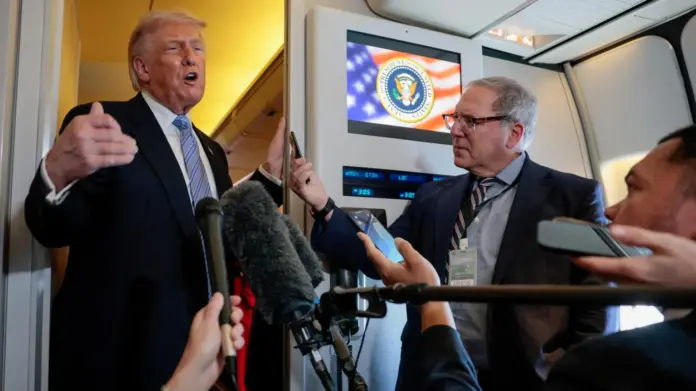
Iran Nuclear Freeze — President Donald Trump declared on Thursday that he would accept a 20-year suspension of Iran’s nuclear programme, marking a notable shift from his earlier insistence on a permanent end to uranium enrichment — provided, he stressed, that the freeze was a "real 20 years."
Trump made the remarks to reporters aboard Air Force One following high-level discussions in Beijing with Chinese President Xi Jinping. The two leaders reached rare common ground on the Iran crisis, agreeing that Tehran cannot be permitted to acquire a nuclear weapon and that the Strait of Hormuz — currently blocked by Iranian forces — must be reopened. Iran’s closure of the strategic waterway has driven a sharp rise in global oil prices, sending shockwaves through energy markets worldwide.
The president’s patience, he warned, was wearing thin. With no breakthrough in sight despite a ceasefire that has been in place for several weeks, Trump said the lack of progress was becoming untenable. The ceasefire was intended to create space for negotiations, but both sides have rejected each other’s most recent proposals.
Recommended Reading
Iran’s latest offer included an immediate end to hostilities across all fronts, a lifting of the US naval blockade of Iranian ports, and formal guarantees against further military strikes on Iranian territory. Washington has not accepted those terms.
The conflict began on 28 February, when Israeli and US forces launched a massive coordinated air campaign against Iran. Pakistan has since stepped in as a mediator, hosting key rounds of diplomacy in Islamabad. It was there, in April, that Vice-President JD Vance rejected an Iranian offer to suspend enrichment for five years, countering with a minimum threshold of 20 years — a position now publicly confirmed by Trump himself.
The evolution in Trump’s stated position is significant. He had previously demanded that Iran permanently cease all uranium enrichment and be categorically prevented from ever developing a nuclear weapon. The acceptance of a time-limited suspension, even one spanning two decades, represents a pragmatic recalibration — though Trump’s insistence on the suspension being genuinely enforced suggests deep scepticism about Iranian compliance.
That scepticism has historical roots. Trump withdrew the United States from the 2015 nuclear agreement — negotiated under the Obama administration — during his first term, citing what he described as fatally flawed "sunset clauses" that would eventually allow Iran’s nuclear constraints to expire. Critics of that deal, including Israeli Prime Minister Benjamin Netanyahu, argued the same point: that time-limited restrictions left open the door to Iranian weaponisation once the agreement lapsed.
Netanyahu has not publicly responded to Trump’s latest remarks. However, the Israeli leader has been unambiguous about his own conditions for ending the war. Iran’s stockpile of enriched uranium, Netanyahu has insisted, must be physically "taken out" before the conflict can be considered concluded — a demand that goes considerably further than a suspension agreement and complicates any diplomatic pathway forward.
Iran Nuclear Freeze: The Nuclear Dimension
Israel’s silence on Trump’s 20-year proposal leaves open the question of whether Washington and Jerusalem remain fully aligned on war aims. The two allies launched the February air campaign together, but the gap between Trump’s apparent willingness to negotiate a suspension and Netanyahu’s demand for the elimination of Iran’s nuclear material could prove a significant fault line in the weeks ahead.
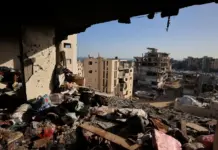
Meanwhile, the humanitarian and economic consequences of the conflict continue to mount. Iran’s blockade of the Strait of Hormuz — through which a substantial portion of the world’s seaborne oil passes — has kept energy prices elevated, adding pressure on governments and consumers globally. The naval blockade imposed by the United States on Iranian ports has drawn particular condemnation from Tehran, which has made its removal a central condition of any ceasefire agreement.
With Pakistan continuing its mediation efforts and China now more visibly engaged following the Beijing summit, the diplomatic landscape is shifting — but a resolution remains elusive. Trump’s modified nuclear demand may open a narrow window for renewed talks, yet the distance between the parties on core issues, from enrichment timelines to security guarantees to the fate of Iran’s existing uranium stockpile, remains formidable.