Russia-Ukraine Ceasefire — A ceasefire declared by Russia to cover its Victory Day commemorations collapsed in acrimony on Friday, with Moscow and Kyiv trading accusations of violations as drone strikes struck deep inside Russian territory and Ukrainian front-line positions came under sustained assault.
The truce, announced by the Kremlin to run from May 8 to May 10, was intended to allow Russia to hold its annual military parade in Moscow marking the Soviet Union‘s defeat of Nazi Germany in World War II — a conflict in which the Soviet Union lost 27 million people. Instead, the holiday became a backdrop for one of the most intense exchanges of the war in recent weeks.
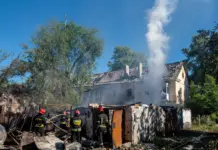
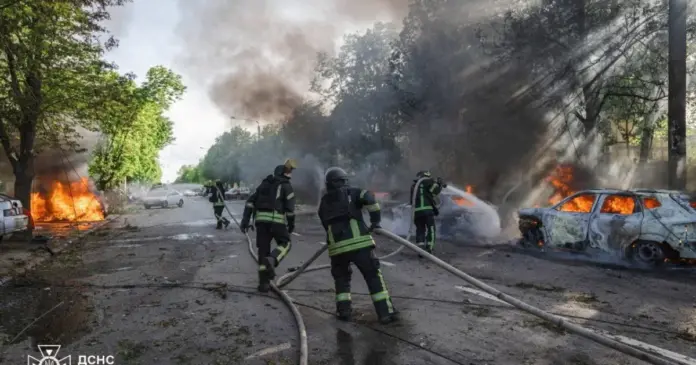
Russian air defences reported shooting down 264 Ukrainian drones in the early hours of Friday, including attempted strikes on Moscow and the Perm region in the Ural Mountains. Thirteen airports across Russia’s south suspended operations as a result of the drone campaign. In Rostov-on-Don, a Ukrainian drone struck the administrative building of the regional air traffic control centre, forcing a temporary suspension of operations. Russian authorities reported no casualties from that strike.
Recommended Reading
The most strategically significant Ukrainian strike hit an oil facility in Yaroslavl, a city located deep inside Russian territory. Kyiv described the attack as direct retaliation for ongoing Russian strikes against Ukrainian cities, framing it as a proportional response rather than a ceasefire violation.
Ukrainian President Volodymyr Zelenskyy flatly rejected Moscow’s characterisation of events, stating that Russian forces had carried out more than 140 attacks on front-line positions by early morning and launched in excess of 850 drone strikes overnight. He accused Russia of using the ceasefire as a tactical pause rather than a genuine gesture toward peace, saying Moscow was already discussing military operations to resume after May 9.
"They want a pause to hold a parade safely for one hour a year," Zelenskyy said, dismissing the Russian initiative as cynical and self-serving.
Ukraine had itself proposed an open-ended ceasefire beginning May 6 — two days before Russia's own truce was set to begin — but Moscow declined to adopt that framework. The divergence underscored the fundamental mistrust between the two sides and the difficulty of establishing any durable halt to hostilities.
Russia’s posture during the ceasefire period was notably aggressive in its diplomatic signalling. Moscow warned that any disruption of the truce would trigger a large-scale missile response against Kyiv and urged foreign diplomats stationed in the Ukrainian capital to leave the city ahead of a potential escalation. The warning drew sharp criticism from Western governments, who characterised it as coercive and incompatible with any genuine ceasefire commitment.
Russia-Ukraine Ceasefire: The Wider European Impact
Victory Day holds profound symbolic weight in Russia. The annual commemoration marks the moment in May 1945 when the Red Army raised the Soviet Victory Banner over the Reichstag in Berlin, following the death of Adolf Hitler and the final collapse of the Third Reich. The Moscow parade, featuring troops, armoured vehicles, and ballistic missiles, serves as the centrepiece of the national holiday and a showcase of Russian military power.
This year's celebrations carried particular resonance given the ongoing war in Ukraine, now in its fourth year. The Kremlin has consistently framed its invasion as a continuation of the anti-fascist struggle commemorated on Victory Day — a characterisation rejected by Ukraine and most of the international community.
The failure of the ceasefire, however brief and limited its scope, signals that neither side is prepared to accept a pause that the other can exploit for military or political advantage. With both governments accusing the other of bad faith before the truce had even fully taken effect, prospects for any broader diplomatic breakthrough remain distant. The exchange of strikes on Friday — from the front lines in eastern Ukraine to oil infrastructure deep inside Russia — illustrated the widening geographic scope of a conflict that shows no sign of abating.