ABU DHABI / TEHRAN — A clandestine visit by Israeli Prime Minister Benjamin Netanyahu to the United Arab Emirates has triggered sharp warnings from Tehran, deepened tensions across the Middle East, and drawn fresh scrutiny to the fragile architecture of Gulf diplomacy at a moment of acute regional instability.
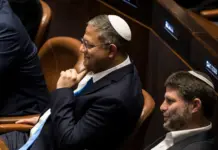
Netanyahu Uae Visit — The UAE’s Foreign Ministry flatly denied that Netanyahu had visited the country. Yet the denial quickly unravelled. Netanyahu’s former spokesperson, Ziv Agmon, confirmed he personally accompanied the prime minister to Abu Dhabi, describing a reception befitting a head of state. Netanyahu was driven by the UAE president in his ‘personal car from the plane to the palace,’ Agmon said, adding that the Israeli leader was received ‘with the honour of kings.’ Netanyahu’s own office subsequently characterised the trip as ‘historic.’
Iran’s response was swift and pointed. Foreign Minister Abbas Araghchi said Netanyahu had merely ‘publicly revealed what Iran’s security services long ago conveyed to our leadership’ — framing the disclosure less as an intelligence failure than as confirmation of what Tehran already knew. More ominously, Araghchi warned that ‘collusion’ with Israel is ‘unforgivable’ and that those engaging in it will be ‘held to account,’ language that carries unmistakable weight given the region’s current volatility.
Recommended Reading
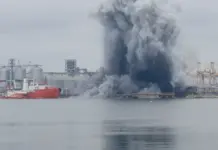
The episode compounds existing friction between Iran and its Gulf neighbours. Araghchi separately accused Kuwait of attempting to ‘sow discord’ after Kuwaiti authorities detained four Iranian citizens following an attack on a boat — an incident that has added another layer of grievance to an already strained relationship.
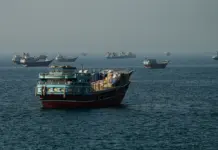
Iran’s assertiveness extends to the waterways that underpin global energy markets. First Vice President Mohammad Reza Aref declared that Tehran’s ‘right’ to the Strait of Hormuz is ‘established and the matter is closed,’ a statement that coincided with the Iranian mission to the United Nations formally condemning a US-sponsored draft resolution threatening sanctions against Tehran over its conduct in the strait.
While diplomatic fault lines deepen, the human cost of Israel’s military campaign continues to mount. At least 20 people were killed in Israeli strikes on Lebanon on Wednesday alone, among them a mother and her two children. Since March 2, Israeli attacks on Lebanon have killed at least 2,896 people and left 8,824 others injured — figures that have drawn sustained international condemnation.
In a separate legal development, a US court suspended sanctions imposed by the Trump administration against UN Special Rapporteur Francesca Albanese. The measures, introduced in July 2025, had barred Albanese from entering the United States and restricted her access to banking. The State Department had accused her of ‘engaging in lawfare’ and ‘unabashed antisemitism, support for terrorism, and open contempt for the United States, Israel, and the West’ — charges Albanese and her supporters have vigorously rejected. The court’s suspension of the sanctions represents a significant, if provisional, rebuke of the administration’s approach.
Netanyahu Uae Visit: Regional Implications
Efforts to break the siege on Gaza — in place since 2007 — are also intensifying. The Global Sumud Flotilla has announced plans to challenge Israel’s blockade by both land and sea. The initiative has already faced forceful resistance: in April, Israeli naval forces intercepted 22 of the flotilla’s 58 boats in international waters off Greece, detaining 175 activists. A land convoy component departed from Mauritania in late April and had gathered in Libya by early May, signalling that organisers intend to press forward despite the earlier interdiction.
Against this volatile backdrop, US diplomacy is operating on multiple fronts simultaneously. Vice President JD Vance stated that progress is being made in negotiations with Iran aimed at ending the war, though specifics remain scarce. Meanwhile, President Donald Trump has touched down in Beijing for high-level discussions with President Xi Jinping, following weeks of unsuccessful efforts to secure China’s assistance in reviving talks with Tehran. The visit underscores Washington’s recognition that any durable resolution to the Iran standoff may require Beijing’s involvement — a calculation that adds yet another dimension to an already complex diplomatic landscape.
The convergence of Netanyahu’s Abu Dhabi visit, Iran’s escalating rhetoric, the Lebanon death toll, and Trump’s China trip illustrates the degree to which Middle Eastern and global power dynamics are in simultaneous flux. Whether the diplomatic channels now being tested can absorb the pressure — or whether the region edges closer to a broader confrontation — may become clearer in the days ahead.