Russia Ukraine Territorial Losses — Russia is losing the territorial war of attrition in Ukraine, with new battlefield assessments revealing the Kremlin’s forces surrendered more ground than they captured over the first half of 2025 — even as Moscow launched one of its most intense aerial bombardments of the conflict to date.
The Institute for the Study of War calculated a net Russian gain of just 104 square kilometres across the period, later revising that figure down to 40.64 square kilometres when December data was incorporated. Against those marginal advances, Russian forces lost control of 281.1 square kilometres they had previously occupied — a stark illustration of how costly the grinding offensive has become. The monitoring group DeepState offered an even grimmer assessment for Moscow, estimating Russia captured only 14 square kilometres in May 2025 alone, its worst monthly performance since September 2023.
The battlefield stagnation has done nothing to curb Russian aerial aggression. On June 2, Russian forces unleashed 656 drones and 73 missiles against Ukrainian civilian areas in one of the war’s most concentrated single-day strikes. The attack killed 23 people and wounded at least 130 others. Ukrainian air defences performed strongly against most categories of incoming fire, intercepting 91.7 percent of drones and 90.6 percent of cruise missiles. Ballistic missiles, however, proved far harder to stop — only 27 percent were neutralised, a vulnerability that continues to haunt Ukrainian defenders.
Recommended Reading
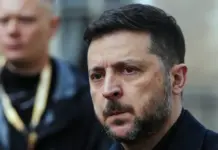
President Volodymyr Zelenskyy has publicly stated that Russia produces approximately 120 ballistic missiles per month, while Ukraine’s deputy defence minister Serhiy Beskrestnov assessed Moscow’s strategic stockpile of Iskander ballistic missiles at between 180 and 250 units. The United States, by comparison, manufactures Patriot interceptors at twice the rate Russia produces ballistic missiles — a production advantage that has yet to fully translate into Ukrainian defensive capability. Washington has refused to permit Ukraine to manufacture Patriot interceptors under licence, leaving Kyiv to develop its own solution. Zelenskyy pledged to deliver a domestically produced Ukrainian equivalent of the Patriot system by the end of 2027.
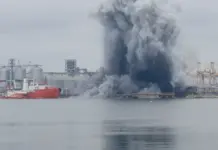
While defending against Russian missiles, Ukraine has simultaneously pushed its own strike campaign to unprecedented range and ambition. On May 30, Ukrainian forces destroyed a ballistic missile launcher and two Tupolev-142 long-range strategic bombers at Taganrog airbase — a significant blow to Russia’s strategic aviation assets. Separate strikes hit the St Petersburg oil terminal and damaged the corvette Boykyi berthed in the city’s harbour, bringing the war to Russia’s second-largest urban centre.
The energy infrastructure campaign intensified further over the weekend and into the following week. Ukrainian strikes hit the Saratov and Rostov oil refineries, followed by attacks on the Ilsky refinery — described as one of Russia’s largest — and the Novoshakhtinsky refinery. The sustained targeting of Russian refining capacity is designed to degrade the fuel supply chains sustaining Moscow’s military operations.
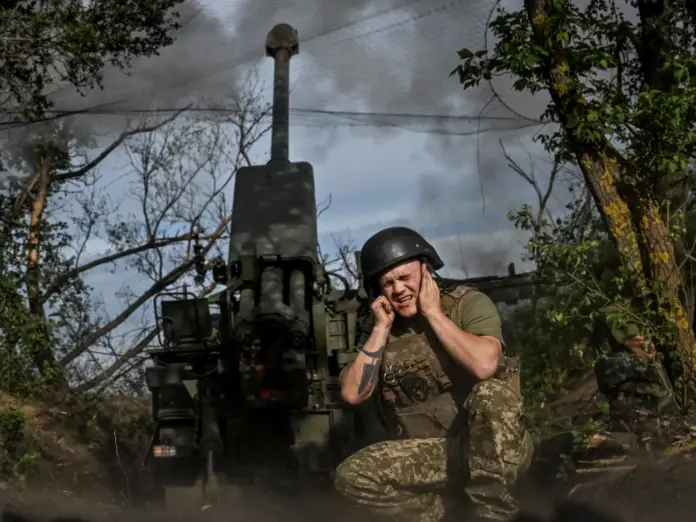
On the ground, Ukraine’s 3rd Army Corps declared on May 31 that it had established fire control over five significant cities deep inside occupied Luhansk — Luhansk city itself, Starobilsk, Alchevsk, Bryanka, and Kadiivka. Those urban centres sit between 50 and 90 kilometres inside Russian-held territory. Ukrainian commanders also stated their forces could strike armoured vehicles and ammunition depots at the Russian border, 205 kilometres away. The claim was underscored by a drone strike on the Tryokhizbenko training ground of the Russian 3rd Army in Luhansk on Saturday, which inflicted at least 30 casualties.
Russia Ukraine Territorial Losses: The Wider European Impact
Ukraine’s Unmanned Systems Forces have driven first-person view drones more than 100 kilometres into enemy-held territory and are deploying them to remotely mine major supply roads across occupied Ukraine — a tactic that threatens to strangle Russian logistics without requiring conventional ground operations.
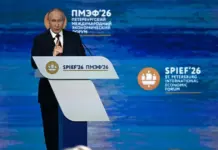
Diplomatically, the conflict remains deadlocked. Zelenskyy issued an open letter inviting Vladimir Putin to face-to-face negotiations, reaffirming Ukraine’s intention to recapture all occupied lands. Russian Foreign Minister Sergey Lavrov confirmed Moscow had heard Zelenskyy’s stated objectives, but offered no indication the Kremlin was prepared to engage. With Russian territorial gains at their lowest monthly rate in nearly two years and Ukrainian strikes reaching deeper into Russian territory than at any previous point in the war, the pressure on both capitals to define their next strategic move is intensifying.