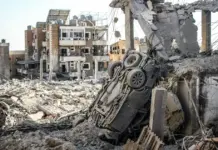
MOGADISHU — Street battles that paralysed Somalia’s capital for more than two days have killed at least 13 people, wounded 189 others, and forced roughly 12,500 households to flee their homes, the United Nations refugee agency reported, as a deepening political crisis over presidential power spilled into deadly urban warfare.
Mogadishu Political Clashes — The violence erupted on Wednesday, igniting in central Mogadishu near the residence of Hassan Ali Khaire, a former prime minister who has emerged as one of the leading figures in an opposition movement demanding timely elections. Fighting subsequently spread northward to the home of Sheikh Sharif Sheikh Ahmed, a former president, in the Abdiaziz district — one of the capital’s most densely populated neighbourhoods.
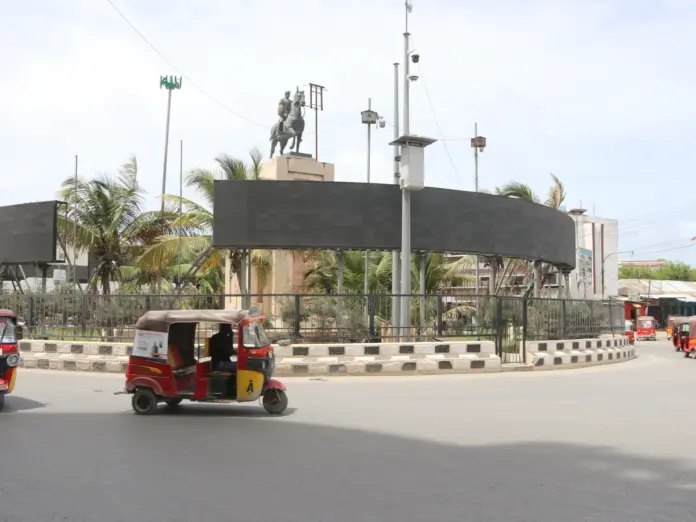
By Friday, the government declared both the Abdiaziz and Hawlwadag districts calm, but the toll on the city had already been severe. Bakara market, the largest commercial hub in Somalia, shuttered entirely during the unrest. Maka al-Mukarama Road, a principal artery running through the capital, was sealed off by security forces. The central bank’s deputy governor estimated business and service losses at approximately $3.8 million.
Recommended Reading
At the heart of the crisis lies a bitter dispute over whether President Hassan Sheikh Mohamud has the right to remain in office beyond his original mandate. The president maintains that parliament lawfully extended his term, a position the opposition has flatly rejected, characterising the move as an unconstitutional power grab designed to entrench his hold on power.
Khaire and Sheikh Sharif had been spearheading an opposition campaign calling for street demonstrations and the holding of elections on schedule. The government refused to permit protests at locations chosen by the opposition with their own security personnel present, arguing that security conditions in the capital were already fragile and that such marches would further destabilise the city. A protest planned for Thursday never materialised as the fighting made assembly impossible.
The standoff involving the two opposition figures ended through separate means. Khaire was escorted by government security forces to his home within the secure airport compound on Thursday. Sheikh Sharif held his position at his private residence in the northern Abdiaziz district until clan elders brokered a mediated agreement, a resolution that underscored the enduring role of traditional authority structures in Somali political life.
The episode carries uncomfortable echoes of a similar crisis in 2021, when a dispute over the term of then-President Mohamed Abdullahi Farmaajo also produced a violent standoff in Mogadishu. That confrontation, like the current one, exposed the fragility of Somalia’s political institutions and the ease with which electoral disagreements can translate into armed conflict on city streets.
Mogadishu Political Clashes: The Broader African Context
Somalia’s democratic foundations remain exceptionally thin. The country has not held a direct national vote since the late 1960s. After the collapse of the Somali state in 1991, a new governmental framework was painstakingly rebuilt beginning in 2012, but the system that emerged relies on clan elders and political elites selecting leaders rather than a popular ballot — a structure that critics argue concentrates power and leaves ordinary citizens with little recourse when disputes arise.
The scale of civilian displacement underlines how quickly political confrontations in Mogadishu translate into humanitarian consequences. Tens of thousands of residents abandoned their homes as gunfire spread through crowded residential and commercial districts, adding to a population already deeply familiar with displacement after decades of conflict, drought, and insecurity.
The restoration of calm, while welcome, has done little to resolve the underlying political impasse. The opposition continues to contest the legitimacy of the term extension, and with no agreed mechanism for resolving the dispute, the conditions that produced this week’s violence remain largely intact. International observers and regional bodies face renewed pressure to facilitate dialogue before tensions resurface.